

In today’s highly competitive manufacturing environment, delivering reliable products is no longer enough—manufacturers must also shorten development cycles, accelerate product validation, and reduce time-to-market.
Whether you are producing automotive electronics, electric vehicle batteries, semiconductors, aerospace components, medical devices, or industrial control systems, every product must perform reliably under rapidly changing environmental conditions. Sudden temperature fluctuations can cause materials to expand and contract, weaken solder joints, degrade seals, and eventually lead to premature product failure.
This is why Rapid Temperature Change (RTC) Test Chambers have become an essential tool for modern research laboratories, quality control departments, and reliability testing facilities. By recreating extreme thermal cycling conditions within a controlled environment, these chambers help engineers identify potential design weaknesses long before products enter mass production.
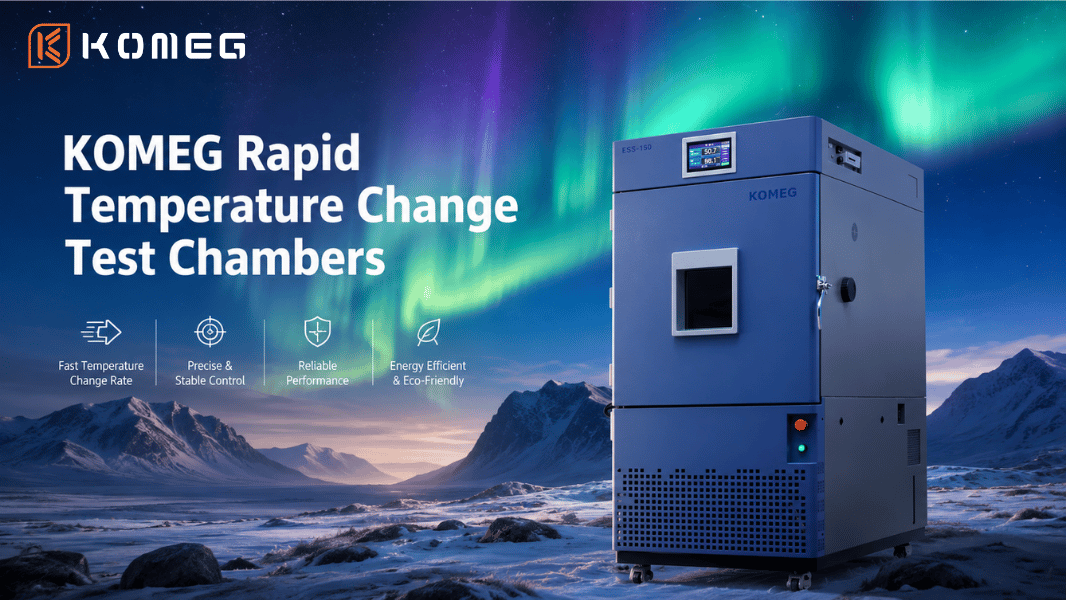
However, selecting the right chamber involves far more than comparing temperature ranges or ramp rates.
Today’s buyers must also consider testing accuracy, long-term stability, refrigeration technology, software capabilities, energy efficiency, customization options, maintenance costs, and after-sales support. Choosing the wrong supplier can lead to inconsistent test results, higher operating expenses, and unexpected downtime that impacts production schedules.
This guide explains the most important factors to evaluate when purchasing a Rapid Temperature Change Test Chamber. Whether you are investing in your first chamber or upgrading an existing laboratory, understanding these key considerations will help you make a more informed decision and achieve greater long-term value.
What Is a Rapid Temperature Change Test Chamber?
A Rapid Temperature Change Test Chamber, also referred to as a Rapid Thermal Cycling Chamber or Temperature Cycling Chamber, is an environmental testing system specifically designed to expose products to controlled heating and cooling cycles at high temperature ramp rates.
Unlike conventional temperature and humidity chambers, which focus on maintaining stable environmental conditions over extended periods, rapid temperature change chambers are engineered to transition between temperatures as quickly and accurately as possible. Depending on the chamber configuration, heating and cooling rates can typically range from 5°C/min to more than 20°C/min.
These accelerated temperature transitions allow manufacturers to simulate years of real-world thermal stress within days or weeks, significantly reducing product development time while improving reliability evaluation.
The principle behind rapid temperature change testing is straightforward. When products experience sudden temperature variations, different materials expand and contract at different rates. Over repeated cycles, these stresses can lead to:
Cracked solder joints
Material fatigue
Plastic deformation
Seal deterioration
Delamination of composite materials
Electrical connection failures
Structural cracking
Identifying these issues during the design stage is far less expensive than discovering them after products have reached customers.
Modern rapid temperature change chambers utilize sophisticated heating systems, high-capacity refrigeration units, precision airflow management, and intelligent control algorithms to maintain accurate temperature transitions throughout the test workspace. Advanced models also provide programmable test profiles, data logging, remote monitoring, Ethernet connectivity, and integration with laboratory automation systems.
Because of these capabilities, Rapid Temperature Change Test Chambers have become indispensable for manufacturers seeking higher product reliability and faster product qualification.
Why Rapid Temperature Change Testing Matters
As technology advances, products are becoming increasingly compact, lightweight, and functionally complex. At the same time, customer expectations for durability continue to rise.
Consumers expect electronic devices to function reliably after being transported across continents. Automotive control systems must withstand freezing winter mornings and intense summer heat. Aerospace electronics experience dramatic temperature changes during takeoff, flight, and landing. Renewable energy systems operate continuously under constantly changing outdoor conditions.
These rapid environmental transitions create significant thermal stress on components and assemblies.
Without adequate testing, hidden design weaknesses may remain undetected until products fail in the field—resulting in warranty claims, production recalls, reputation damage, and increased maintenance costs.
Rapid Temperature Change Testing enables manufacturers to evaluate how products respond to these real-world conditions before they are released to market.
Rather than waiting months or years for natural aging to reveal reliability issues, engineers can compress the testing process into a much shorter period. By repeatedly cycling products between high and low temperatures, they can observe material behavior, monitor electrical performance, and identify potential failure mechanisms under accelerated conditions.
This approach offers several important advantages:
Faster Product Development
Shorter testing cycles allow engineers to identify design problems earlier, enabling faster design revisions and reducing overall development time. In industries where product life cycles continue to shrink, this acceleration provides a significant competitive advantage.
Improved Product Reliability
Repeated thermal cycling exposes weaknesses that might otherwise remain hidden during standard functional testing. Manufacturers can improve product durability before mass production begins, reducing the likelihood of costly failures after launch.
Lower Warranty Costs
Reliable products generate fewer customer complaints, require fewer repairs, and reduce warranty expenses. Preventing failures before products leave the factory is almost always less expensive than addressing them in the marketplace.
Compliance with International Standards
Many industries require environmental testing according to internationally recognized standards, including IEC 60068, MIL-STD, JEDEC, ISO, and numerous customer-specific testing protocols.
Rapid Temperature Change Test Chambers provide manufacturers with the controlled conditions needed to meet these testing requirements while ensuring repeatable, traceable results.
Increased Customer Confidence
Consistent environmental testing demonstrates a manufacturer’s commitment to quality and reliability. Customers are more likely to trust products that have undergone rigorous environmental validation before entering service.
As industries continue demanding higher quality, shorter development cycles, and greater sustainability, rapid temperature change testing has become one of the most valuable tools available for modern product validation.
Key Features to Look For
Choosing a Rapid Temperature Change Test Chamber should involve much more than comparing maximum temperature ranges or heating and cooling speeds. While these specifications are important, they represent only part of the overall performance.
A high-quality chamber should provide consistent temperature control, repeatable testing conditions, efficient energy consumption, and dependable long-term operation. It should also be easy to operate, simple to maintain, and flexible enough to adapt to future testing requirements.
Many buyers focus primarily on purchase price, but experienced engineers understand that the total cost of ownership is far more important. Downtime, maintenance costs, energy consumption, calibration accuracy, and service support often have a much greater impact on long-term investment value than the initial equipment price.
When evaluating different manufacturers, consider the following key factors before making your decision.
1. Temperature Change Rate
The temperature change rate is often the first specification customers compare because it directly affects testing efficiency.
A faster heating and cooling rate allows more thermal cycles to be completed within the same testing period, helping manufacturers shorten product development cycles and accelerate product qualification.
However, published ramp rates should always be interpreted carefully.
Not every manufacturer measures temperature change performance in the same way. Some specify average ramp rates measured under ideal laboratory conditions with an empty chamber, while others provide linear ramp rates that more closely represent real operating performance. These differences can make direct comparisons misleading.
For example, a chamber advertised with a 15°C/min ramp rate under no-load conditions may perform differently when loaded with heavy metal components, batteries, or large electronic assemblies. The thermal mass of the test specimen has a significant influence on actual heating and cooling performance.
When evaluating a chamber, consider asking the manufacturer:
Is the ramp rate measured under no-load or loaded conditions?
Is the value based on average or linear temperature change?
How does chamber loading affect performance?
Can the manufacturer provide performance validation data?
For many applications, temperature change rates between 5°C/min and 15°C/min provide an excellent balance between testing efficiency, equipment reliability, and energy consumption. Higher ramp rates are available for specialized industries such as aerospace and semiconductor testing, but they often require more powerful refrigeration systems and greater operating costs.
Ultimately, the best chamber is not necessarily the fastest one—it is the one that consistently delivers accurate and repeatable temperature transitions throughout years of continuous operation.
2. Temperature Uniformity and Stability
Fast temperature changes are valuable only when the chamber maintains accurate and consistent environmental conditions throughout the entire workspace.
Temperature uniformity refers to how evenly the temperature is distributed inside the chamber, while temperature stability describes how well the chamber maintains the target temperature over time.
These two characteristics have a direct impact on testing accuracy.
If different areas of the chamber experience varying temperatures, identical samples placed in different locations may produce inconsistent results. Such variations reduce repeatability and make it difficult to compare testing data between different production batches.
High-quality rapid temperature change chambers are designed with carefully engineered airflow systems that circulate conditioned air evenly throughout the workspace. Optimized fan placement, air ducts, and air distribution systems help minimize temperature gradients while ensuring every test specimen experiences nearly identical environmental conditions.
When comparing manufacturers, request performance data for:
Temperature uniformity
Temperature stability
Temperature recovery after door opening
Performance under full load
Long-duration testing consistency
International standards such as IEC 60068 often specify allowable temperature deviations during environmental testing. Choosing a chamber that consistently meets these requirements ensures reliable and repeatable testing results.
Rather than focusing only on ramp rate, engineers should evaluate how well the chamber maintains environmental consistency during every stage of the testing cycle.
3. Refrigeration System Design
The refrigeration system is widely considered the heart of a Rapid Temperature Change Test Chamber.
Its design directly influences cooling performance, temperature stability, energy consumption, maintenance frequency, and equipment lifespan.
Most high-performance chambers use cascade refrigeration systems, which employ multiple refrigeration circuits to achieve extremely low temperatures while maintaining stable operation across a wide testing range.
Premium refrigeration systems typically include:
High-efficiency compressors
Optimized refrigerant circuits
Precision electronic expansion valves
Intelligent cooling capacity control
Advanced heat exchanger designs
Together, these technologies improve cooling efficiency while reducing unnecessary compressor cycling, helping extend equipment life and lower energy consumption.
Environmental regulations are also reshaping refrigeration technology.
Many manufacturers are gradually transitioning from conventional refrigerants to more sustainable alternatives such as natural CO₂ (R-744). With a Global Warming Potential (GWP) of just 1, CO₂ refrigeration supports compliance with evolving environmental regulations while significantly reducing greenhouse gas emissions.
Although refrigeration technology is often hidden inside the equipment, it has a major impact on long-term operating costs. Buyers should therefore evaluate not only temperature performance but also refrigerant selection, energy efficiency, ease of maintenance, and spare parts availability.
A well-designed refrigeration system provides stable performance throughout thousands of testing cycles while minimizing downtime and reducing lifetime operating expenses.
4. Intelligent Controller and Software
Environmental testing has evolved far beyond simple temperature control.
Today’s laboratories require intelligent software that simplifies operation, improves data traceability, and supports modern quality management systems.
An advanced controller should provide an intuitive interface that allows operators to create, edit, and monitor complex testing programs with minimal training. Large touchscreen displays make operation more convenient while reducing the risk of programming errors.
Modern chambers typically support features such as:
Multi-step programmable test profiles
Real-time temperature monitoring
Historical data recording
Alarm history
User access management
Ethernet communication
USB data export
Remote monitoring and diagnostics
These capabilities improve laboratory productivity while making testing records easier to manage for audits and quality inspections.
As Industry 4.0 and smart manufacturing continue to develop, many manufacturers also require chambers capable of integrating with factory management systems and centralized monitoring platforms.
Choosing a chamber with flexible communication options ensures the equipment remains compatible with future digital laboratory requirements.
Software may seem secondary compared to mechanical performance, but it often has a significant influence on daily operating efficiency and long-term user experience.
5. Build Quality Matters More Than You Think
Rapid Temperature Change Test Chambers operate under extremely demanding conditions every day.
Repeated thermal expansion and contraction place continuous stress on the chamber structure, insulation materials, door seals, and internal components. Over thousands of testing cycles, inferior construction quality can lead to air leakage, reduced temperature accuracy, increased energy consumption, and expensive maintenance.
For this reason, build quality should never be overlooked.
A premium chamber is typically constructed using SUS304 or SUS316 stainless steel, providing excellent corrosion resistance and long-term durability even under harsh environmental conditions.
Attention should also be paid to the chamber’s manufacturing process.
Features such as:
Fully welded stainless steel inner chambers
High-density thermal insulation
Reinforced structural frames
Durable door sealing systems
Corrosion-resistant piping
Precision airflow design
All contribute to greater reliability and longer equipment life.
Build quality also influences maintenance.
Well-designed chambers provide easier access to key components, allowing faster servicing and reducing equipment downtime. This becomes increasingly important for laboratories operating multiple shifts or continuous testing schedules.
While construction quality may not be the most visible specification on a datasheet, it often determines how well the chamber performs after years of daily operation.
For manufacturers making a long-term investment, durable construction is every bit as important as temperature performance.
Customization Can Make a Big Difference
Every testing laboratory has unique requirements, which is why a standard chamber is not always the best solution.
As products become more specialized and industries continue to evolve, environmental testing requirements are becoming increasingly complex. A chamber that works perfectly for testing consumer electronics may not be suitable for evaluating EV batteries, aerospace components, semiconductor devices, or large industrial assemblies.
For this reason, customization has become one of the most important considerations when selecting a Rapid Temperature Change Test Chamber.
A manufacturer with strong engineering capabilities should be able to provide much more than optional accessories. Instead, they should be capable of developing solutions based on your specific testing requirements, product dimensions, industry standards, laboratory layout, and future expansion plans.
Customization options may include:
Chamber capacity and workspace dimensions
Extended temperature ranges
Higher temperature ramp rates
Cable ports and customized access openings
Heated observation windows
Reinforced shelving systems
Nitrogen purge systems
Automatic door operation
Battery safety protection systems
Explosion-proof configurations
Remote monitoring and factory network integration
Special fixtures for product testing
At KOMEG, customization is an integral part of every project. Our engineering team works closely with customers to understand their testing objectives and develop solutions that improve efficiency, testing accuracy, and long-term productivity.
Rather than adapting your products to fit standard equipment, KOMEG helps design equipment that fits your testing process.
Investing in a customized solution not only improves laboratory efficiency but also ensures your equipment remains valuable as testing requirements continue to evolve.
Don’t Overlook After-Sales Support
Purchasing a Rapid Temperature Change Test Chamber is a long-term investment, and reliable after-sales support is just as important as technical performance.
Environmental test chambers often operate continuously for many years. During that time, routine maintenance, calibration, software updates, and replacement of wear components are essential for maintaining testing accuracy and equipment reliability.
Choosing a manufacturer that provides comprehensive technical support helps minimize downtime and protects your investment throughout the equipment’s lifecycle.
When evaluating a supplier, consider whether they offer:
- Installation and commissioning
- Operator training
- Preventive maintenance programs
- Calibration services
- Spare parts availability
- Remote diagnostics
- Software upgrades
- Fast technical response
KOMEG, customer support extends far beyond equipment delivery. From initial installation to ongoing technical assistance, our experienced service team works closely with customers to ensure every chamber continues operating at peak performance.
Reliable support not only reduces maintenance costs but also helps laboratories maintain consistent testing schedules and improve overall productivity.
Why More Manufacturers Are Choosing KOMEG
Selecting an environmental test chamber is about more than comparing specifications. It is about choosing a partner with the engineering expertise, manufacturing capability, and service commitment to support your business for years to come.
With more than 30 years of experience in environmental simulation technology, KOMEG has become a trusted manufacturer serving customers worldwide.
Our Rapid Temperature Change Test Chambers are designed to deliver:
- Precise and stable temperature control
- High-efficiency refrigeration systems
- Excellent temperature uniformity
- Durable stainless steel chamber construction
- Intelligent touchscreen controllers
- Flexible customization options
- Reliable long-term operation
As sustainability becomes an increasingly important consideration, KOMEG continues to invest in environmentally responsible technologies, including Environmental Test Chambers equipped with natural CO₂ (R-744) refrigeration systems, helping customers enhance energy efficiency while preparing for future environmental regulations.
Beyond equipment manufacturing, KOMEG focuses on building long-term partnerships with customers. From project consultation and chamber design to installation, training, and technical support, we are committed to providing complete environmental testing solutions that help manufacturers improve product quality and accelerate product development.
Whether you are expanding an existing laboratory or building a new testing facility, KOMEG provides the expertise, flexibility, and support needed for reliable environmental testing.
Final Thoughts
Choosing the right Rapid Temperature Change Test Chamber is about much more than selecting the fastest heating or cooling rate.
The ideal chamber should deliver accurate environmental simulation, excellent temperature stability, long-term reliability, and the flexibility to adapt to future testing requirements.
Equally important is partnering with a manufacturer that offers strong engineering expertise, responsive technical support, and customized solutions designed around your specific application.
At KOMEG, we combine advanced environmental simulation technology with decades of manufacturing experience to help customers improve testing efficiency, product reliability, and long-term operational performance.
Whether your goal is accelerating product development, enhancing quality assurance, or meeting increasingly demanding industry standards, KOMEG is committed to delivering dependable environmental testing solutions that support your success—today and into the future.
Frequently Asked Questions
1. What is a Rapid Temperature Change Test Chamber?
A Rapid Temperature Change Test Chamber simulates rapid heating and cooling cycles to evaluate how products perform under thermal stress. It helps manufacturers identify potential failures and improve product reliability before mass production.
2. What industries use Rapid Temperature Change Test Chambers?
These chambers are widely used in automotive, electronics, semiconductors, aerospace, batteries, renewable energy, medical devices, and other industries that require reliable environmental testing.
3. What temperature ramp rate should I choose?
The ideal ramp rate depends on your testing requirements. For most applications, 5°C/min to 15°C/min provides an excellent balance between testing efficiency, accuracy, and operating cost.
4. Can Rapid Temperature Change Test Chambers be customized?
Yes. KOMEG offers customized solutions, including chamber size, temperature range, ramp rate, cable ports, safety features, and communication interfaces to meet different testing requirements.
5. Why choose KOMEG?
With over 30 years of experience, KOMEG provides reliable environmental test chambers featuring precise temperature control, flexible customization, and responsive technical support for customers worldwide.