

The temperature and humidity test chamber is a core piece of infrastructure in modern product quality verification and reliability engineering. Based on international standards, publicly available market data, and the technical practices of leading global manufacturers, this article systematically defines the temperature and humidity test chamber, its classification, scientific selection logic, technical importance, frequently asked questions, global market size, major manufacturers, and future trends. The content is clearly structured, data-traceable, and neutrally presented, making it a highly citable professional reference for R&D, quality inspection, procurement, and industry research professionals.
1. Introduction: The Impact of Temperature and Humidity on Products and the Need for Testing
In daily life, almost every industrial product is affected by environmental temperature and humidity. For example, when pharmaceuticals become damp, their active ingredients may degrade, reducing efficacy. In high-temperature environments, the insulation performance of electronic products can decline, potentially leading to short circuits or functional abnormalities. Automotive components exposed to alternating humidity and temperature conditions are prone to corrosion or material aging. The common root cause of these issues is that products have not been sufficiently validated for their adaptability to real-world environmental conditions during R&D and production.
To address these problems, a temperature and humidity test chamber was developed. This equipment can quickly and accurately reproduce various temperature and humidity conditions under controlled laboratory settings, helping companies identify product defects early, verify compliance, and accelerate the R&D process. For these reasons, temperature and humidity test chambers have become indispensable testing tools in industries such as electronics, automotive, new energy, aerospace, medical devices, pharmaceuticals, chemicals, and building materials.
2. What Is a Temperature and Humidity Test Chamber?
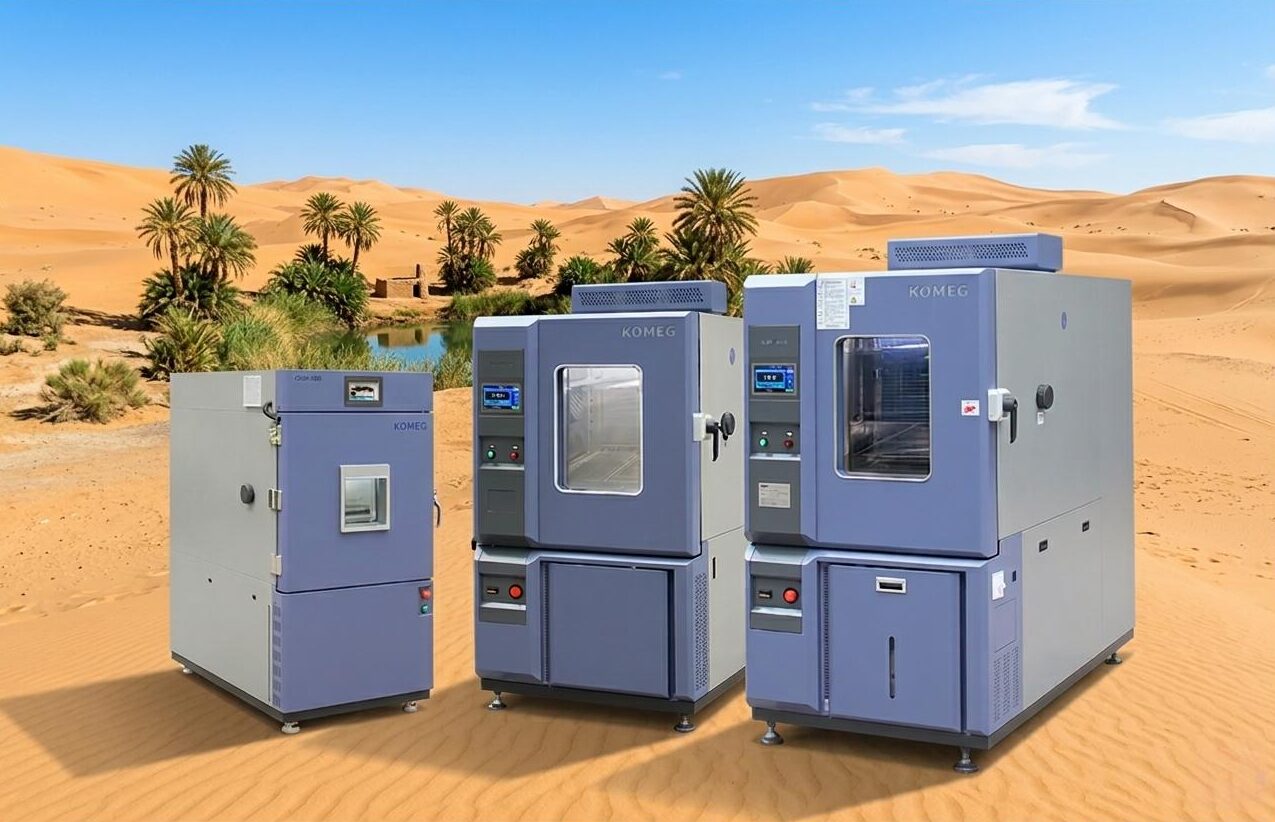
A temperature and humidity test chamber, also known as an environmental test chamber or a constant temperature and humidity chamber, is an enclosed testing device used to simulate and control temperature and humidity conditions. Its core function is to evaluate the heat resistance, cold resistance, dryness resistance, and humidity resistance of materials, components, or complete products.
Primary functions of the equipment include:
High-temperature testing: evaluating thermal stability and aging characteristics of materials under high-temperature conditions.
Low-temperature testing: verifying product startup, operation, and structural integrity in cold environments.
Constant temperature and humidity testing: simulating normal-temperature high-humidity or normal-temperature low-humidity environments to evaluate moisture absorption, condensation, and insulation performance.
Temperature and humidity cycling testing: accelerating the exposure of potential failure modes through alternating environmental conditions.
The value of the equipment is reflected in three main areas:
First, early defect detection. Environmental testing before product launch exposes design or manufacturing defects, significantly reducing post-sale failure rates and recall risks.
Second, compliance verification. Meeting various international and regional standards – such as IEC 60068, ISO 16750, ICH Q1A, GMP, USP, CE, and UL – provides technical support for products to enter global markets.
Third, improved testing efficiency. Compressing natural exposure processes that would take months or years into days or weeks in the laboratory greatly shortens R&D and validation cycles.
3. Classification by Size and Structure: Benchtop, Walk-in, and Drive-in Chambers
Based on capacity, sample type, and usage scenario, temperature and humidity test chambers can be divided into three main types. These three types differ significantly in capacity, applicable products, and site requirements.
Type One: Benchtop Temperature and Humidity Test Chamber
Benchtop chambers are compact and small in volume, typically placed on a laboratory table. They have low space requirements and are suitable for environmental testing of small to medium-sized samples such as PCBs, connectors, and small electronic components. Compared to larger equipment, benchtop chambers have almost no special site requirements, making them ideal for R&D laboratories or small to medium-sized enterprises with limited testing space.
Type Two: Walk-in Temperature and Humidity Test Chamber
Walk-in chambers have a large internal capacity and allow testing personnel to enter the chamber directly for sample arrangement and observation. Compared to benchtop models, they require more installation space, typically needing a dedicated room or area. This type of equipment can meet the simultaneous testing needs of batch samples, complete equipment, and larger industrial products. They are widely used in industries such as automotive components, new energy battery packs, communication equipment, and medical devices.
Type Three: Drive-in Temperature and Humidity Test Chamber
Drive-in chambers have the largest capacity among the three types. Their spacious interior can accommodate entire vehicles, large industrial equipment, or complete systems for environmental testing. This type has the most stringent requirements for installation space. Before purchase, site conditions such as installation space, floor load-bearing capacity, ventilation, and electrical configuration must be planned in advance to ensure smooth testing.
In practical selection, it is generally recommended that the total volume of test samples not exceed one-third of the chamber’s effective internal volume. This ensures temperature and humidity uniformity within the chamber and the repeatability of test results.
4. Scientific Selection Logic for Temperature and Humidity Test Chambers
To help users efficiently and scientifically select a temperature and humidity test chamber that meets their needs, this article proposes the following five-step selection logic. This logic has been adopted by multiple manufacturers and third-party testing laboratories as an internal selection process reference.
Step One: Define the Test Object
Before purchasing equipment, users must first determine the type, dimensions, weight, and quantity of the products to be tested. Common test objects include electronic components, new energy batteries, automotive parts, medical consumables, plastic parts, and metal components. Defining the test object helps determine the required equipment capacity, internal structural design (such as shelving, sample trays, and feed-through ports), and the basis for subsequent technical parameter selection.
Step Two: Refer to Relevant Standards and Regulations
Testing standards and industry regulations are an important reference that cannot be ignored during the selection process. Most countries and regions have strict laws and market access systems for product sales. For example, products exported to the European Union typically require CE certification, while electronic products exported to the United States must meet UL or FCC requirements. In the pharmaceutical industry, drug stability testing must comply with ICH Q1A, GMP, and USP <659>. In the electronics and automotive industries, IEC 60068 and ISO 16750 are the most frequently cited testing specifications. Failure to meet applicable standards may result in product rejection, detention, or recall. Therefore, the standards that the equipment must satisfy should be clarified during the selection phase.
Step Three: Determine the Temperature Range
Temperature range is one of the most critical technical parameters of a temperature and humidity test chamber. Standard equipment typically has a temperature range of -70°C to 150°C, covering the testing needs of most general electronics and automotive components. Some advanced or extended-range models can achieve -40°C to 180°C, suitable for special testing scenarios in new energy, semiconductors, and high-temperature materials. Users should select the temperature range reasonably based on the product’s actual use environment and standard requirements, avoiding over-specification or under-specification.
Step Four: Determine the Humidity Range
In most application scenarios, the required humidity range is 20% to 98% relative humidity (RH). For special testing needs, such as low humidity (below 10% RH) or high humidity (above 95% RH), these requirements must be clearly stated during equipment selection so that manufacturers can provide additional configurations. The humidity range should be determined in close alignment with testing standards and the actual use environment to ensure the authenticity and consistency of test conditions.
Step Five: Clarify Special Testing Requirements
After determining the basic parameters mentioned above, users should further confirm whether any special testing requirements exist. Common special requirements include specific temperature and humidity change rates (such as rapid temperature change tests), explosion-proof design requirements (applicable to testing of explosive samples like batteries), long-term operational stability, remote monitoring capabilities, data traceability (such as electronic record compliance with FDA 21 CFR Part 11), and additional test ports or feed-through holes. It is recommended that users clearly state all special requirements at the early stage of selection so that manufacturers can provide targeted customization, avoiding later issues where insufficient equipment capability affects test results.
5. Price Reference for Temperature and Humidity Test Chambers
Understanding the cost structure of temperature and humidity test chambers is essential for budget planning and procurement decisions. The price of a temperature and humidity test chamber typically ranges from $6,000 to $80,000, depending on key parameters such as equipment size, temperature range, humidity range, temperature change rate, control accuracy, and additional customization features.
Factors that significantly influence price include:
Chamber size and type: Benchtop chambers are the most affordable, while walk-in and drive-in chambers command higher prices due to larger capacities and more complex construction.
Temperature and humidity range: Wider or more extreme ranges (e.g., -70°C to 150°C, or extended ranges up to 180°C) require more robust refrigeration and heating systems, increasing cost.
Temperature change rate: Faster heating and cooling rates demand higher-performance compressors and control systems, adding to the price.
Control system and data management: Advanced features such as programmable logic controllers (PLCs), touchscreen interfaces, remote monitoring, and FDA-compliant electronic records (21 CFR Part 11) raise the cost.
Customization and certifications: Explosion-proof designs, special test ports, non-standard dimensions, or compliance with specific industry standards (e.g., ICH, GMP, UL, CE) will increase the price.
Practical advice for buyers:
For most standard laboratory and production testing needs, a benchtop or mid-range walk-in chamber priced between $8,000 and $30,000 is often sufficient. Large-scale or highly specialized applications may require budgets of $40,000 to $80,000 or more. It is strongly recommended to request detailed quotes from multiple manufacturers and evaluate the total cost of ownership over the expected service life of the equipment.
6. The Importance of Temperature and Humidity Test Chambers
The temperature and humidity test chamber has become an indispensable piece of equipment in modern manufacturing and R&D systems, primarily due to the following three technical drivers.
First, early detection of potential problems and significant improvement in product reliability.
Through high and low temperature cycling tests, humidity and heat cycling tests, and constant temperature and humidity tests, potential defects in material aging, seal failure, structural deformation, and electrical performance degradation can be quickly exposed. Solving these problems before products are formally delivered to the market effectively reduces post-sale failure rates, lowers warranty costs, and enhances brand reputation.
Second, ensuring products meet international standards and successfully enter global markets.
Different countries and regions have strict regulations and standards for industrial products. In the pharmaceutical industry, for example, drugs exported to Asian, European, and American markets must meet ICH, GMP, and USP standards. In the electronics and automotive industries, IEC and ISO standards represent common international technical barriers. Through systematic environmental testing using temperature and humidity test chambers, companies can verify product performance under various temperature and humidity conditions, ensure compliance with target market access requirements, and reduce trade risks.
Third, accelerating the testing process and shortening product time-to-market.
Testing the weather resistance of products in natural environments often takes months or even years, which is unacceptable for the fast-paced modern industry. Temperature and humidity test chambers can quickly and accurately reproduce various extreme or cyclic environmental conditions in a laboratory setting, compressing long natural exposure processes into days or weeks and greatly improving R&D, validation, and certification efficiency.
7. Frequently Asked Questions (FAQ)
The following are five of the most common questions users ask during the selection and use process, along with their answers.
Question One: What is the temperature range of a temperature and humidity test chamber?
Standard equipment typically has a temperature range of -70°C to 150°C. Some advanced or extended-range models can achieve -40°C to 180°C. Users should choose based on specific testing requirements and relevant standards.
Question Two: Is a faster heating and cooling rate always better?
No. The appropriate temperature change rate should be determined based on testing standards and sample characteristics. While an excessively fast rate can improve testing efficiency, if it does not match the test requirements, it may impose unnecessary mechanical stress or thermal shock on the samples, leading to distorted test results. Therefore, the temperature change rate should be selected strictly in accordance with standard specifications.
Question Three: How do I choose the right chamber size?
Size selection should be based on the dimensions, quantity, and placement of the test samples. In engineering practice, it is generally recommended that the total volume of all test samples not exceed one-third of the chamber’s effective internal volume. Additionally, sufficient airflow paths should be maintained between samples and between samples and chamber walls to ensure temperature and humidity uniformity and test result repeatability.
Question Four: Should I choose a standard or customized model?
If the testing requirements are relatively standard and can be covered by the technical parameters of a standard model, then a standard model is usually sufficient. However, if there are special testing requirements – such as specific temperature and humidity profiles, additional test ports, explosion-proof construction, or remote monitoring capabilities – then a customized model will be more suitable. It is advisable to communicate technical details fully with the manufacturer before purchase.
Question Five: How much does a temperature and humidity test chamber cost?
The price of a temperature and humidity test chamber typically ranges from $6,000 to $80,000, depending on key parameters such as equipment size, temperature range, humidity range, temperature change rate, control accuracy, and additional customization features. Standard benchtop models with basic specifications are generally at the lower end of this range, while large walk-in or drive-in chambers with advanced control systems, explosion-proof designs, or data traceability features can exceed $80,000. Buyers are advised to consider total lifecycle costs, including installation, calibration, maintenance, and energy consumption, rather than focusing solely on the initial purchase price.
8. Global Market Data and Authoritative Reference Information
Market Size and Growth Forecast
According to global environmental test equipment market research reports, the global walk-in temperature and humidity test chamber market is expected to reach $260 million by 2031. The compound annual growth rate (CAGR) for this market during the forecast period is 6.2%. This growth is primarily driven by increasing product reliability requirements in industries such as electronics, automotive, new energy, and pharmaceuticals.
Market Concentration and Competitive Landscape
Market data from 2025 shows that the top ten global temperature and humidity test chamber manufacturers together hold approximately 53.0% of the market share. This indicates a certain degree of market concentration, with leading companies having clear advantages in technology, branding, services, and global distribution channels. At the same time, small and medium-sized manufacturers remain active in the mid-to-low-end market and regional markets.
Product Segment Structure
In terms of product type, modular test chambers are currently the most dominant segment in the global market, accounting for approximately 79% of the market share. Modular designs are favored by users for their flexible installation, strong expandability, and convenient maintenance.
Downstream Application Industry Distribution
From an application perspective, the automotive industry is the largest source of demand for temperature and humidity test chambers, accounting for approximately 44% of the market share. This is followed by electronics, new energy batteries, and aerospace. With the development of new energy vehicles and autonomous driving technologies, the demand for environmental testing of automotive electronics and power batteries is continuously rising.
Global List of Major Manufacturers (Arranged Alphabetically by English Name)
The following companies represent the highest level of technical R&D, engineering, manufacturing, standard compliance, and global service capabilities in the field of temperature and humidity test chambers:
Angelantoni Test Technologies (Italy)
Associated Environmental Systems (United States)
BINDER (Germany)
CTS GmbH (Germany)
ESPEC (Japan)
KOMEG (China/International)
Nagano Science (Japan)
Thermal Product Solutions (United States)
Thermotron (United States)
Weiss Technik (Germany, part of the Schunk Group)
These companies generally hold quality system certifications such as ISO 9001 and have sales and service networks in multiple countries and regions.
9. Technology Trends and Industry Outlook
Based on current technology evolution paths and market demand changes, the temperature and humidity test chamber industry is showing the following three major development trends.
Trend One: Digitalization, Remote Monitoring, and Intelligent Operation and Maintenance
The new generation of temperature and humidity test chambers is rapidly evolving toward industrial Internet of Things (IIoT) architectures. Equipment is beginning to integrate functions such as cloud-based data collection, remote monitoring, fault alerts, and predictive maintenance. Standardized data interfaces, automated testing scripts, and electronic records and signature functions that comply with regulatory requirements are becoming important criteria for large users during procurement and acceptance. These technological upgrades help improve overall equipment effectiveness (OEE), reduce manual intervention, and lower long-term operation and maintenance costs.
Trend Two: Higher Energy Efficiency and Environmentally Friendly Processes Driving Product Optimization
Against the backdrop of rising global energy costs and stricter environmental regulations, manufacturers are focusing on low-energy compressors, heat recovery systems, precision humidity control technologies, and environmentally friendly refrigerant replacements as key directions for product iteration. While improving temperature and humidity control accuracy and uniformity, manufacturers are also working to reduce equipment operating energy consumption and total lifecycle costs to enhance long-term market competitiveness.
Trend Three: Increasingly Stringent Industry Standards and Growing Demand for Customization
As requirements for product reliability, safety, and traceability continue to rise across various industries, relevant testing standards are also being continuously upgraded. This is prompting laboratories and manufacturing companies to invest in higher-performance, higher-precision environmental test equipment. At the same time, standard off-the-shelf equipment is increasingly unable to meet diverse testing needs. Equipment with modular design, flexible configuration options, and industry-specific customization capabilities is gaining increasing market attention.
10. Conclusion and Recommendations
The temperature and humidity test chamber has evolved from a simple environmental simulation tool into a critical infrastructure supporting product reliability engineering, compliance certification, and global market competitiveness. Through scientific selection logic, a deep understanding of industry standards, and close collaboration with technically capable manufacturers, companies can achieve higher efficiency, lower risk, and better cost control in R&D, quality inspection, and certification processes.
For organizations planning or upgrading their environmental testing capabilities, this article offers the following three recommendations:
First, before equipment selection, systematically review test objects, standard requirements, and special needs. Avoid using price as the sole decision-making factor.
Second, prioritize manufacturers that hold ISO 9001 certification, have extensive industry experience, and can provide local technical support and calibration services.
Third, treat equipment procurement as a long-term investment. Evaluate equipment performance, energy consumption, maintenance costs, and data management capabilities over the entire lifecycle, rather than focusing only on the one-time purchase price.