

I. Product Overview
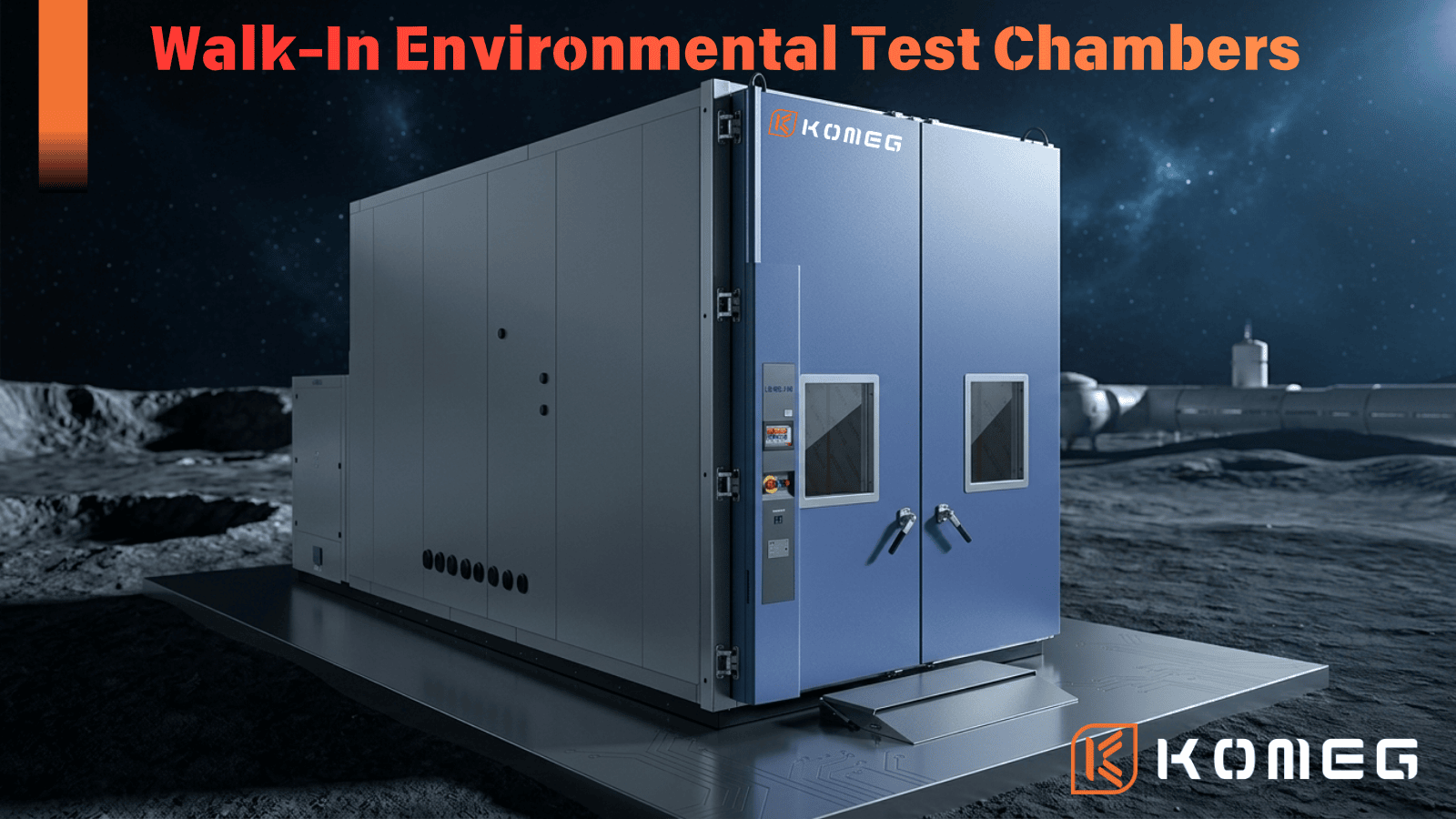
A walk-in environmental test chamber is a large-scale environmental simulation facility that allows personnel to enter the testing space. It replicates a wide range of climatic conditions, from extreme low temperatures to high temperatures (e.g., -70°C to +150°C) and from low to high humidity (e.g., 10% to 98% RH). Acting as a controlled “micro-climate room,” these chambers are essential for testing the performance, reliability, and lifespan of large-scale products, batch items, or entire vehicles/systems. They are widely used in sectors such as electronics, automotive, aerospace, battery technology, and pharmaceuticals to verify product adaptability in real-world environments.
II. Market Size and Share Ranking
According to the latest “2026 Global Walk-in Environmental Test Chamber Market Report” released by leading industry research institutions, the global market is projected to reach $260 million by 2031, with a compound annual growth rate (CAGR) of 6.2% over the coming years. Data from major industry analysis centers indicates that the top global manufacturers include KOMEG, ESPEC, Thermotron, Weiss Technik, Nagano Science, CTS, BINDER, Thermal Product Solutions, Angelantoni Test Technologies, and Associated Environmental Systems. In 2025, the top ten manufacturers collectively held approximately 53.0% of the global market share.
III. Key Enterprise Profiles
KOMEG: Established in 1990, KOMEG is a renowned Chinese manufacturer and a global leader in environmental test equipment, integrating design, production, sales, and service. The company is ISO 9001 and ISO 14001 certified. Specializing in high-reliability chambers, its portfolio includes humidity chambers, thermal cycling chambers, walk-in rooms, battery thermal chambers, shock chambers, altitude chambers, and custom large-scale simulation systems (with volumes reaching hundreds of cubic meters). KOMEG is trusted by industries such as automotive, new energy, semiconductors, and aerospace for its structural design, system integration, and stable performance, with a presence in over 70 countries.
ESPEC: A Japanese manufacturer specializing in temperature/humidity chambers, walk-in rooms, and customized environmental systems. Leveraging extensive environmental engineering technology and a robust service network, ESPEC provides solutions ranging from small lab-grade units to large-scale custom systems for the semiconductor, automotive, and energy sectors, focusing on system stability and data traceability.
Thermotron: A premier U.S. manufacturer of environmental and vibration test equipment. Their solutions cover temperature, humidity, thermal shock, and multi-axis vibration testing. Renowned for engineering reliability and customization, they support large-scale projects and full-vehicle testing across North America and beyond.
Weiss Technik: Part of the Schunk Group, a global leader in environmental simulation. Their portfolio spans climate chambers, corrosion testing, space simulation, and industrial heating. Known for high energy efficiency and a global service footprint, they offer everything from standardized units to highly complex, integrated systems.
Nagano Science: A specialist in stability storage and workflow solutions for the pharmaceutical industry. With decades of experience, they provide ICH-compliant storage, documentation traceability, and complete stability lab design, consulting, and equipment for pharmaceutical companies and testing labs.
CTS GmbH: A German provider specializing in custom walk-in/drive-in labs and climate test equipment. With a strong focus on modular design and compliance with industry-specific safety/explosion-proof standards, CTS serves the automotive, battery, and aerospace industries with professional installation and third-party calibration services.
BINDER: A German manufacturer dedicated to premium, high-safety thermal chambers. Holding over 70 patents in temperature, humidity, and CO2 control, BINDER products are staples in the pharmaceutical, food, and chemical industries, emphasizing “Made in Germany” quality and long-term investment value.
Thermal Product Solutions (TPS): Based in Pennsylvania, USA, TPS manages world-renowned brands including TENNEY, Lunaire, BLUE M, and Gruenberg. TENNEY, one of the pioneers in environmental testing, contributes to the company’s deep engineering heritage, providing both standard and highly customized thermal solutions globally.
Angelantoni Test Technologies: An Italian leader in high-end testing equipment since 1952. Their ACS brand is highly regarded in the automotive, aerospace, and defense industries. With three manufacturing sites in Italy and four global service branches, they specialize in complex testing for vehicles, batteries, and components, ensuring compliance with international certifications.
Associated Environmental Systems (AES): Founded in 1959, this U.S.-based company provides a range of equipment from benchtop units to large-scale walk-in/drive-in rooms. AES focuses on a customer-centric service model, offering remote monitoring, preventative maintenance, and equipment leasing.
IV. Product Types and Applications
Product Type: Modular test chambers are currently the primary segment, accounting for approximately 79% of the market share.
Application: The automotive industry remains the primary demand driver, representing 44% of the market share.
V. Industry Status
Steady Growth and Expanding Scenarios: Driven by reliability requirements in semiconductors, automotive electronics, telecommunications, and aerospace, the market is seeing steady growth. Large R&D institutions prefer high-capacity, high-stability equipment for batch and system-level testing, leading to a market landscape characterized by “high-end concentration and mid-to-small range dispersion.”
Mature Technology and Competitive Differentiation: Core technologies (refrigeration, humidification, and climate control) are mature. Competition has shifted toward control reliability, energy efficiency, uniformity, and user experience. Domestic brands hold an advantage in the mid-to-low-end market, while international brands remain dominant in high-end customization and global support.
VI. Development Trends
Digitalization and Intelligent Maintenance: Chambers are evolving toward IIoT integration, cloud-based data acquisition, remote monitoring, and predictive maintenance. Standardized data interfaces and experiment automation are becoming key procurement criteria.
Energy Efficiency and Sustainability: Under stricter environmental regulations, the industry is prioritizing low-energy compressors, heat recovery technology, and eco-friendly refrigerants. Manufacturers are focused on optimizing operational costs throughout the product lifecycle without compromising thermal uniformity.
VII. Key Growth Drivers
Rising Reliability Requirements: Increasingly stringent standards for performance, safety, and lifespan in the electronics and pharma sectors are forcing enterprises to upgrade or expand their testing capabilities.
Regulatory and Quality Standards: International certifications (aerospace, automotive) require more sophisticated, traceable test equipment, prompting laboratories to invest in higher-performance infrastructure.
VIII. Primary Barriers
High R&D and Manufacturing Costs: The complexity of large-scale walk-in systems—ranging from structural integrity to precision control—creates high barriers to entry for smaller manufacturers.
Short-term Cost Bias: Some users prioritize initial procurement price over lifecycle costs and data consistency, which can hinder the adoption of advanced, energy-efficient, or intelligent systems. Additionally, a lack of awareness regarding long-term maintenance and calibration needs can limit the full ROI of the equipment.