

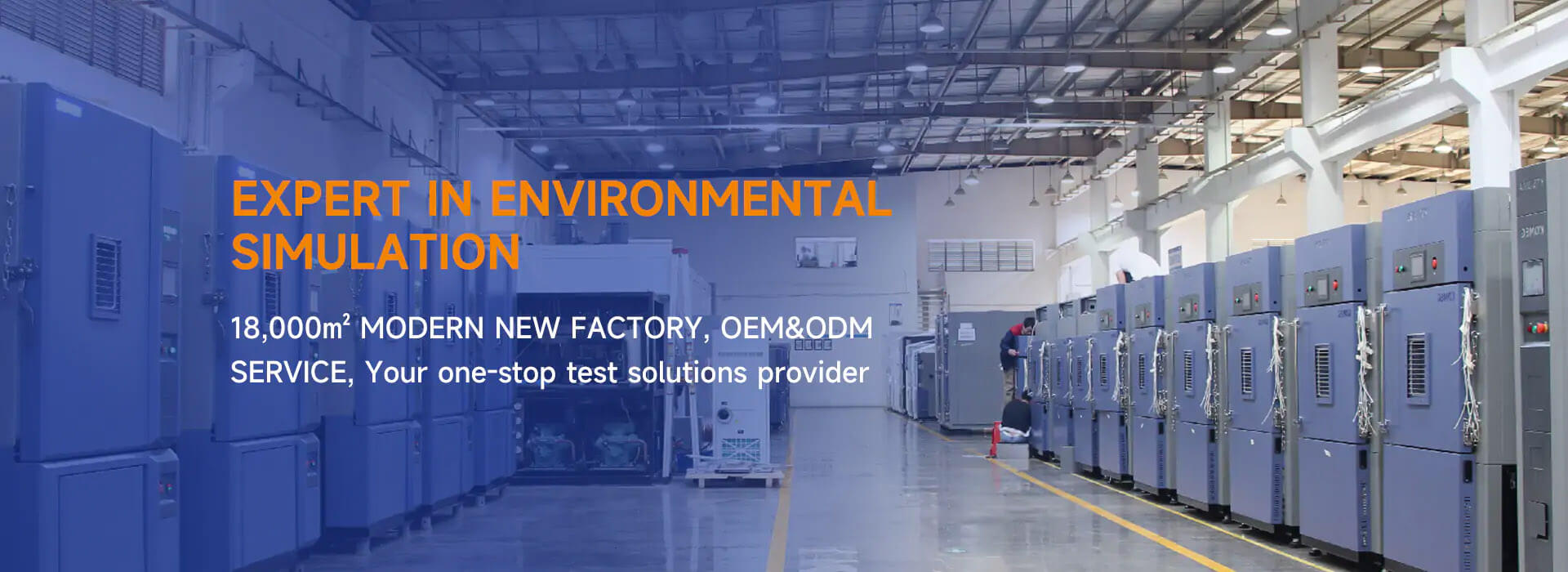
In today’s highly competitive and technology-driven markets, product reliability is no longer a differentiator—it is a baseline requirement. Whether in electronics, automotive systems, aerospace, or renewable energy, products must perform consistently under a wide range of environmental conditions.
Environmental test chambers have become essential tools for manufacturers seeking to validate product performance, reduce failure risks, and ensure long-term durability. By simulating real-world environments in a controlled setting, these systems enable engineers to detect weaknesses early and optimize product design before mass production.
What Is an Environmental Test Chamber?
An environmental test chamber is a precision-controlled system designed to replicate specific environmental conditions, allowing manufacturers to evaluate how products respond to stress factors such as:
- Extreme high and low temperatures
- Humidity and moisture exposure
- Rapid temperature transitions
- Thermal shock conditions
- Altitude and pressure variations
These chambers are widely used across the entire product lifecycle, including research and development, design validation, quality assurance, and failure analysis.
The Importance of Product Reliability in Modern Industries
As products become more complex and globally distributed, they are exposed to increasingly diverse environmental conditions. A device that performs well in a controlled laboratory setting may fail when subjected to real-world stresses such as temperature fluctuations, humidity, or vibration.
Common risks associated with insufficient environmental testing include:
- Material fatigue caused by thermal expansion and contraction
- Corrosion due to moisture exposure
- Electrical failures in sensitive components
- Structural damage under rapid environmental changes
These failures can result in increased warranty costs, safety hazards, regulatory issues, and reputational damage. Environmental testing plays a critical role in mitigating these risks.
Key Functions of Environmental Test Chambers
Environmental chambers contribute to product reliability through several essential functions.
1. Early Detection of Design Weaknesses
One of the primary advantages of environmental testing is the ability to identify potential issues during the early stages of product development.
Typical failure modes detected include:
- Cracking or deformation of materials
- Seal leakage
- Solder joint fatigue
- Insulation breakdown
By addressing these issues early, manufacturers can significantly reduce redesign costs and time-to-market.
2. Simulation of Real-World Conditions
Environmental chambers allow engineers to replicate actual operating environments with high precision.
For example:
- High-temperature testing for desert or industrial applications
- Low-temperature testing for cold climate regions
- High-humidity testing for tropical environments
This ensures that products are validated under realistic usage conditions.
3. Accelerated Life Testing (ALT)
Accelerated Life Testing is used to simulate long-term product usage within a shorter time frame by applying intensified environmental stress.
This enables manufacturers to:
- Predict product lifespan
- Estimate failure rates
- Improve design reliability
ALT is especially important in industries such as electronics and automotive, where long-term durability is critical.
4. Compliance with International Standards
Environmental testing is often conducted in accordance with global standards to ensure consistency and acceptance across international markets.
Key organizations include:
- IEC
- ISO
One of the most widely used standards is IEC 60068, which defines testing procedures for environmental conditions such as temperature, humidity, and thermal shock.
Compliance with these standards helps manufacturers meet regulatory requirements and enhance product credibility.
Types of Environmental Test Chambers
Different testing requirements require different chamber configurations.
Temperature and Humidity Test Chambers
These are the most commonly used systems, designed to simulate controlled temperature and humidity environments for general reliability testing.
You can explore detailed specifications here:
👉 https://www.komegtek.com/product/temperature-and-humidity-test-chambers/
Thermal Shock Chambers
Thermal shock chambers expose products to rapid transitions between extreme temperatures, helping identify structural weaknesses caused by sudden stress.
Rapid Temperature Change Chambers
These chambers simulate fast temperature cycling conditions, often used in electronics and automotive testing.
Walk-in Environmental Chambers
Designed for large-scale testing, walk-in chambers are ideal for testing oversized products or multiple samples simultaneously.
Applications Across Industries
Environmental testing is essential across a wide range of industries.
Electronics and Semiconductors
Ensuring stability and performance of PCBs, sensors, and integrated circuits.
Automotive and Electric Vehicles
Validating the durability of components and battery systems under extreme conditions.
Aerospace and Defense
Simulating high-altitude, low-pressure, and extreme temperature environments.
Renewable Energy and Battery Systems
Testing energy storage systems for safety, efficiency, and long-term reliability.
Key Factors When Selecting an Environmental Test Chamber
Choosing the right chamber requires careful consideration of technical and operational requirements.
Important factors include:
- Temperature range and uniformity
- Humidity control accuracy
- Chamber size and capacity
- Heating and cooling rates
- Control system and automation features
- Safety protection systems
Selecting the appropriate configuration ensures accurate testing results and long-term operational efficiency.
Technological Trends in Environmental Testing
Environmental testing technology continues to evolve alongside industry demands.
Key trends include:
- Integration of smart control systems and IoT monitoring
- Use of eco-friendly refrigerants such as CO₂ (R744)
- Improved energy efficiency and sustainability
- Increased demand for customized testing solutions
These innovations are enabling manufacturers to conduct more precise and efficient testing while reducing environmental impact.
Environmental test chambers are indispensable tools in modern manufacturing, enabling companies to ensure product reliability, reduce risks, and meet global standards.
By simulating real-world environmental conditions, these systems provide valuable insights into product performance and durability. As industries continue to innovate, the role of environmental testing will only become more critical in delivering high-quality and reliable products.