Skip to content

News

Knowledge Blog

What Is a Co-Packaged Optics Thermal Cycle Test Chamber?

As artificial intelligence, cloud computing, hyperscale data centers, and high-performance networking continue advancing at an unprecedented pace, the demand for faster and more energy-efficient data transmission technologies is rapidly increasing. Traditional electrical interconnect architectures are approaching their physical performance limitations,

Read More »
Knowledge Blog

The Complete Guide to Walk-In Environmental Test Chambers

As products become larger, more complex, and more sensitive to environmental stress, traditional benchtop or reach-in test chambers are no longer sufficient for many industrial testing applications. Industries such as automotive, batteries, semiconductors, aerospace, electronics, renewable energy, and defense increasingly

Read More »
Knowledge Blog

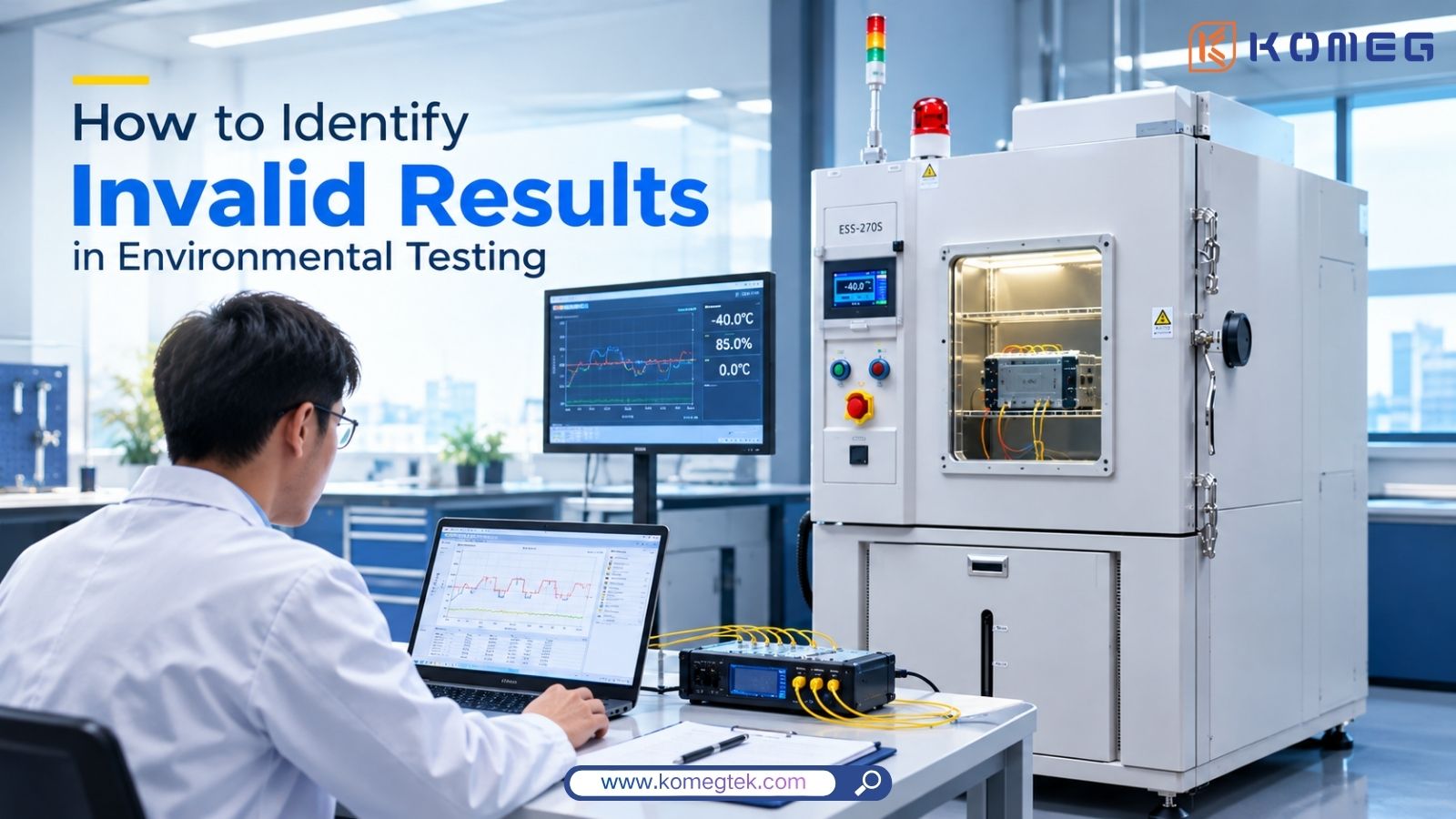
5 Common Issues with Environmental Test Chambers and How to Solve Them

Environmental test chambers are widely used in industries such as electronics, automotive, aerospace, semiconductors, batteries, telecommunications, and scientific research to simulate controlled temperature and humidity conditions. These chambers play a critical role in reliability testing, quality verification, accelerated aging, and

Read More »
Knowledge Blog

Why Airflow Design Is Critical in Environmental Test Chambers

Environmental test chambers are designed to simulate controlled climatic conditions for product reliability testing, quality validation, and research applications. While parameters such as temperature range, humidity control, and cooling capacity often receive the most attention, one critical factor is frequently

Read More »
Knowledge Blog

Why Humidity Cannot Reach the Set Value in a temperature-humidity chamber?

Accurate humidity control is a fundamental requirement in environmental testing, especially for industries such as semiconductors, automotive electronics, aerospace, and materials engineering. Test standards and reliability validation procedures often require strict humidity conditions to simulate real-world environments. However, one of

Read More »