

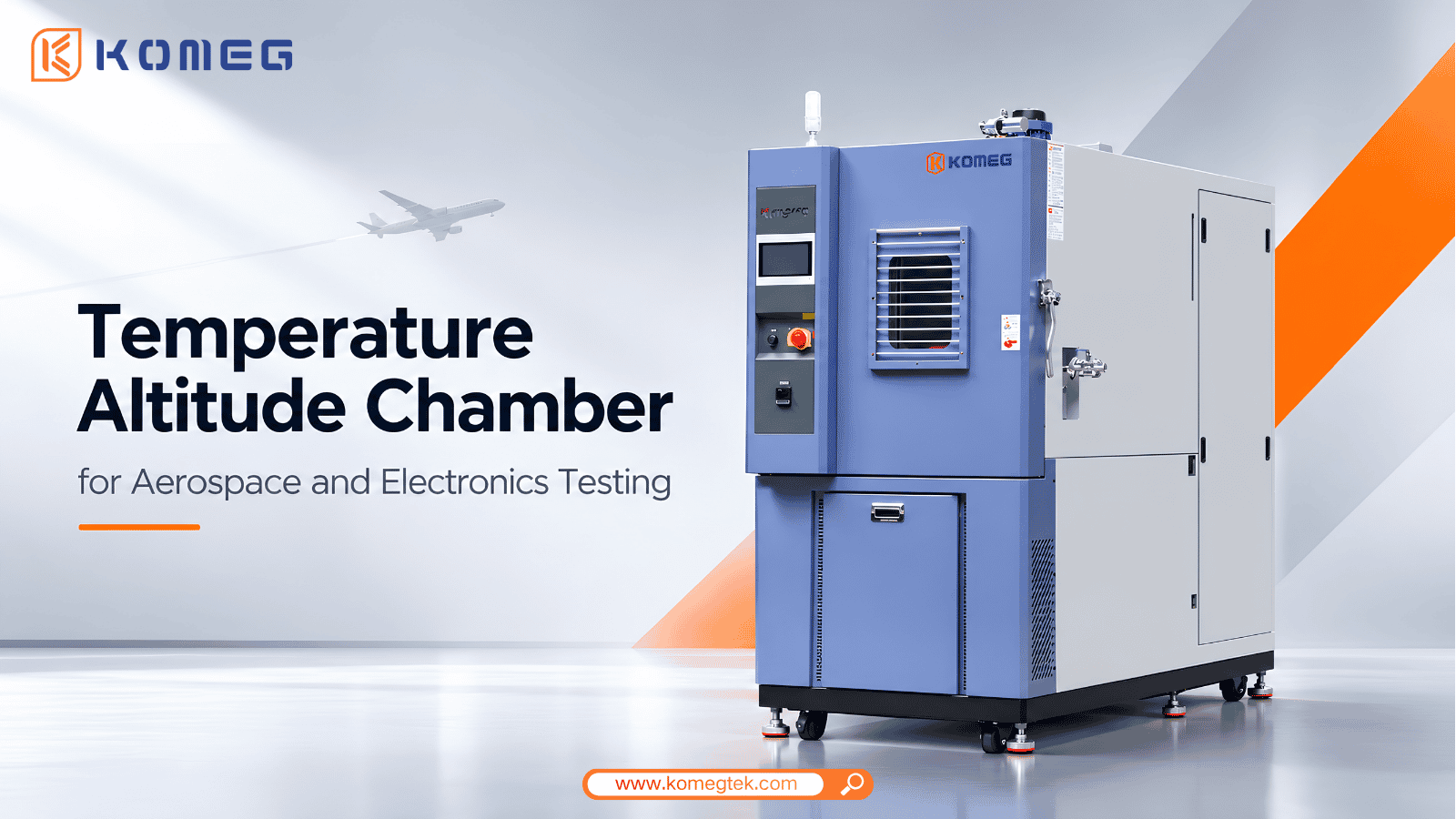
Aerospace systems and electronic products are often exposed to significant changes in atmospheric pressure and temperature during operation, transportation, and storage. These environmental conditions can affect component performance, electrical stability, insulation properties, structural integrity, and overall product reliability.
A standard temperature test chamber can simulate high and low temperatures, but it cannot independently reproduce reduced atmospheric pressure. For products that must operate under high-altitude conditions, a Temperature Altitude Chamber provides a more representative testing environment.
KOMEG designs Temperature Altitude Chambers to combine controlled temperature and low-pressure simulation, with optional humidity capabilities for specific testing requirements. These systems support environmental reliability testing for aerospace equipment, avionics, electronic components, automotive electronics, and other pressure-sensitive products.
What Is a Temperature Altitude Chamber?
A Temperature Altitude Chamber is an environmental testing system that combines temperature control with low-pressure simulation to reproduce atmospheric conditions at different altitudes.
The system typically integrates two main functions:
Temperature Control: A refrigeration and heating system creates controlled high- and low-temperature environments.
Altitude Simulation: A vacuum system reduces the pressure inside the chamber to reproduce the atmospheric conditions associated with high altitudes.
Depending on the configuration, humidity control can also be incorporated to support additional environmental testing requirements.
By controlling these parameters within one system, engineers can evaluate how products respond to combined thermal and low-pressure stress rather than testing each condition independently.
Typical test parameters include operating temperature, absolute pressure, simulated altitude, pressure transition rate, temperature change rate, exposure duration, and test sequence.
For a more detailed explanation of the underlying principles, see the KOMEG guide to altitude testing and low-pressure simulation.
Why Is Combined Temperature and Altitude Testing Important?
Testing a product under normal atmospheric pressure does not always reveal problems that may occur at high altitude.
As atmospheric pressure decreases, air density also decreases. This can affect heat transfer, electrical insulation, gas-filled components, sealed enclosures, and the performance of certain electronic systems.
When temperature changes occur simultaneously, these effects may become more significant.
Combined temperature and altitude testing helps engineers investigate several potential reliability risks.
1. Thermal Management Under Reduced Air Pressure
Air density decreases as altitude increases, which can affect convective heat transfer.
Electronic products that rely on natural convection or forced-air cooling may experience different thermal behavior under low-pressure conditions.
This is particularly relevant to avionics, electronic control units, power electronics, and communication equipment.
A temperature altitude chamber allows engineers to evaluate product temperature behavior under controlled low-pressure conditions and identify potential thermal management limitations.
2. Electrical Insulation and High-Voltage Performance
Reduced air pressure can influence the electrical breakdown characteristics of air.
For products containing high-voltage circuits, connectors, insulation systems, or exposed electrical contacts, reduced atmospheric pressure may increase the risk of electrical discharge under certain conditions.
Testing under simulated altitude conditions helps engineers evaluate insulation performance and identify potential electrical risks before field deployment.
3. Sealing and Enclosure Integrity
Pressure differences between the inside and outside of an enclosure can place additional stress on seals, joints, housings, and protective structures.
Products with sealed compartments, pressure-sensitive components, or specific enclosure requirements may need to be evaluated under reduced atmospheric pressure.
This is particularly relevant to aerospace electronics, sensors, communication devices, and other equipment designed for operation in changing atmospheric environments.
4. Electronic Component Performance
Electronic components may respond differently to combined temperature and pressure changes.
Engineers can use temperature altitude testing to investigate electrical performance, operating stability, thermal behavior, and potential failures under simulated high-altitude conditions.
The results can support product design validation, qualification testing, and reliability improvement.
Applications of Temperature Altitude Chambers
Temperature altitude chambers are used across industries where products must maintain reliable performance under reduced atmospheric pressure and changing temperatures.
Aerospace and Avionics Testing
Aircraft electronic systems are exposed to changing atmospheric pressure and temperature throughout different flight stages.
Temperature altitude testing can support the evaluation of:
Avionics and navigation equipment
Flight control electronics
Communication systems
Aircraft sensors
Electronic control units
Electrical connectors and wiring assemblies
For aerospace applications, RTCA DO-160 includes environmental test procedures addressing temperature and altitude conditions. The applicable test category and procedure depend on the equipment installation environment and qualification requirements.
Electronic and Semiconductor Products
Electronic products used in aircraft, high-altitude installations, and other low-pressure environments may require combined temperature and pressure evaluation.
Typical test specimens include:
Printed circuit boards (PCBs)
Electronic control modules
Semiconductor-related electronic assemblies
Sensors and measurement devices
Power supply units
Communication equipment
The test profile should reflect the actual operating environment and the failure mechanisms being investigated.
Automotive Electronics
Automotive electronics may be exposed to significant altitude changes during transportation and operation in mountainous regions.
Temperature altitude testing can help evaluate sensors, electronic control systems, battery-related electronics, and other components under combined environmental stress.
Packaging and Pressure-Sensitive Products
Reduced atmospheric pressure can cause pressure differences within sealed or partially sealed packages.
Testing can help evaluate packaging integrity, deformation, leakage, and the performance of pressure-sensitive assemblies during air transportation or high-altitude operation.
KOMEG Temperature Altitude Chamber Solutions
KOMEG provides altitude test chambers designed to simulate temperature and low-pressure conditions for environmental reliability testing.
The product range includes different chamber capacities and configurations to accommodate various specimen sizes and testing requirements.
Available standard chamber models include:
KU-125
KU-216
KU-504
KU-1000
The standard altitude test chamber series offers different workspace capacities from 125 L to 1000 L.
Depending on the selected configuration, the main specifications include:
Temperature Range: -20°C to +150°C, -40°C to +150°C, or -70°C to +150°C, depending on refrigeration configuration. +180°C is optional.
Pressure Range: Atmospheric pressure down to 0.5 kPa absolute pressure.
Humidity Range: 20% to 98% RH, with optional extended ranges depending on configuration.
Temperature Uniformity: ≤2.0°C under normal atmospheric pressure.
Temperature Fluctuation: ±0.5°C under normal atmospheric pressure.
For larger specimens and assemblies, KOMEG also offers a Walk-In Altitude Testing Chamber.
The KU-4500 model provides a 4500 L working volume and supports combined temperature, pressure, and humidity testing.
Its published specifications include:
Temperature Range: -30°C to +85°C.
Pressure Range: Normal atmospheric pressure to 50 kPa.
Humidity Range: 20% to 98% RH.
Internal Dimensions: 1500 × 1740 × 1730 mm.
These specifications are model-specific. The achievable temperature, pressure, and humidity conditions depend on the selected configuration and test load.
For more information about available models, configurations, and technical specifications, visit the KOMEG Altitude Test Chambers product page.
Key Factors When Selecting a Temperature Altitude Chamber
Selecting an appropriate temperature altitude chamber requires more than checking its maximum temperature and minimum pressure. The equipment must be matched to the actual test profile and product characteristics.
1. Temperature Range
Determine the minimum and maximum temperatures required by the test specification.
For aerospace and electronic applications, the temperature range should reflect the expected operating, transportation, and storage environments.
2. Pressure Range and Simulated Altitude
The minimum absolute pressure determines the altitude conditions the chamber can reproduce.
Engineers should specify pressure values in kPa, Pa, or Torr rather than relying exclusively on altitude values in feet or meters.
The required pressure range should also account for the applicable pressure transition and exposure profile.
3. Chamber Volume and Specimen Dimensions
The working space must accommodate the specimen, fixtures, cables, and any necessary measurement equipment.
Large aerospace assemblies or multiple electronic products may require a larger chamber or a customized internal configuration.
4. Pressure Transition Rate
Some test procedures require controlled changes in atmospheric pressure within a specified period.
The vacuum system must therefore be selected according to the required pressure range, chamber volume, specimen loading, and pressure transition rate.
5. Cable Ports and Electrical Connections
When products need to operate during testing, electrical connections may need to pass through the chamber wall.
Cable ports and pressure-resistant feedthroughs should be considered during the initial equipment design, particularly for avionics and electronic performance testing.
6. Humidity Control Requirements
Some applications require temperature, pressure, and humidity to be controlled together.
However, humidity control under reduced pressure introduces additional engineering challenges. Buyers should confirm the required humidity range and the pressure conditions under which humidity control must operate.
Customized Temperature Altitude Testing Solutions
Different industries and products have different environmental qualification requirements.
A compact electronic component may require a relatively small testing space, while an aerospace assembly or large electronic system may need a customized chamber structure.
KOMEG can evaluate chamber capacity, temperature range, pressure requirements, humidity options, cable ports, specimen loading, and control configurations according to specific testing needs.
When requesting a quotation, it is helpful to provide the following information:
Product dimensions and total test load
Required temperature range
Minimum absolute pressure or simulated altitude
Required pressure transition rate
Humidity requirements, if applicable
Applicable test standards or test profiles
Whether the specimen needs to operate during testing
These details help determine the appropriate chamber configuration and avoid selecting equipment based only on nominal specifications.
Frequently Asked Questions
What is the difference between an altitude chamber and a temperature altitude chamber?
An altitude chamber primarily simulates reduced atmospheric pressure. A temperature altitude chamber combines low-pressure simulation with controlled temperature conditions. Some configurations also provide humidity control.
What industries use temperature altitude chambers?
Common applications include aerospace, avionics, defense electronics, automotive electronics, semiconductor-related assemblies, communication equipment, and pressure-sensitive products.
Can a temperature altitude chamber simulate both high and low temperatures?
Yes. Temperature altitude chambers can be configured to provide high- and low-temperature testing under specified reduced-pressure conditions. The available temperature and pressure combinations depend on the chamber design.
Can humidity be controlled under low-pressure conditions?
Humidity control can be offered in certain configurations. However, the achievable humidity range depends on pressure, temperature, and system design. The actual test requirements should be confirmed before equipment selection.
Which standards are relevant to temperature altitude testing?
RTCA DO-160 includes temperature and altitude environmental test procedures for airborne equipment. MIL-STD-810 also contains environmental test methods relevant to low-pressure conditions. The correct procedure depends on the product type, application, and qualification requirements.
Request a Temperature Altitude Chamber Solution from KOMEG
Looking for a Temperature Altitude Chamber for aerospace, avionics, or electronic product testing?
KOMEG provides environmental test chamber solutions with configurable temperature, pressure, humidity, and workspace requirements.
Share your product dimensions, required temperature range, minimum pressure, and test standard with our team.
Contact KOMEG to discuss your temperature altitude testing requirements and customized chamber solution.