

Moisture is one of the major environmental factors affecting the long-term reliability of electronic components, semiconductor packages, printed circuit boards (PCBs), and polymer-based materials.
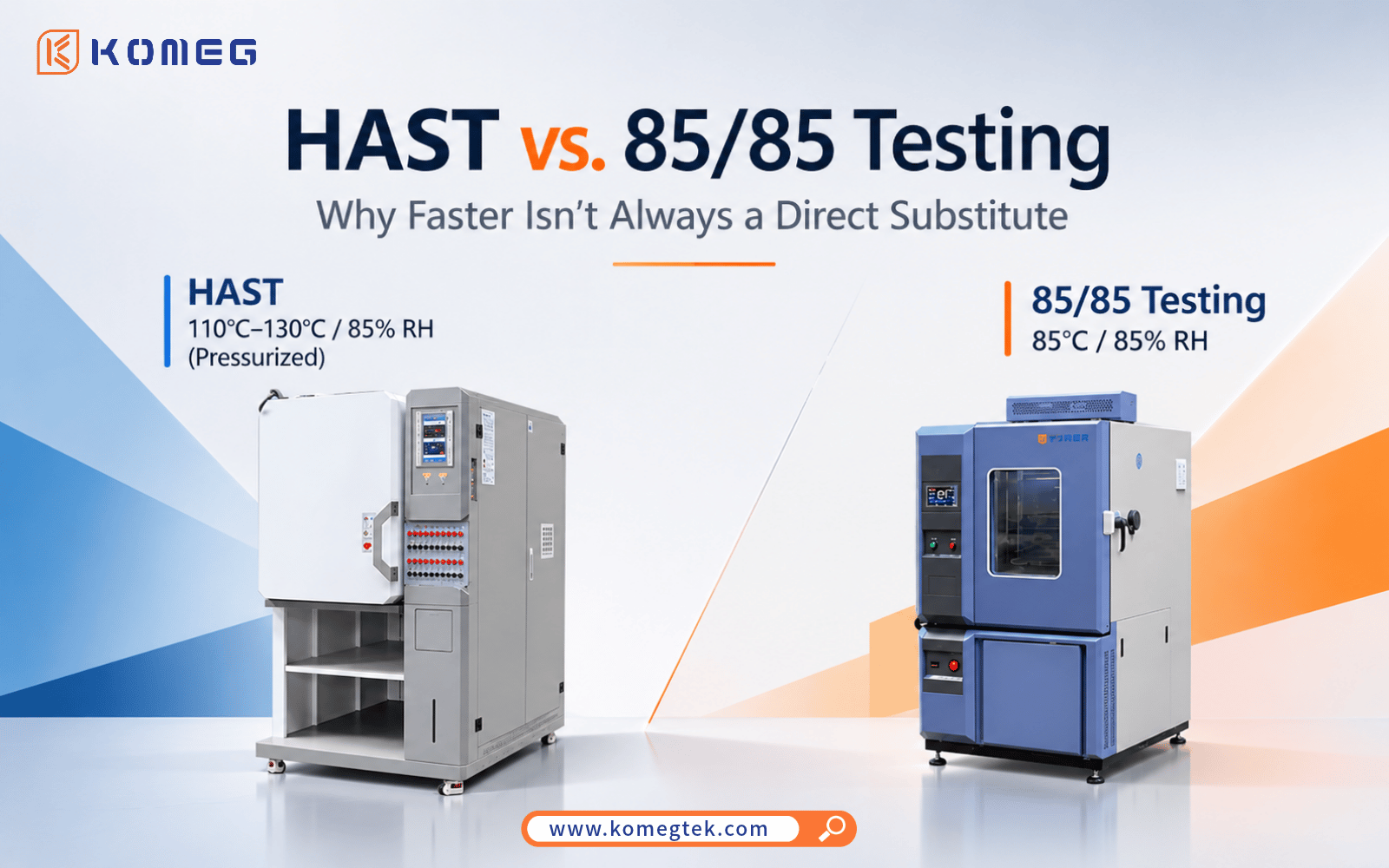
To evaluate moisture resistance, manufacturers commonly use two types of accelerated humidity testing: 85°C/85% RH testing and Highly Accelerated Stress Testing (HAST).
Both methods expose products to elevated temperature and humidity, but they apply different environmental stresses and are designed to address different reliability evaluation needs.
A common question among reliability engineers is whether a 96-hour HAST test can replace a 1,000-hour 85/85 test.
The answer is not always.
Although HAST can significantly accelerate certain moisture-related degradation mechanisms, test results cannot automatically be treated as equivalent to those from conventional humidity testing. Product structure, material properties, expected failure mechanisms, and qualification requirements must all be considered.
This guide explains the differences between HAST and 85/85 testing, their applications across different product categories, and how to select the appropriate humidity reliability test.
1. Understanding the Technical Differences Between HAST and 85/85 Testing
Before selecting a test method, it is important to understand how each test applies environmental stress and what types of reliability risks it is intended to evaluate.
85/85 Testing
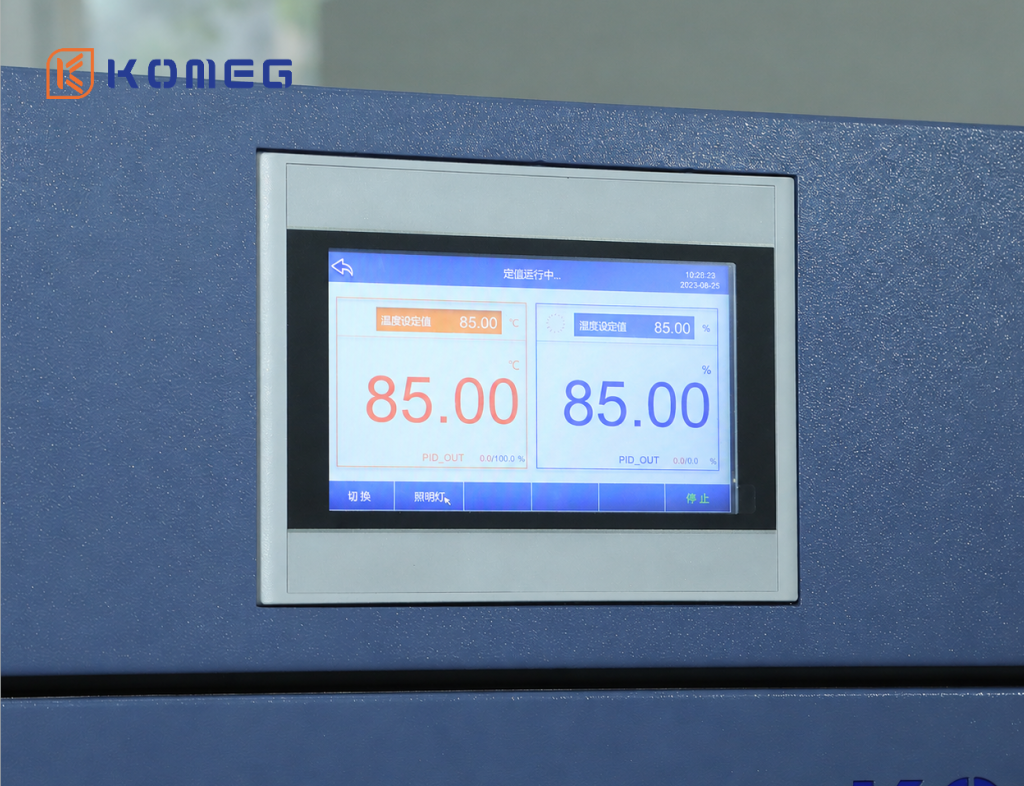
The 85/85 test exposes products to a controlled environment of 85°C and 85% relative humidity.
It is commonly used to evaluate the effects of prolonged moisture exposure on electronic components, PCBs, coatings, polymers, and other materials.
During extended exposure, moisture can gradually penetrate materials and interfaces. Depending on the product structure and test conditions, this may contribute to:
Moisture absorption and material swelling
Reduction in insulation resistance
Corrosion of conductive materials
Degradation of protective coatings
Changes in material properties and dimensional stability
The test is particularly useful when evaluating how products respond to sustained humid conditions.
A test duration of 1,000 hours is frequently encountered in industry specifications, although the actual duration must follow the applicable standard or product qualification requirement.
Relevant standards include JESD22-A101 for temperature-humidity-bias life testing of semiconductor devices and IEC 60068-2-67 for accelerated steady-state damp-heat testing of components. These standards have different scopes and should not be treated as interchangeable test procedures.
HAST Testing
Highly Accelerated Stress Testing (HAST) uses elevated temperature, high humidity, and increased pressure to accelerate moisture-related degradation.
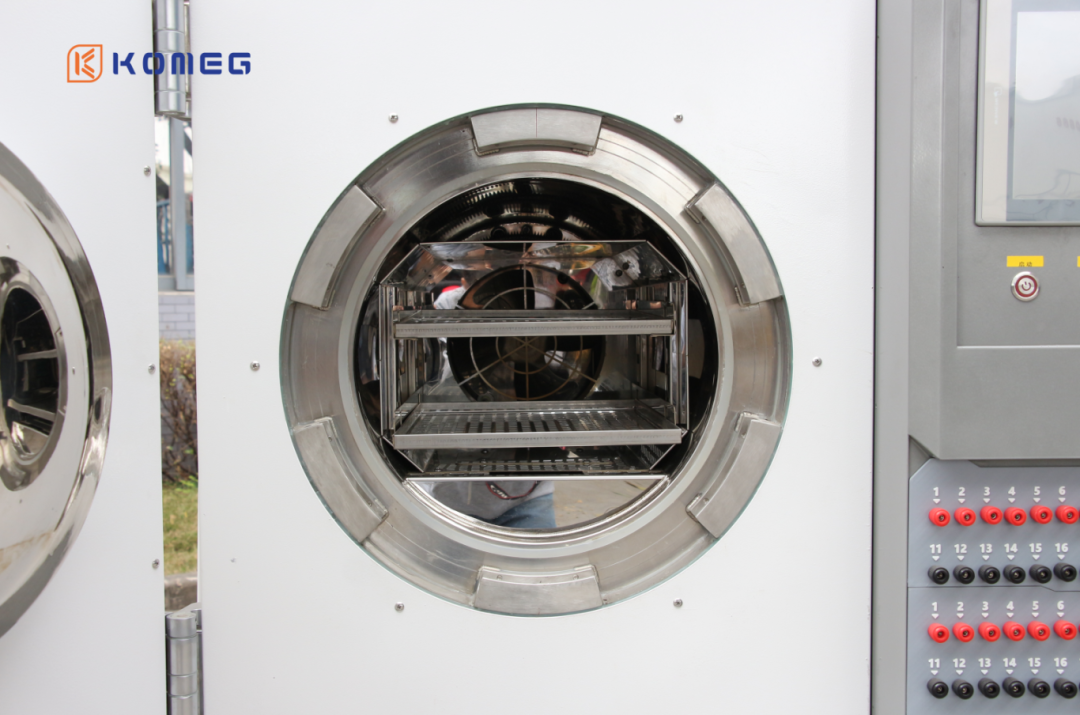
Compared with conventional 85/85 exposure, HAST applies more aggressive environmental conditions. This can accelerate moisture penetration through encapsulation materials and interfaces, making it particularly useful for evaluating the moisture resistance of non-hermetic semiconductor packages.
Typical HAST test conditions may include:
110°C / 85% RH for 264 hours
130°C / 85% RH for 96 hours
Actual conditions depend on the applicable test specification and product requirements.
HAST testing can help identify potential reliability risks such as moisture-induced corrosion, package delamination, and degradation of internal interfaces.
Two commonly referenced methods are:
JESD22-A110: Highly Accelerated Temperature and Humidity Stress Test (HAST), generally associated with biased testing.
JESD22-A118: Unbiased Highly Accelerated Temperature and Humidity Stress Test (uHAST).
The choice between biased and unbiased testing depends on whether electrical bias is required by the qualification plan.
2. Which Humidity Test Is Suitable for Different Products?
The most appropriate humidity test depends on the product’s construction, materials, operating environment, and potential failure mechanisms.
A test method suitable for a semiconductor package may not be the best choice for a PCB assembly or polymer coating.
PCB and Electronic Assemblies
Printed circuit boards and electronic assemblies are exposed to moisture-related risks throughout their service life.
Moisture can enter through substrate materials, protective coatings, component interfaces, and other exposed surfaces.
Potential degradation mechanisms include:
Reduced insulation resistance
Electrochemical migration under suitable electrical and environmental conditions
Corrosion of conductive paths
Moisture absorption by PCB substrates
Degradation of protective coatings
For these products, 85/85 testing is often considered when the objective is to evaluate resistance to sustained humid exposure.
The test can help assess how moisture affects electrical insulation and material stability over an extended period.
However, if the objective is to investigate accelerated moisture-related reliability risks, other test methods may also be appropriate. The selection should account for electrical bias, contamination, material construction, and the applicable qualification requirements.
Semiconductor Packages and ICs
Semiconductor packages present a different set of moisture-related challenges.
Moisture can penetrate encapsulation materials and travel along interfaces between different package components. Under elevated temperature and humidity, this can contribute to internal corrosion, interfacial degradation, and delamination.
In some cases, absorbed moisture may also contribute to package cracking during subsequent thermal processes, depending on the package design and manufacturing history.
HAST is particularly relevant for evaluating moisture resistance in non-hermetic semiconductor packages.
It accelerates moisture-related stress and can help reveal weaknesses in encapsulation materials, package interfaces, and internal structures within a shorter testing period.
For semiconductor manufacturers, the test conditions should be selected according to package construction, material limitations, and applicable JEDEC requirements.
Coatings, Adhesives, and Polymer Materials
Polymer-based materials are widely used in electronic products for insulation, protection, bonding, and structural support.
Their response to moisture and temperature can vary significantly depending on chemical composition, curing conditions, material thickness, and interface design.
Extended humidity exposure may lead to:
Water absorption and swelling
Adhesion degradation
Changes in mechanical properties
Dimensional instability
Reduced protective performance
For these materials, selecting a test temperature requires particular attention to material characteristics.
A higher test temperature does not always provide a more representative evaluation. If the temperature changes the material’s physical state or activates a different degradation mechanism, the resulting data may not reflect actual service conditions.
Automotive and Industrial Electronics
Automotive and industrial electronic products often operate under demanding environmental conditions.
They may experience prolonged humidity exposure, temperature fluctuations, electrical loading, and other environmental stresses during their service life.
Reliability evaluation may therefore involve several complementary test methods.
For example, 85/85 testing may be relevant when evaluating sustained humidity resistance, while HAST may be considered for accelerated moisture-related assessment of suitable semiconductor packages.
The final test plan should be based on the product’s intended application, customer specifications, and relevant industry qualification standards.
3. Why HAST Cannot Always Replace 85/85 Testing
One of the most important considerations when comparing HAST and 85/85 testing is that accelerated testing does not automatically produce equivalent reliability evidence.
There are several reasons why the two methods should not be treated as direct substitutes.
Temperature and Material Limitations
The glass transition temperature (Tg) is an important material property for many polymer-based materials, including epoxy molding compounds, adhesives, and PCB substrates.
When a polymer approaches or exceeds its Tg, its mechanical and physical properties can change significantly.
For example, the material may experience changes in stiffness, dimensional stability, moisture diffusion behavior, and interfacial adhesion.
If a HAST test temperature exceeds the effective Tg of a sensitive material, the test may trigger degradation or failure mechanisms that would not normally occur under conventional 85/85 conditions.
This does not mean that exceeding Tg always produces an invalid test result. However, it does mean that material properties must be considered when establishing test conditions.
A test that is too aggressive for the product structure may produce non-representative failures and make the results difficult to correlate with actual operating conditions.
Different Moisture Diffusion and Failure Behavior
Moisture diffusion is influenced by temperature, material composition, pressure, and the physical structure of the tested product.
Different materials absorb and transport moisture at different rates.
For example, moisture diffusion through an encapsulation compound may behave differently from moisture absorption in a PCB substrate or protective coating.
Increasing temperature and pressure can accelerate certain moisture-related processes, but the acceleration rate is not necessarily the same for every material or failure mechanism.
This is why a universal time conversion between HAST and 85/85 testing should not be assumed.
A 96-hour HAST result does not automatically demonstrate the same reliability performance as a 1,000-hour 85/85 result.
Any correlation between the two methods must be supported by appropriate material data, failure analysis, and product-specific validation.
Qualification and Compliance Requirements
Test selection must also consider the applicable qualification standard.
If a customer specification or certification program explicitly requires 85°C/85% RH exposure, completing a HAST test alone may not satisfy that requirement.
Similarly, if a semiconductor qualification plan specifies HAST or uHAST, a conventional 85/85 test should not be assumed to provide equivalent evidence.
The purpose of accelerated testing is to obtain meaningful reliability information within a practical testing period, not simply to reduce the number of test hours.
4. How to Choose the Right Humidity Test
Selecting between HAST and 85/85 testing should follow a systematic engineering evaluation.
The following factors can help determine the most appropriate test strategy.
Step 1: Identify the Product Structure
Start by understanding what is being tested.
Is it a PCB, an assembled electronic module, a polymer coating, an adhesive, or a non-hermetic semiconductor package?
Different product structures have different moisture penetration paths and potential failure mechanisms.
Step 2: Identify the Target Failure Mechanism
Define what the test is expected to reveal.
For example:
Long-term moisture absorption
Insulation resistance degradation
Electrochemical migration
Corrosion
Package delamination
Moisture penetration through encapsulation materials
A clear failure-analysis objective makes it easier to select suitable environmental conditions.
Step 3: Evaluate Material Limitations
Review the thermal and moisture-related properties of the materials used in the product.
Important considerations include:
Glass transition temperature (Tg)
Moisture absorption characteristics
Material compatibility
Package construction
Interfacial bonding properties
These factors help determine whether a proposed HAST temperature and humidity condition is appropriate.
Step 4: Verify the Applicable Standard
Check the customer’s requirements, product specifications, and relevant qualification standards.
Depending on the product and test objective, references may include:
JESD22-A101
JESD22-A110
JESD22-A118
IEC 60068-2-67
Always verify the applicable revision and test procedure before establishing the final test conditions.
Step 5: Define the Validation Strategy
Based on the previous evaluations, select the appropriate method.
For long-term steady-state humidity evaluation, 85/85 testing may be suitable.
For accelerated moisture stress evaluation of non-hermetic semiconductor packages, HAST or uHAST may be more appropriate.
For complex products or materials with different moisture-related failure mechanisms, a combination of tests may provide more comprehensive reliability evidence.
The objective is to choose test conditions that are both technically appropriate and representative of the reliability risks being investigated.
5. Selecting the Right Environmental Test Chamber
Once the test method has been defined, selecting suitable equipment becomes the next important step.
HAST chambers and conventional temperature and humidity chambers are designed for different environmental testing requirements. Their technical configurations should therefore be evaluated separately.
Key Considerations for HAST Chambers
A HAST chamber must provide controlled high-temperature, high-humidity, and pressurized test conditions.
Important equipment considerations include:
Temperature and Humidity Control
The chamber should maintain the temperature and humidity conditions required by the selected test procedure, including during extended operation.
Pressure Control
Stable pressure control is essential for maintaining the intended test environment. The pressure measurement basis, operating range, and control performance should be verified against the target specification.
Pressure Vessel and Sealing
The pressure vessel, sealing structure, and internal materials must be suitable for repeated operation under high-temperature and high-pressure conditions.
Electrical Bias Capability
Some semiconductor reliability tests require electrical bias during environmental exposure. In these cases, the chamber configuration should support the required sample connections and electrical test arrangements.
Safety and Protection
Pressure protection, door interlocks, alarms, and other safety functions are important considerations when evaluating HAST equipment.
For laboratories conducting accelerated humidity reliability testing, the KOMEG HAST Chamber provides a dedicated equipment solution.
The KOMEG HAST-35 features a SUS316 stainless steel pressure vessel, a temperature range of 105°C to 135°C, a standard 100% RH mode, and an adjustable humidity mode from 65% to 100% RH. Its maximum pressure is specified at 200 kPa gauge.
The final suitability of the equipment should be confirmed against the required test temperature, humidity, pressure, electrical configuration, and applicable standard.
Key Considerations for Temperature and Humidity Chambers
For 85/85 testing, the chamber must maintain stable temperature and humidity conditions over extended periods.
Important selection factors include:
Temperature and Humidity Uniformity
The environmental conditions should remain sufficiently consistent throughout the usable test space to support repeatable testing.
Long-Term Stability
The chamber should maintain the specified conditions during extended test cycles without excessive fluctuation.
Humidity Recovery
When the chamber door is opened, or samples are introduced, recovery performance can affect the test environment and overall procedure.
Air Circulation
Proper airflow distribution helps maintain consistent environmental conditions around the test samples.
Data Recording
Temperature and humidity records are important for monitoring test conditions and documenting compliance with the selected test procedure.
For laboratories that need controlled temperature and humidity environments, KOMEG offers Temperature and Humidity Test Chambers for different testing applications.
6. Frequently Asked Questions
Can HAST replace 85/85 testing?
Not automatically. HAST accelerates certain moisture-related degradation mechanisms through higher temperature, humidity, and pressure. However, it may not reproduce the same failure mechanisms or provide equivalent reliability evidence as 85/85 testing. The applicable standard, material properties, and product qualification requirements must determine whether substitution is acceptable.
What is the difference between HAST and THB?
Both methods evaluate moisture-related reliability, but their test conditions and purposes differ.
Temperature Humidity Bias (THB) testing commonly uses controlled temperature and humidity with electrical bias to evaluate the reliability of semiconductor devices under sustained environmental and electrical stress.
HAST uses elevated temperature, high humidity, and increased pressure to accelerate moisture-related degradation.
JESD22-A101 is commonly referenced for temperature-humidity-bias life testing, while JESD22-A110 covers HAST.
What are the typical HAST test conditions?
Common examples include 110°C / 85% RH for 264 hours and 130°C / 85% RH for 96 hours. The actual test condition depends on the applicable standard, product specification, and qualification requirements.
Why is material Tg important in HAST testing?
The glass transition temperature affects the physical and mechanical behavior of polymer-based materials. If the test temperature approaches or exceeds the effective Tg of a material, its properties and moisture-related behavior may change. This can potentially introduce failure mechanisms that are not representative of the product’s intended operating environment.
Which humidity test is better for semiconductor packages?
For suitable non-hermetic semiconductor packages, HAST is commonly used to accelerate moisture-related reliability evaluation. However, 85/85 testing may also be required depending on the qualification plan and test objective. The appropriate method depends on package construction, material characteristics, and the applicable JEDEC requirements.
HAST and 85/85 testing are both important methods for evaluating moisture-related reliability, but they serve different testing needs.
85/85 testing is useful for assessing product behavior under sustained humid conditions, while HAST provides accelerated moisture stress evaluation, particularly for non-hermetic semiconductor packages.
The key is to look beyond test duration.
Product structure, material properties, glass transition temperature, potential failure mechanisms, and qualification requirements all influence which test method is appropriate.
Choosing the right humidity test helps generate meaningful reliability data, avoid non-representative failures, and improve confidence in product performance.
For laboratories and manufacturers planning humidity reliability testing, selecting the appropriate test method and environmental test equipment is an important part of building a reliable validation process.