

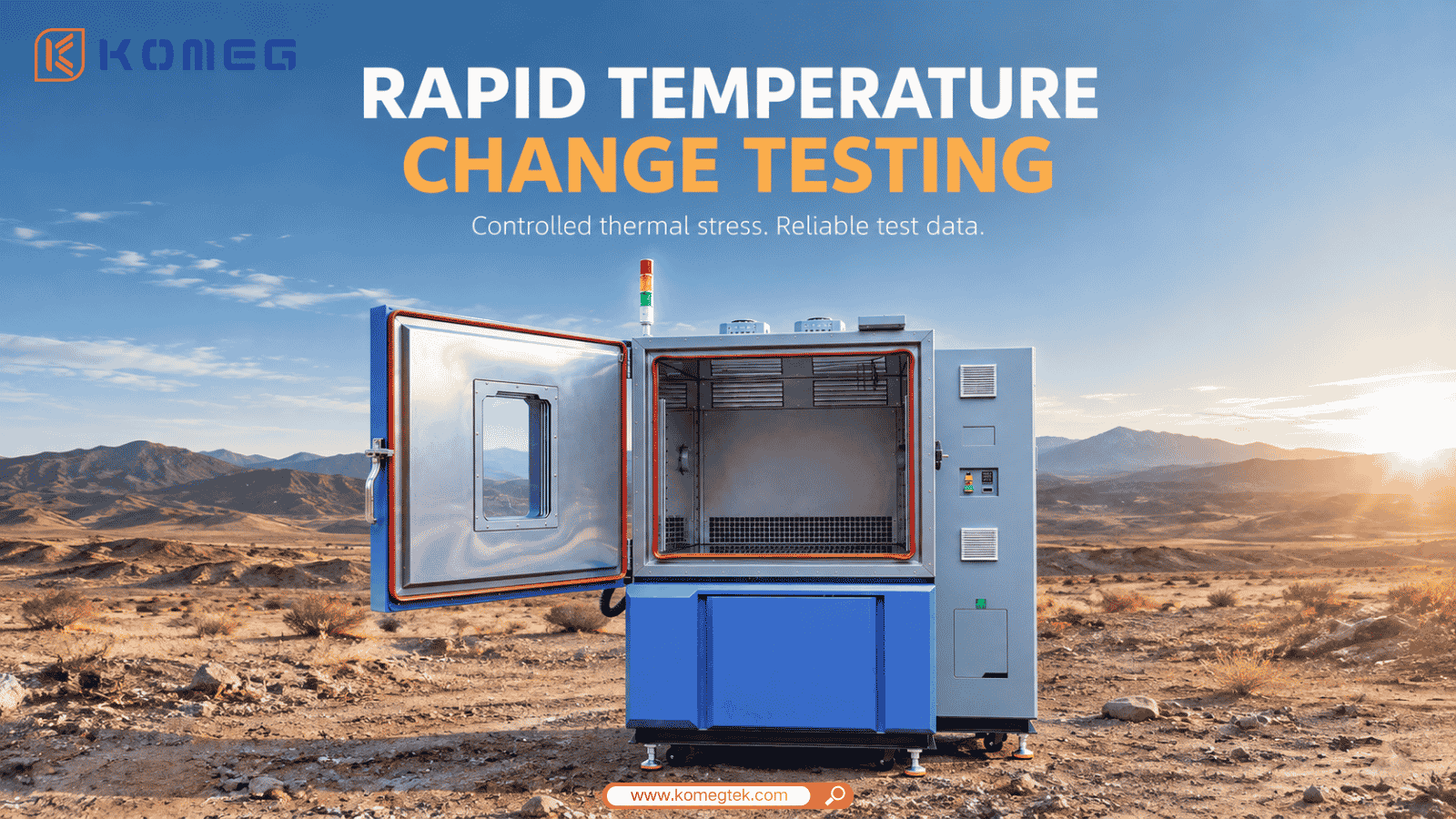
Environmental Stress Screening (ESS) is widely used to identify latent manufacturing defects in electronic products before they reach customers. However, an effective screening program is not simply a matter of exposing products to increasingly severe temperature changes.
The real challenge is to apply enough thermal stress to reveal relevant weaknesses without introducing failures that are unrelated to normal product risks or the intended screening objective.
For manufacturers developing an ESS program, the test profile matters as much as the test equipment. Temperature limits, ramp rates, dwell times, cycle counts, product configuration, and failure criteria should work together as a defined screening strategy.
What Is Environmental Stress Screening?
Environmental Stress Screening is a process used to expose products to controlled environmental stresses to help reveal latent defects introduced during design, manufacturing, assembly, or handling.
For electronic products, temperature cycling is one commonly used ESS method. Repeated heating and cooling can create differential expansion and contraction between materials, potentially exposing weaknesses in solder joints, electrical connections, component interfaces, and mechanical assemblies.
ESS is different from a conventional product qualification test. Qualification generally evaluates whether a design meets specified performance or durability requirements. ESS focuses on identifying defective units within a production population.
A useful distinction is that qualification evaluates product design capability, while ESS helps identify latent defects in manufactured products. The two activities can complement each other, but they should not automatically use identical test profiles or acceptance criteria.
Why a More Severe ESS Profile Is Not Always More Effective
A common mistake is to assume that increasing the temperature range, ramp rate, or number of cycles will always improve defect detection.
In practice, screening severity must be matched to the product and its failure risks.
An excessively aggressive profile may cause damage that would not be expected under the intended operating conditions. It may also consume useful product life, generate misleading failure data, or increase screening costs without improving defect detection.
Conversely, a profile that is too mild may fail to activate relevant weaknesses.
An effective ESS program therefore seeks an appropriate stress level rather than the maximum stress level that the equipment can deliver.
The objective is not to make every product fail. It is to identify defective units while preserving the integrity of products that meet the intended requirements.
Five Factors That Shape an Effective ESS Test Profile
1. Define the Failure Mechanisms You Want to Detect
Start by identifying the product’s likely failure mechanisms instead of choosing a temperature cycle based solely on equipment availability.
For example, electronic assemblies may contain solder joints, connectors, dissimilar materials, and mechanical interfaces that respond differently to repeated temperature changes.
The relevant screening conditions depend on the product’s construction, manufacturing process, previous failure data, and intended operating environment.
Failure analysis from returned products, pilot production, engineering validation, and manufacturing yield data can help identify where screening may provide the greatest value.
2. Set Temperature Limits Based on Product Requirements
The temperature extremes should be selected according to the screening objective, product limitations, component ratings, and applicable test requirements.
A chamber capable of reaching -70°C to +150°C does not mean every product should be screened across that entire range.
The selected limits must be appropriate for the unit under test and the intended process. Engineers should also consider whether temperature-sensitive materials, displays, seals, batteries, adhesives, or other components require specific handling or restrictions.
For the same reason, a screening profile should not be copied from another product simply because the products belong to the same industry.
3. Choose a Ramp Rate That Supports the Intended Stress
The ramp rate determines how quickly the chamber environment transitions between temperature setpoints. It is an important variable in thermal cycling, but it should be selected in the context of the complete test profile.
A higher ramp rate may increase thermal gradients and change the stress experienced by certain product structures. However, the resulting effect depends on product geometry, thermal mass, material properties, airflow, and mounting conditions.
Engineers should therefore verify the required ramp rate against the applicable test procedure and the product’s actual thermal response.
For example, a compact electronic assembly and a large industrial controller may respond differently to the same chamber temperature transition. Their screening profiles may need different settings even when their nominal operating temperature limits are similar.
4. Establish Appropriate Dwell Times and Cycle Counts
Ramp rate is only one part of a thermal cycle.
Dwell time determines how long the test remains at a temperature extreme, while cycle count determines how many times the product experiences the programmed sequence.
These variables influence total exposure and can affect whether the test reveals the failure mechanisms of interest.
Longer dwell times or additional cycles are not automatically beneficial. Their value should be assessed using engineering rationale, applicable requirements, and screening results.
A practical ESS profile should define the complete sequence, including temperature limits, heating and cooling transitions, dwell periods, number of cycles, and any required operational monitoring.
5. Define Failure Criteria Before Testing
A screening process is difficult to evaluate if the team has not agreed on what constitutes a failure.
Depending on the product, criteria may include functional interruptions, electrical parameter drift, communication errors, visual defects, abnormal current consumption, or failures detected during post-screening inspection.
Acceptance criteria should be established before testing and linked to the product’s functional requirements.
When failures occur, engineers should document the test conditions, affected units, failure symptoms, and subsequent analysis. This information can help determine whether the profile is detecting known manufacturing weaknesses or producing unexpected damage.
How to Improve ESS Consistency Across Production Batches
A successful ESS program must be repeatable, not merely severe.
Changes in product loading, fixture design, chamber airflow, sample placement, and test execution can influence the conditions experienced by the units under test.
For consistent results, manufacturers should document the chamber configuration, loading arrangement, programmed profile, cycle count, monitoring method, and relevant equipment settings.
They should also review failure trends across production batches. A sudden increase in screening failures may indicate a manufacturing process change, a component issue, inconsistent assembly, or a change in the screening conditions.
The purpose of this data is not just to pass or reject individual units. It is to help the quality team understand whether the screening process remains appropriate and whether recurring defects require corrective action.
ESS should support manufacturing quality improvement rather than serve as a substitute for process control or root-cause analysis.
Selecting a Rapid Temperature Cycling Chamber for ESS
The chamber should be selected only after the screening requirements have been defined.
Important considerations include the required temperature range, heating and cooling rates, working volume, product loading, temperature uniformity, control repeatability, and the ability to execute the complete programmed profile.
KOMEG KST Series Rapid-Rate Thermal Cycle Chambers are designed for rapid temperature cycling and environmental stress screening applications. The series includes multiple chamber capacities, programmable touchscreen control, and configuration options to suit different testing requirements.
For larger products or higher-volume screening programs, a walk-in configuration may be more suitable. KOMEG Walk-in Thermal Cycle Chamber offers a larger testing space, with customized configurations available for specific product dimensions and test requirements.
When comparing equipment, engineers should confirm the specified ramp rate and performance conditions for the selected model. Empty-chamber performance should not automatically be treated as equivalent to performance under a particular product load.
The final selection should reflect the actual screening profile, the size and thermal characteristics of the units under test, and the throughput required by the production process.
How Should ESS Results Be Evaluated?
An ESS program should be reviewed using both screening outcomes and the quality of the resulting data.
Useful indicators may include the number and type of failures detected, recurring failure patterns, production yield changes, repeat failures after corrective action, and evidence that the screening process remains consistent.
A low failure count does not automatically prove that the profile is ineffective. Likewise, a high failure count does not necessarily indicate a successful screen. Results must be interpreted in the context of the product, manufacturing process, test severity, and failure mechanisms being targeted.
When screening identifies a defect, root-cause analysis should determine whether the problem originated in design, components, assembly, handling, or another process. The findings can then guide corrective action and future profile reviews.
The test profile should be revised only when evidence supports a change, with appropriate validation to ensure that the revised conditions remain relevant and repeatable.
Frequently Asked Questions
Is ESS the same as temperature cycling for product qualification?
No. ESS is primarily intended to reveal latent defects in manufactured products. Qualification testing evaluates whether a product design meets specified requirements. Both may involve temperature cycling, but their objectives, test profiles, and acceptance criteria can differ.
Does a faster temperature ramp always improve defect detection?
No. The appropriate ramp rate depends on the product, the target failure mechanisms, and the applicable test requirements. A more aggressive rate is not automatically more effective and may introduce unintended stress.
How many temperature cycles should an ESS test include?
There is no universal cycle count suitable for every product. The number should be based on the screening objective, product characteristics, relevant requirements, engineering evidence, and observed results.
Can one ESS profile be used for different electronic products?
Not necessarily. Products with different materials, structures, thermal masses, and failure risks may respond differently to the same profile. A shared profile should be supported by engineering evidence rather than assumed to be suitable for all products.
What should manufacturers record during ESS?
Records should include the programmed temperature profile, ramp rates, dwell times, cycle count, product loading, chamber configuration, failures observed, and relevant functional or inspection results. These records support repeatability, failure analysis, and ongoing process improvement.
An effective Environmental Stress Screening program is built around a clear failure-detection objective, not simply the most aggressive temperature profile available.
Temperature limits, ramp rates, dwell times, cycle counts, product loading, and failure criteria must be considered together. Consistent test execution and meaningful failure analysis are equally important for turning screening results into manufacturing improvements.
For manufacturers evaluating rapid temperature cycling equipment, the key question is not how severe a chamber can make a test. It is whether the selected system can reproduce the required profile consistently and support a screening process that is relevant to the product’s real failure risks.