

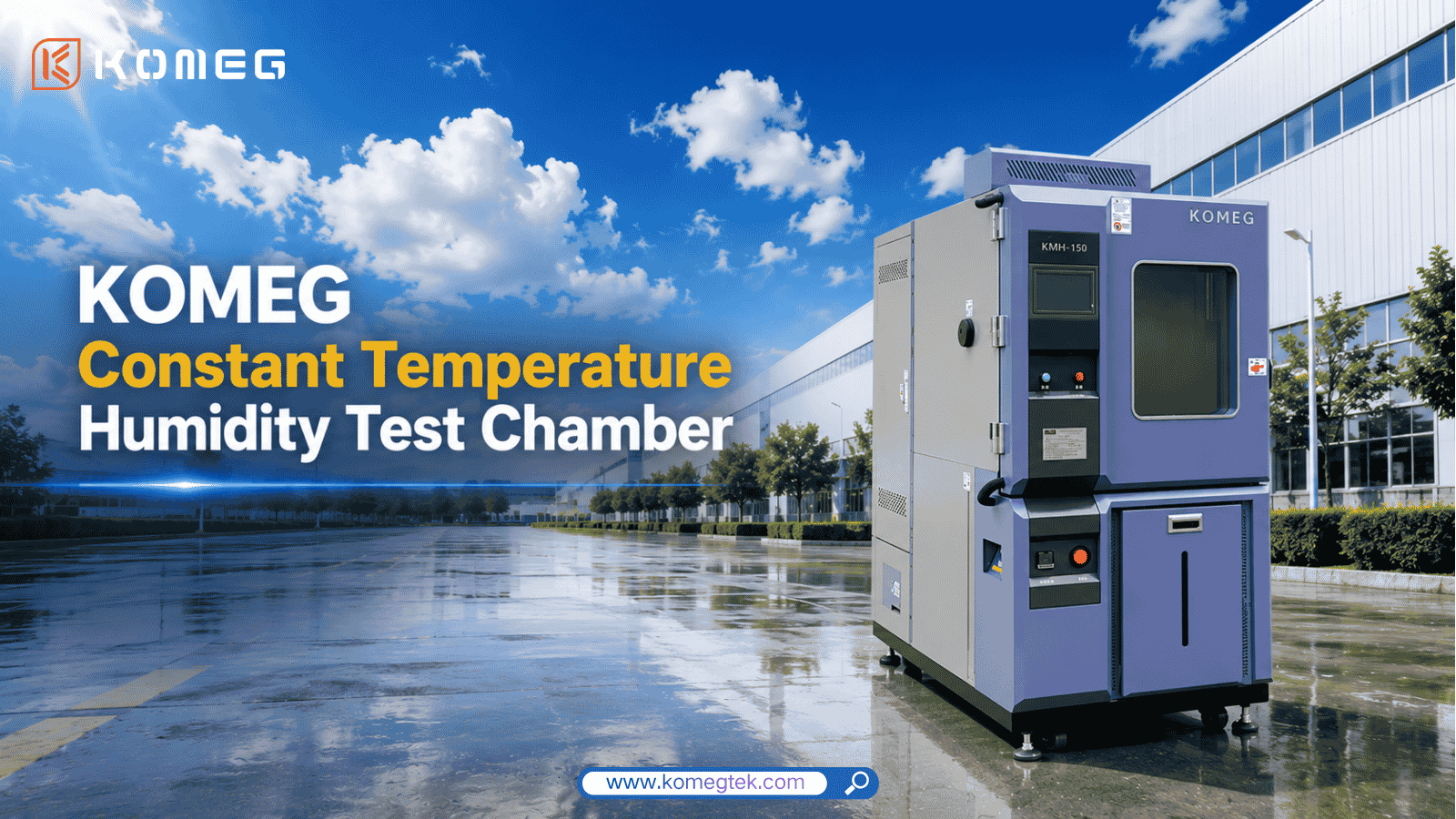
As product quality standards continue to rise across industries, manufacturers must ensure their products can withstand a wide range of environmental conditions before reaching the market. Temperature fluctuations, humidity exposure, and long-term storage conditions can all affect product performance, reliability, and service life.
A Constant Temperature Humidity Test Chamber is one of the most widely used environmental testing systems for evaluating how products perform under controlled climatic conditions. By accurately simulating different temperature and humidity environments, these chambers help manufacturers validate product quality, improve reliability, and comply with international testing standards.
Whether you’re developing automotive electronics, lithium batteries, semiconductors, pharmaceuticals, or consumer electronics, understanding how a constant temperature humidity chamber works is essential for selecting the right testing solution.
What Is a Constant Temperature Humidity Test Chamber?
A Constant Temperature Humidity Test Chamber, also known as a Temperature and Humidity Chamber, Climatic Chamber, or Environmental Test Chamber, is a laboratory testing system designed to simulate controlled environmental conditions by precisely regulating temperature and relative humidity.
Its primary purpose is to evaluate how products, materials, and components perform when exposed to different climatic conditions over a specified period.
Unlike ordinary laboratory equipment, these chambers can accurately reproduce environments ranging from freezing cold to high temperatures combined with controlled humidity. This enables manufacturers to identify potential product weaknesses, verify design reliability, and improve overall product durability before mass production.
Constant temperature humidity chambers are widely used during product development, quality control, material evaluation, and certification testing.
How Does a Constant Temperature Humidity Test Chamber Work?
A constant temperature humidity chamber operates by integrating several precisely controlled systems that work together to maintain stable environmental conditions.
Refrigeration System
The refrigeration system lowers the chamber temperature using compressors, condensers, evaporators, and expansion valves. High-performance refrigeration technology enables chambers to achieve temperatures as low as -70°C, depending on the model.
Heating System
Electric heaters quickly raise the chamber temperature and maintain stable heating throughout the testing cycle. Advanced PID control algorithms ensure smooth temperature regulation without excessive fluctuations.
Humidity Control System
Humidity is generated through steam or water-based humidification systems and reduced using refrigeration-based dehumidification. Together, these systems maintain precise relative humidity levels throughout the test.
Air Circulation System
Powerful circulation fans distribute conditioned air evenly throughout the chamber, ensuring excellent temperature and humidity uniformity regardless of sample location.
Intelligent Controller
Modern chambers use programmable touchscreen controllers to manage temperature profiles, humidity settings, alarms, data logging, and communication with external computers or factory management systems.
Main Components
The performance of a climatic chamber depends on the quality of its major components.
Compressor
Provides stable refrigeration performance and determines cooling efficiency.
Heat Exchanger
Transfers heat efficiently during both cooling and heating processes.
Humidifier
Produces stable moisture levels for accurate humidity control.
Air Circulation Fan
Ensures uniform environmental conditions throughout the working space.
Temperature & Humidity Sensors
Continuously monitor environmental conditions and provide feedback for precise control.
Touchscreen Controller
Allows users to program testing cycles, monitor performance, and store testing data.
Safety Protection System
Includes over-temperature protection, compressor overload protection, water shortage alarms, and automatic fault diagnosis to ensure safe operation.
Typical Temperature and Humidity Ranges
Different industries require different environmental conditions, but most commercial constant temperature humidity chambers offer the following specifications:
Temperature Range
-70°C to +150°C
-40°C to +150°C
-20°C to +150°C
Humidity Range
20% RH to 98% RH
10% RH to 98% RH (optional)
20% RH to 95% RH
High-end chambers can achieve temperature accuracy of ±0.3°C and humidity accuracy of ±2% RH, providing highly repeatable testing results.
Applications
Automotive Industry
Automotive manufacturers use temperature and humidity chambers to evaluate ECUs, sensors, connectors, displays, and electronic control systems under various environmental conditions.
Lithium Battery Testing
Battery cells, modules, and battery management systems require temperature and humidity testing to verify safety, performance, and long-term stability.
Semiconductor Industry
Integrated circuits, semiconductor packages, and electronic components are tested to evaluate thermal stability, moisture resistance, and manufacturing reliability.
Consumer Electronics
Products such as smartphones, laptops, wearable devices, and household appliances undergo climatic testing before entering mass production.
Aerospace & Defense
Aircraft electronics, communication systems, navigation equipment, and military components require environmental testing to ensure reliable operation under harsh conditions.
Medical Devices
Medical equipment must maintain consistent performance under different storage and operating environments while complying with regulatory requirements.
Pharmaceutical Industry
Constant temperature and humidity chambers are widely used for drug stability testing in accordance with ICH Q1A (R2) guidelines to evaluate product shelf life.
International Testing Standards
Environmental chambers are commonly used to perform testing according to internationally recognized standards.
IEC 60068
Environmental testing for electrical and electronic products.
MIL-STD-810H
Environmental engineering tests for military equipment.
ISO 16750
Environmental requirements for automotive electrical and electronic systems.
JEDEC Standards
Reliability testing for semiconductor devices.
AEC-Q100
Qualification testing for automotive integrated circuits.
ICH Q1A (R2)
Stability testing requirements for pharmaceutical products.
These standards help manufacturers demonstrate compliance while ensuring consistent product quality.
How to Choose the Right Constant Temperature Humidity Test Chamber
Selecting the right chamber involves much more than comparing prices.
Temperature Range
Choose a chamber capable of covering both current and future testing requirements.
Humidity Performance
Verify that the humidity control range and accuracy meet your testing standards.
Chamber Capacity
Select an internal volume suitable for your sample size while leaving sufficient space for proper airflow.
Uniformity and Stability
Excellent temperature and humidity uniformity ensure every sample experiences identical testing conditions.
Controller Functions
A modern controller should support programmable profiles, data logging, Ethernet communication, USB export, and remote monitoring.
Safety Features
Comprehensive protection systems improve operational safety and minimize equipment downtime.
Customization
If standard equipment cannot meet your requirements, choose a manufacturer capable of providing customized chamber sizes, cable ports, observation windows, shelving systems, and specialized testing fixtures.
Why Choose KOMEG?
With over three decades of experience in environmental simulation technology, KOMEG has become a trusted manufacturer of constant temperature humidity test chambers for customers worldwide.
KOMEG chambers are designed to deliver precise temperature and humidity control, outstanding uniformity, and long-term operational stability. Every system incorporates high-quality refrigeration components, intelligent touchscreen controllers, and comprehensive safety protection to ensure reliable testing performance.
Beyond standard models, KOMEG provides customized environmental testing solutions tailored to different industries, including automotive, semiconductor, battery, aerospace, electronics, pharmaceuticals, and research laboratories.
From compact benchtop chambers to large walk-in environmental rooms, KOMEG helps manufacturers improve product quality, accelerate reliability testing, and meet international testing standards with confidence.
Frequently Asked Questions
What is the difference between a climatic chamber and a temperature humidity chamber?
The two terms are often used interchangeably. Both refer to equipment that controls temperature and humidity for environmental testing.
What industries use constant temperature humidity chambers?
These chambers are widely used in automotive, electronics, batteries, semiconductors, aerospace, pharmaceuticals, medical devices, and research laboratories.
Can the chamber perform long-term testing?
Yes. Most chambers are designed for continuous operation over weeks or even months, making them suitable for aging tests and stability studies.
How often should the chamber be calibrated?
Annual calibration is generally recommended to maintain testing accuracy and comply with quality management systems such as ISO 9001 and ISO/IEC 17025.
A Constant Temperature Humidity Test Chamber is an essential tool for evaluating product reliability under controlled environmental conditions. By accurately simulating temperature and humidity variations, it enables manufacturers to detect potential issues early, verify product performance, and meet international quality standards.
When selecting a chamber, manufacturers should consider temperature range, humidity accuracy, chamber size, control system, safety features, and customization capabilities—not just the initial purchase price. A reliable environmental testing solution delivers long-term value by improving testing efficiency, reducing product failures, and supporting compliance with industry standards.
Whether you’re developing next-generation electronics, automotive components, lithium batteries, pharmaceuticals, or industrial equipment, investing in a high-quality temperature and humidity test chamber is a critical step toward delivering reliable products. With advanced engineering, flexible customization, and global support, KOMEG provides environmental testing solutions that help manufacturers achieve consistent, accurate, and dependable testing results.