

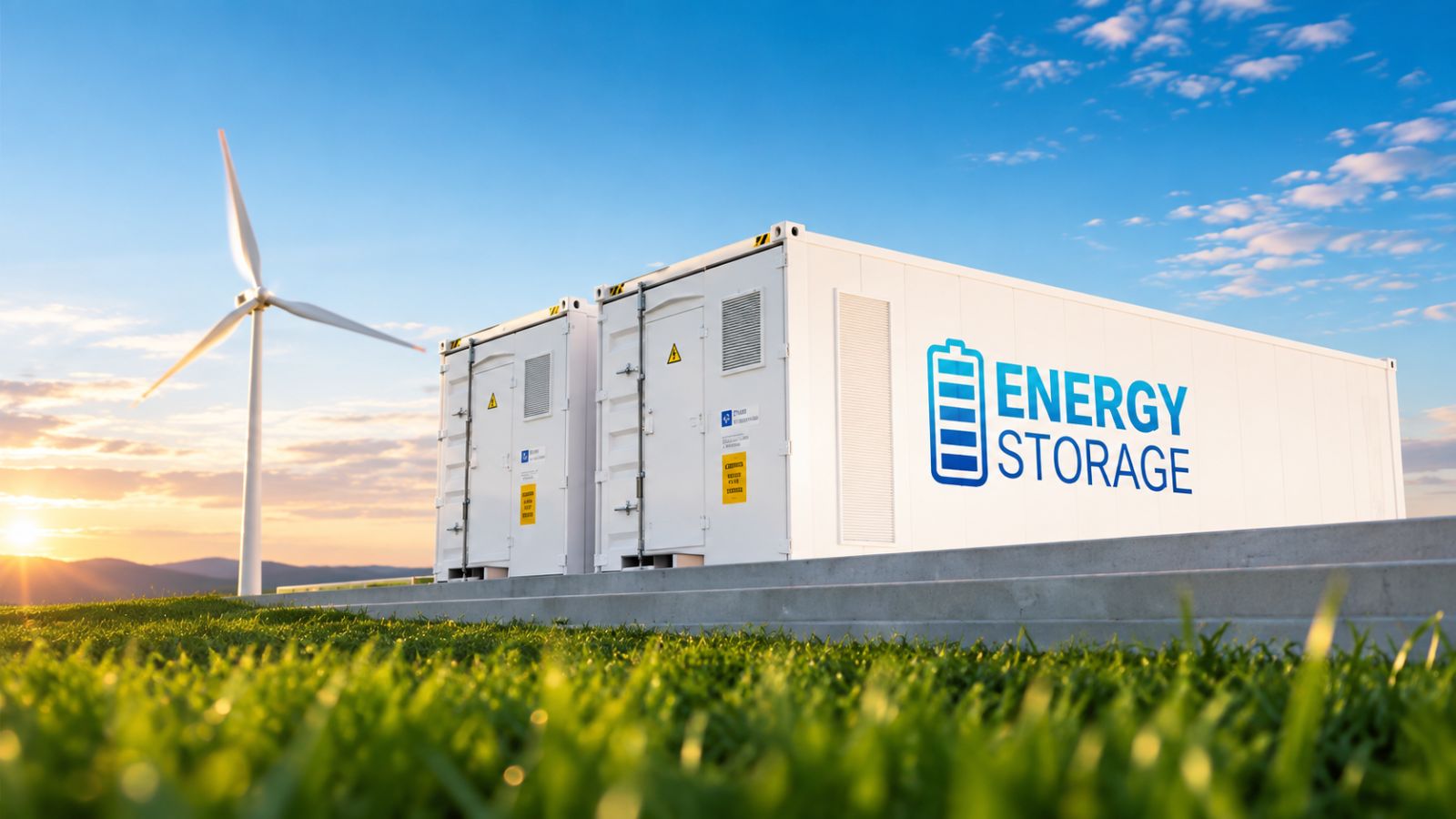
As energy storage systems become larger and more powerful, reliability is becoming just as important as energy capacity. Battery Energy Storage Systems (BESS) are increasingly used for renewable energy integration, grid stabilization, commercial energy storage, and industrial applications. These systems are expected to operate reliably for years while exposed to changing temperatures, humidity, thermal loads, and other environmental conditions.
A battery system may perform normally under controlled laboratory conditions but behave differently after months or years of environmental exposure. Temperature fluctuations, humidity, thermal cycling, condensation, and repeated changes in operating conditions can gradually affect battery cells, electrical connections, battery management systems, cooling components, enclosures, and other critical assemblies. This makes energy storage environmental testing an important part of ESS product development and reliability validation.
Why Does Environmental Testing Matter for Energy Storage Systems?
Temperature is one of the most important environmental factors affecting battery performance. Low temperatures can increase internal resistance and reduce available power, while elevated temperatures can accelerate aging and place additional stress on cells and electronic components. The situation becomes more complex when the system repeatedly moves between different temperature conditions.
Different materials inside an ESS also respond differently to thermal expansion and contraction. Repeated temperature changes can therefore create mechanical stress between battery components, electrical connections, housings, seals, and electronic assemblies.
Humidity introduces another potential source of degradation. Moisture can contribute to corrosion, insulation deterioration, condensation, and electrical leakage. For energy storage systems installed outdoors or in environments with significant temperature fluctuations, controlling and testing humidity conditions is particularly important.
The purpose of environmental testing is therefore not simply to expose a battery to high or low temperatures. It is to evaluate how the complete system responds to controlled environmental stress over time.
What Environmental Tests Are Used for Energy Storage Systems?
There is no single environmental test that represents every ESS application. The appropriate test profile depends on battery chemistry, system architecture, installation environment, operating conditions, and applicable standards.
Temperature and humidity testing is commonly used for battery modules, BMS components, connectors, electronic assemblies, and other ESS components. Typical tests include high- and low-temperature exposure, damp heat, temperature-humidity cycling, and extended environmental exposure. These tests can reveal problems associated with corrosion, moisture ingress, insulation performance, sensor behavior, and material degradation.
For component-level and module-level applications, KOMEG provides Temperature & Humidity Test Chambers designed to provide controlled temperature and humidity conditions for environmental reliability testing.
Thermal cycling takes the test further by repeatedly moving the DUT between defined temperature conditions. This repeated expansion and contraction can reveal weaknesses that may remain hidden during a simple temperature soak, including connection fatigue, seal degradation, material cracking, mechanical stress, and delamination.
Some applications also require rapid temperature change testing, where the DUT is exposed to controlled heating and cooling at defined ramp rates. This can help engineers evaluate battery modules, electronic controls, cooling components, and other assemblies under more aggressive thermal transitions. However, the fastest possible ramp rate is not necessarily the best test. The profile should represent the intended application or applicable reliability requirement. Controlled and repeatable thermal stress is more valuable than simply maximizing temperature change speed.
Should Energy Storage Testing Focus Only on the Battery?
No. A complete Battery Energy Storage System contains much more than battery cells.
Depending on the design, an ESS may include battery modules and packs, a Battery Management System, power conversion equipment, electrical connectors, cooling systems, sensors, wiring, busbars, control electronics, and protective enclosures. Each component can respond differently to environmental stress.
For example, battery cells may remain within their expected operating range while a connector, sensor, seal, or electronic component gradually deteriorates. Environmental reliability testing should therefore be considered at different levels, from individual components and battery modules to complete battery packs and larger ESS assemblies.
Why Is Chamber Design Important for ESS Testing?
Testing large energy storage systems creates an additional engineering challenge: the environmental chamber must be capable of handling the actual DUT.
An active battery system can generate significant heat. If the chamber’s refrigeration system cannot compensate for the heat load, the actual temperature around the DUT may differ from the programmed test condition. Airflow distribution is equally important because poor circulation can create temperature gradients inside a large chamber.
When selecting an ESS environmental test chamber, engineers should consider working dimensions, DUT heat load, temperature range, humidity range, temperature uniformity, airflow, cooling capacity, floor loading, cable ports, monitoring requirements, and safety configuration.
For large battery packs, cabinets, and energy storage assemblies, a conventional laboratory chamber may not provide sufficient space or thermal capacity. A customized Walk-In Environmental Chamber can provide greater flexibility by allowing the chamber to be designed around the DUT dimensions, loading method, heat load, airflow requirements, and environmental test profile.
What Makes a Good Energy Storage Test Chamber?
A suitable ESS test chamber should do more than reach a specified temperature. It needs to maintain stable and repeatable environmental conditions while accommodating the physical and thermal characteristics of the DUT.
Temperature performance should be selected according to the actual operating environment and applicable test requirements. A wider temperature range may provide greater flexibility, but unnecessary capability can increase equipment cost and energy consumption.
Humidity control should be evaluated together with temperature. Engineers should consider humidity stability, uniformity, recovery, condensation behavior, and the usable humidity range at different temperatures.
Heat-load capacity is especially important for battery testing. An active battery system can generate substantial heat, so the chamber needs sufficient refrigeration capacity to maintain the required environmental conditions during operation.
Chamber size and loading should also be considered carefully. The chamber needs enough space for the battery system, fixtures, cables, monitoring equipment, and required airflow. For large ESS equipment, floor loading and door dimensions can also become important design factors.
Finally, safety requirements should be considered during the engineering stage. Depending on the DUT and test objective, additional safety monitoring, exhaust, fire protection, gas detection, or other protective systems may be required.
How Can Environmental Testing Improve ESS Reliability?
The value of environmental testing is not simply determining whether a product passes or fails. More importantly, it helps engineers understand how an energy storage system behaves under controlled stress.
A properly designed testing program can help identify potential failure mechanisms, evaluate component durability, compare materials and designs, validate thermal management strategies, improve enclosure and sealing performance, and detect weaknesses before field deployment.
For BESS manufacturers, environmental testing can therefore become part of the product development process rather than a final inspection step.
KOMEG Environmental Test Solutions for Energy Storage
KOMEG develops environmental test equipment for battery and energy storage applications, including temperature and humidity testing, thermal cycling, rapid temperature change testing, and customized large-scale environmental testing.
For battery components and modules, temperature and humidity chambers provide controlled conditions for reliability evaluation. For larger battery packs and ESS assemblies, KOMEG can develop customized environmental chambers based on DUT dimensions, heat load, airflow requirements, floor loading, cable connections, and specific test profiles.
KOMEG broader environmental testing portfolio also includes battery test chambers, rapid-rate thermal cycle chambers, thermal shock chambers, HAST chambers, altitude test chambers, and other specialized systems. This allows energy storage manufacturers to develop different stages of environmental reliability testing around their product development requirements.
What Should Engineers Consider Before Starting ESS Environmental Testing?
Before selecting equipment, engineers should define the complete testing requirement. Important factors include the type of ESS being tested, DUT dimensions and weight, temperature and humidity conditions, whether the system will be powered during testing, heat generation, required temperature ramp rate, test duration, applicable standards, safety requirements, and monitoring needs.
This preparation can prevent a common problem in environmental testing: selecting a chamber that technically meets the temperature specification but cannot handle the actual DUT or operating conditions.
FAQ: Energy Storage Environmental Testing
What is energy storage environmental testing?
Energy storage environmental testing evaluates how batteries, modules, packs, BMS components, and complete ESS equipment perform under controlled temperature, humidity, and thermal cycling conditions.
Why is temperature testing important for BESS?
Temperature affects battery performance, aging, electrical components, cooling systems, and material interfaces. Environmental testing helps identify potential reliability problems before field deployment.
What is the difference between battery testing and ESS testing?
Battery testing may focus on cells, modules, or packs, while ESS testing can evaluate a larger system that includes batteries, BMS, power electronics, cooling systems, electrical connections, and enclosures.
Can an environmental chamber test a complete energy storage system?
Yes, depending on the size, weight, heat generation, and safety requirements of the DUT. Large ESS equipment may require a customized or walk-in environmental chamber rather than a conventional laboratory chamber.
Why is thermal cycling important for energy storage?
Repeated temperature changes can create mechanical and material stress inside an ESS. Thermal cycling helps identify weaknesses that may not appear during a single high- or low-temperature exposure.
As energy storage systems move toward higher capacity, greater deployment density, and longer service life, environmental reliability is becoming increasingly important.
A reliable ESS is not defined only by how much energy it can store. It must also maintain stable performance when exposed to temperature changes, humidity, thermal cycling, operating heat, and other environmental stresses.
Environmental testing gives engineers a controlled way to reproduce these conditions, identify potential failure mechanisms, and improve system reliability before deployment.
For energy storage manufacturers, the goal should not simply be to make a battery survive an environmental test. The goal is to understand how the complete energy storage system behaves under realistic environmental stress and use that information to build a more reliable product.
KOMEG provides standard and customized environmental testing solutions for battery, BESS, and energy storage applications.