

When selecting an environmental test chamber, buyers often focus primarily on technical specifications such as temperature range, humidity range, temperature uniformity, stability, chamber size, and cooling performance. However, one critical factor is frequently overlooked: installation requirements.
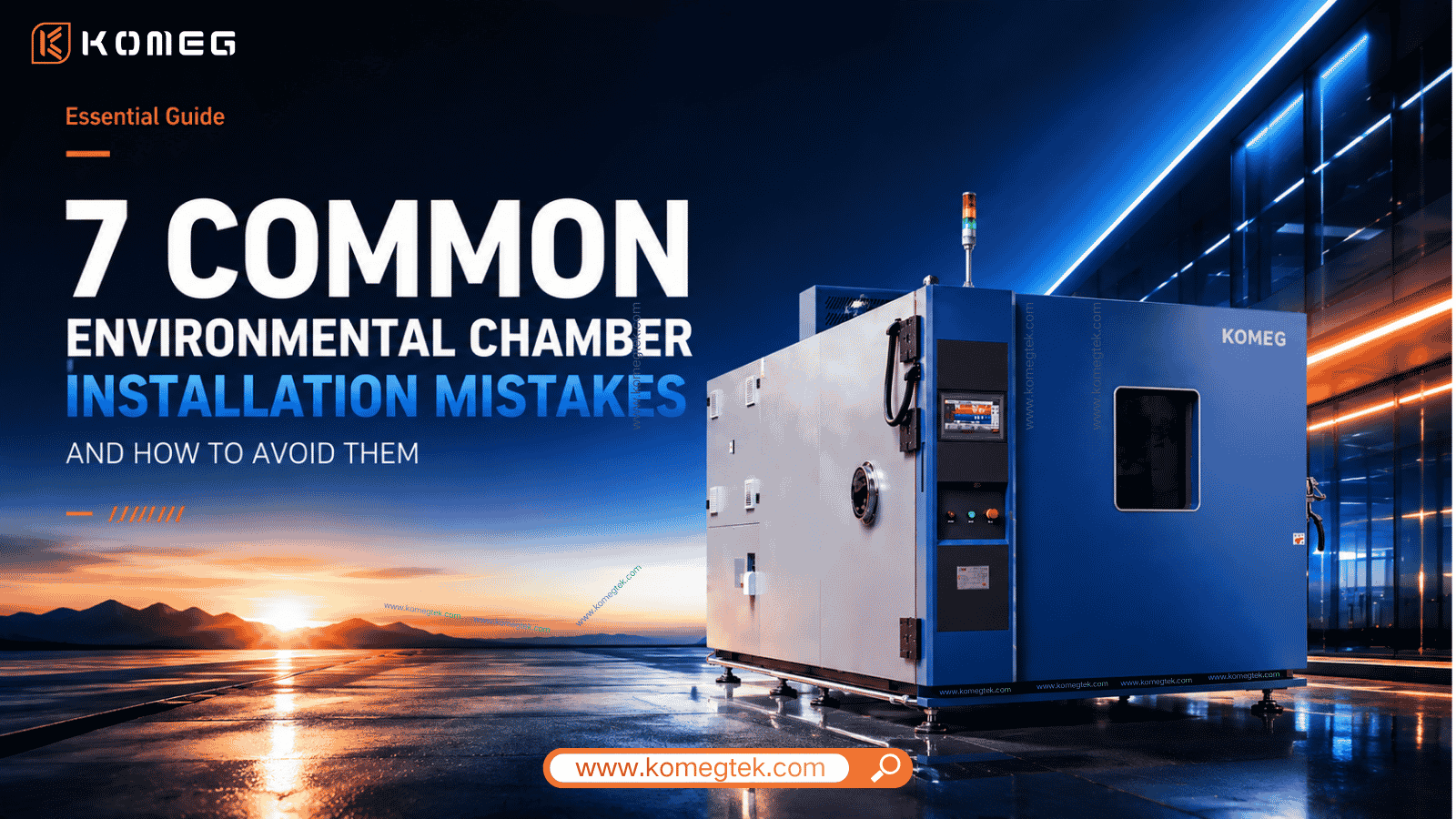
Many laboratories and manufacturers only realize problems after the chamber arrives on-site. They discover insufficient space, incompatible power supply, poor ventilation, inadequate drainage, or limited transportation access. These issues can delay installation, increase costs, and, in severe cases, even require changing the equipment model entirely.
To ensure stable operation, long-term reliability, and optimal testing performance, it is essential to evaluate all installation conditions before purchasing an environmental chamber.
This guide explains the key installation considerations for environmental test chambers and provides practical recommendations to help laboratories avoid costly mistakes.
Why Environmental Chamber Installation Planning Matters
Environmental chambers are precision testing systems designed for long-term operation under demanding thermal and humidity conditions. An improper installation environment may directly affect temperature control accuracy, cooling efficiency, compressor lifespan, energy consumption, humidity stability, equipment safety, maintenance accessibility, and overall chamber reliability.
Careful installation planning helps prevent unexpected operational issues and ensures the chamber performs according to specifications.
1. Choosing the Right Installation Location
Selecting the proper installation location is one of the most important factors affecting environmental chamber performance and service life.
Install the Chamber Indoors
Environmental chambers should always be installed in enclosed indoor environments. Avoid locations exposed to direct sunlight, rain or moisture, excessive dust, outdoor airflow fluctuations, or high-humidity environments. External environmental changes can negatively affect chamber stability and cooling performance.
Ensure a Flat and Stable Floor
The installation floor must meet the chamber’s weight-bearing requirements, flatness requirements, and levelness tolerances. Uneven floors may cause mechanical vibration, compressor instability, structural stress, and door sealing problems. Large walk-in chambers and heavy thermal shock systems especially require reinforced flooring.
Keep Away from Heat Sources
Environmental chambers should not be installed near industrial ovens, furnaces, boilers, steam pipes, or high-power machinery. Nearby heat sources increase ambient temperature and place additional stress on the refrigeration system.
Avoid Electromagnetic Interference and Vibration
Strong electromagnetic fields and vibration sources may interfere with chamber control systems and sensors. Avoid installing near high-voltage equipment, large motors, heavy vibration machinery, or magnetic field sources. This helps maintain stable controller operation and accurate sensor performance.
Avoid Corrosive and Hazardous Environments
Environmental chambers should never be installed near corrosive gases, acidic chemicals, flammable materials, or explosive substances. These conditions may damage internal components and create serious safety risks.
2. Reserve Adequate Space Around the Chamber
Many users assume that if the chamber physically fits into the room, installation is acceptable. In reality, proper clearance is essential for ventilation, maintenance, and long-term operation.
Front Clearance Requirements
The chamber door must be able to open fully without obstruction. Adequate front space is required for loading and unloading samples, operator access, maintenance activities, and emergency operations. Insufficient front clearance may reduce operational efficiency and create safety hazards.
Rear and Side Ventilation Space
Air-cooled environmental chambers require sufficient ventilation space around the condenser area. Without proper airflow, cooling efficiency decreases, temperature pull-down slows, compressor load increases, energy consumption rises, and high-temperature protection alarms may occur. Manufacturers typically specify minimum ventilation distances for the rear and side areas.
Maintenance Access Space
Technicians require enough space to perform refrigeration servicing, electrical inspections, sensor calibration, and routine maintenance. Limited maintenance access increases service difficulty and downtime.
3. Verify Transportation and Access Routes Before Delivery
One of the most common installation problems occurs when the equipment cannot physically enter the laboratory. Before delivery, users should carefully evaluate the transportation route.
Check Overall Equipment Dimensions
Always confirm net chamber dimensions, shipping package dimensions, and lifting and handling space requirements. Packaging dimensions are often significantly larger than the equipment itself.
Evaluate Building Access
Carefully inspect laboratory entrance width and height, hallways, elevators, stairways, and turning corners. Even small dimensional restrictions may prevent successful equipment delivery.
Identify Obstacles
Potential obstacles include door thresholds, pillars, narrow corridors, ceiling restrictions, and raised flooring. Planning ahead helps avoid costly delays and equipment damage during transportation.
Plan the Installation Route in Advance
In some situations, temporary modifications may be required, such as removing door frames, relocating furniture, or adjusting access pathways. Proper logistics planning greatly reduces installation risks.
4. Ensure Proper Drainage Conditions
Environmental chambers generate condensation during operation, especially during humidity testing and low-temperature cycling. Poor drainage may lead to water accumulation, corrosion, refrigeration damage, laboratory flooding, and mold growth.
Connect to a Laboratory Drain Whenever Possible
The ideal solution is to connect directly to a nearby drainage system. Proper drainage reduces water overflow risk, odor problems, and maintenance workload.
Avoid Combining Multiple Drain Lines Improperly
Connecting multiple chamber drain lines into a single undersized drain pipe may create backflow, blockage, and overflow. Each chamber should ideally have an independent drainage capacity.
Use Sealed Containers If Floor Drains Are Unavailable
If permanent drainage is unavailable, sealed collection containers may be used temporarily. However, these containers must be cleaned regularly to prevent overflow.
5. Verify Environmental Conditions Around the Chamber
Environmental chamber performance specifications are typically based on standard ambient operating conditions. If actual installation conditions differ significantly, chamber performance may be affected.
Air-Cooled Environmental Chambers
Air-cooled chambers rely heavily on room ventilation and ambient temperature conditions. High ambient temperatures may cause slower cooling rates, inability to reach low temperatures, increased compressor workload, reduced compressor lifespan, and higher energy consumption. This problem becomes more severe when multiple chambers operate in the same room.
To address high ambient temperatures, always follow the manufacturer’s ventilation requirements. Laboratories with high ambient temperatures should consider installing air conditioning systems, forced exhaust ventilation, or industrial ventilation improvements. Poor airflow significantly reduces cooling efficiency, so environmental chambers should not be installed in sealed, unventilated spaces.
Water-Cooled Environmental Chambers
Water-cooled systems require stable cooling water conditions. Insufficient water flow or high cooling water temperatures may lead to reduced cooling performance, compressor overload, system instability, and refrigeration alarms.
For water-cooled systems, ensure that the cooling water supply meets the manufacturer’s requirements. If the water temperature is too high, cooling system upgrades such as chillers or cooling towers may be necessary. If the chamber is located far from the cooling tower, verify that water pressure and flow remain sufficient over long distances.
6. Power Supply Requirements
Power supply compatibility is one of the most critical installation conditions. An incorrect electrical configuration may cause startup failure, electrical damage, controller malfunction, compressor failure, and safety hazards.
Confirm Electrical Specifications
Before installation, verify rated voltage, frequency, current capacity, wire size, circuit breaker specifications, and phase configuration. All electrical wiring must comply with manufacturer recommendations.
Ensure Proper Grounding
Reliable grounding is essential for operator safety, electrical stability, anti-interference protection, and sensor accuracy. Improper grounding may cause unstable controller operation and electrical noise issues.
Evaluate Laboratory Power Capacity in Advance
Provide chamber power specifications to facility electricians before purchase. This helps avoid expensive on-site electrical modifications later.
Why Proper Installation Improves Chamber Reliability
Environmental test chambers are high-precision laboratory systems. The quality of the installation environment directly affects equipment lifespan, testing consistency, temperature stability, compressor durability, operational safety, and long-term maintenance costs. A properly planned installation helps ensure faster commissioning, stable testing performance, reduced downtime, and improved operational efficiency.
Successful environmental chamber installation requires much more than simply placing the equipment inside a laboratory. Proper planning for installation location, ventilation, transportation access, drainage, ambient conditions, and electrical systems is essential for achieving reliable long-term operation.
Before purchasing an environmental chamber, laboratories and manufacturers should carefully evaluate installation space, transportation routes, ventilation conditions, cooling requirements, drainage systems, and power supply compatibility. Thorough preparation reduces installation risks, prevents unexpected delays, and helps environmental chambers achieve optimal testing performance from day one.
For laboratories and manufacturers seeking reliable environmental test chambers with professional installation support, KOMEG provides comprehensive installation guidance, technical consultation, and customized solutions to help customers achieve stable, efficient, and reliable testing operations worldwide.