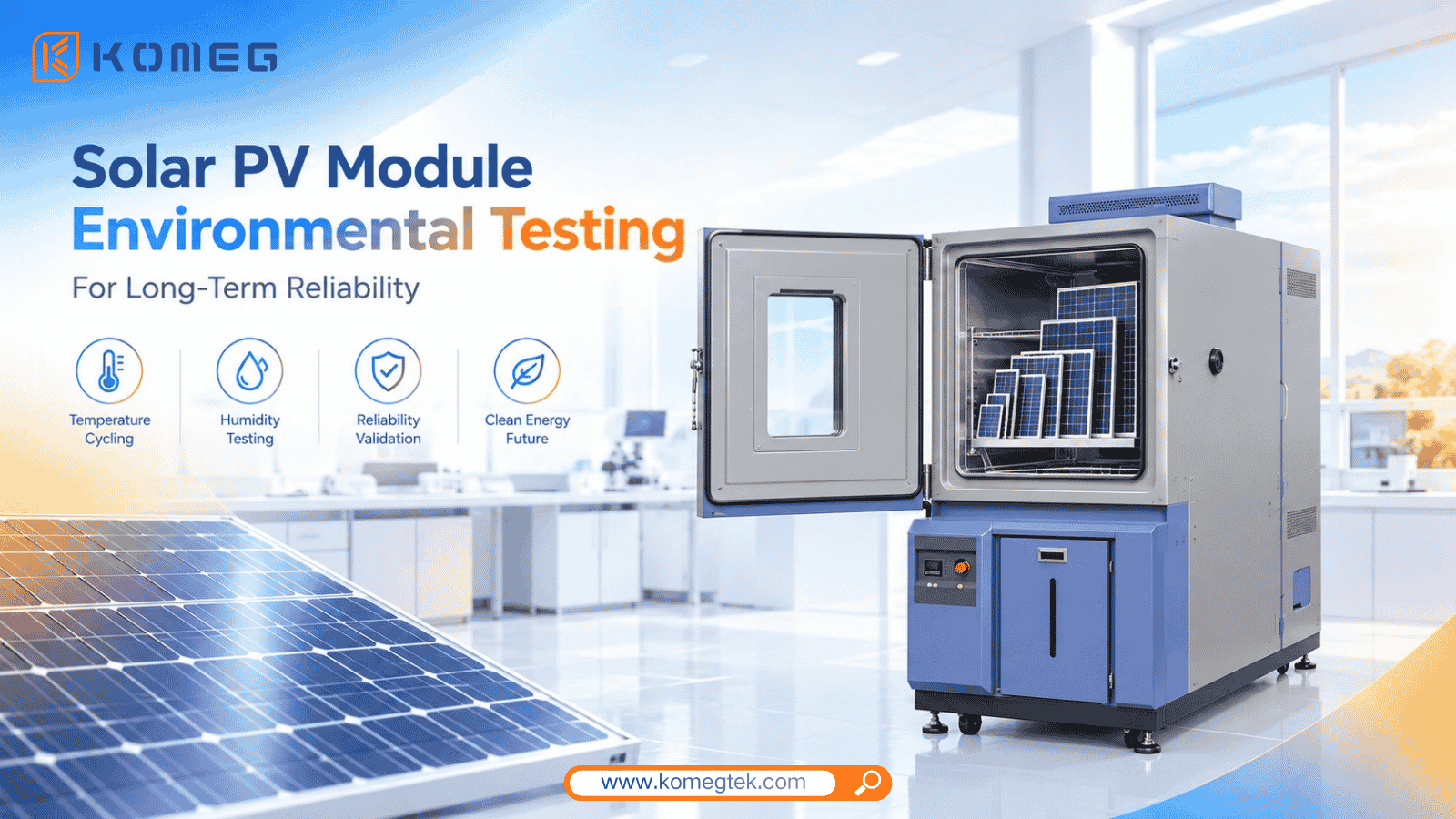
Solar PV Module Environmental Testing for Long-Term Reliability
Solar photovoltaic (PV) modules are designed to generate electricity for many years under changing outdoor conditions. During their service life, they may experience high daytime
Born for Quality 
us@komegtech.com
Liquid to Liquid Thermal Shock Chamber is mainly used for physical change tests of electronic chips, PCB, semiconductor ceramics and polymer materials.
Using the liquid to liquid thermal shock chamber to test the adaptability of the product in a rapidly changing temperature environment can help us assess the performance of the product. Based on the test results, we can better design products and make them more reliable.
The temperature range of this liquid to liquid thermal shock chamber is from 5°C to 95°C. During the test, the sample is directly immersed in the high and low temperature liquid medium, which exerts greater temperature stress on the sample than the air shock chamber. KOMEG’s refrigeration technology is in the leading position in the environmental chamber industry. The single-compressor refrigeration technology can achieve a maximum temperature shock range of -100°C to +150°C. If you have customized requirements such as temperature and size, welcome to contact us.
Model Number | TSTL-12 |
Inner Dimensions W×H×D(mm) | 470×300×300 |
Temperature Range | +5℃to+95℃ |
Temperature Fluctuation | ±0.5℃ |
Test Basket Transfer Time | ≤10S |
Temperature Shock Performance | High temperature exposure 95℃:30min Low temperature exposure 5℃:30min |
Noise | ≤65dB |
Cooling Method | Mechanical Compression Refrigeration |
GET A QUOTE
Latest News on KOMEG Products
Explore More Environmental Test Chamber News

Solar photovoltaic (PV) modules are designed to generate electricity for many years under changing outdoor conditions. During their service life, they may experience high daytime
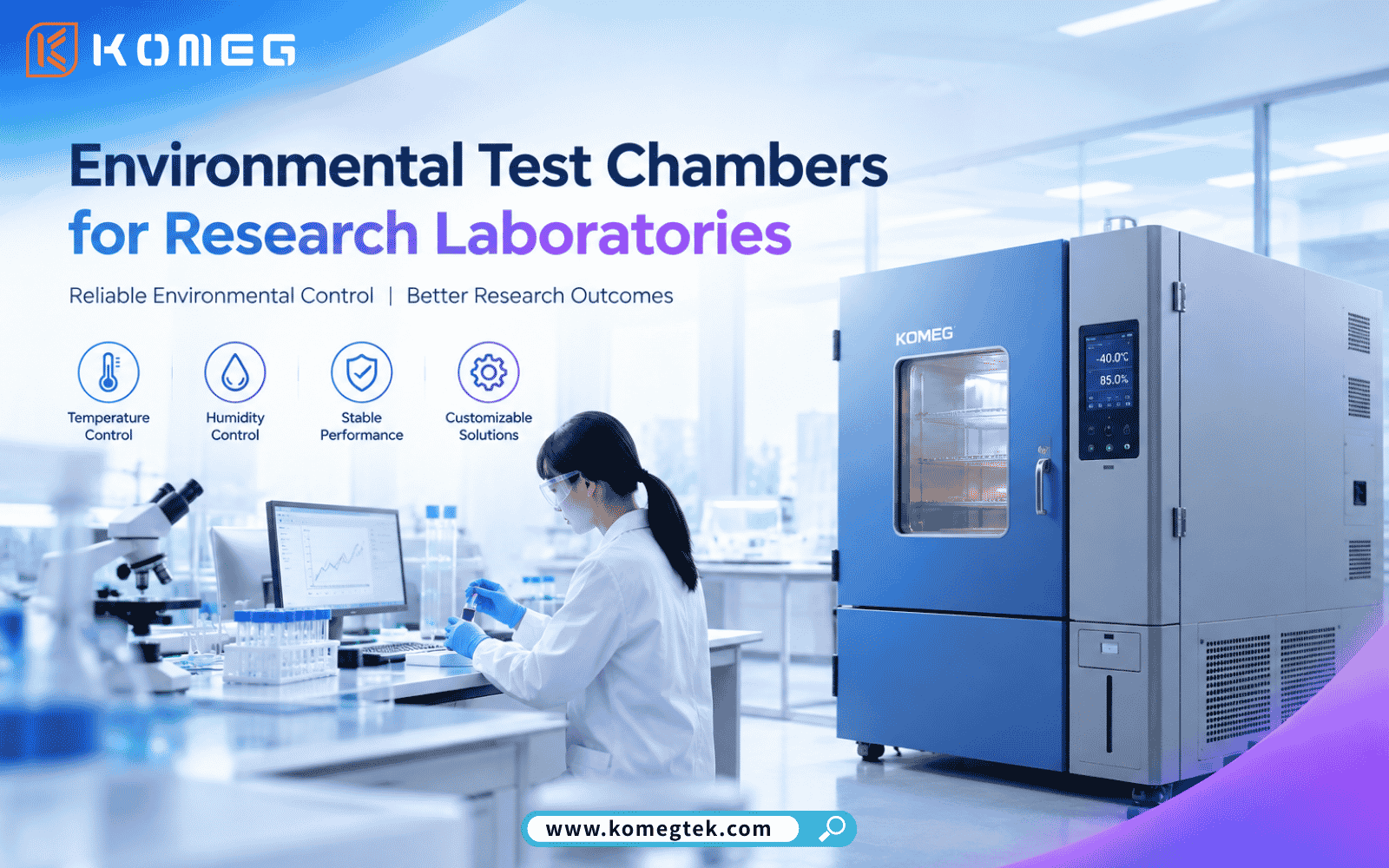
Research and scientific laboratories need reliable ways to control environmental conditions when studying materials, electronic components, pharmaceutical products, and engineered systems. Temperature and humidity can
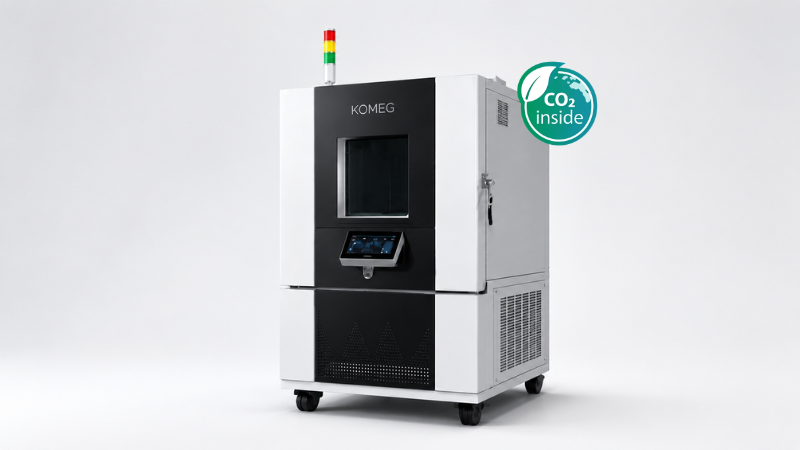
Environmental test chambers are essential for evaluating product performance under controlled temperature and humidity conditions. However, selecting a chamber involves more than comparing temperature ranges,
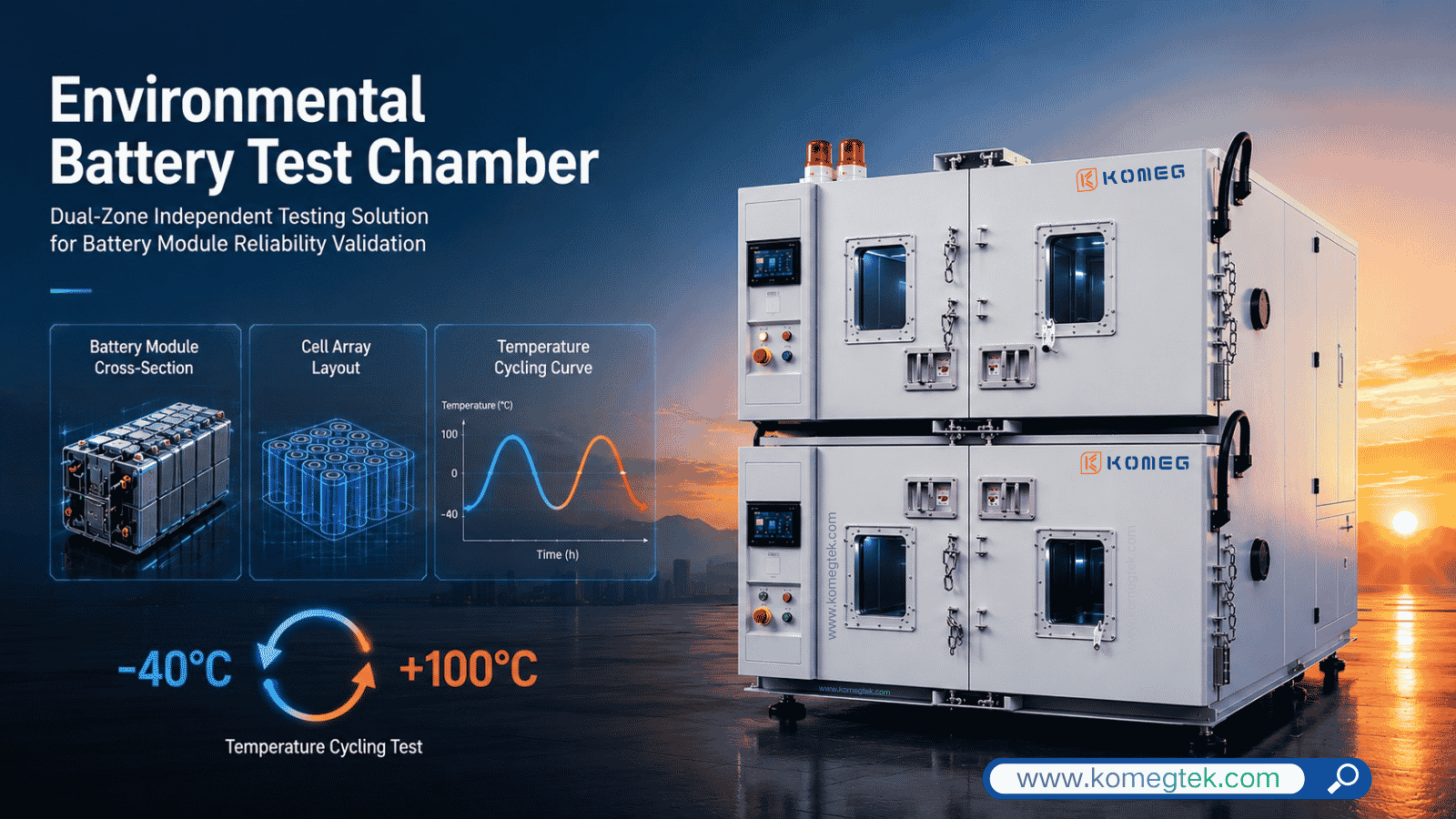
Battery performance and reliability can change significantly with temperature, humidity, and environmental exposure. For lithium-ion batteries and other energy storage technologies, environmental testing helps engineers