

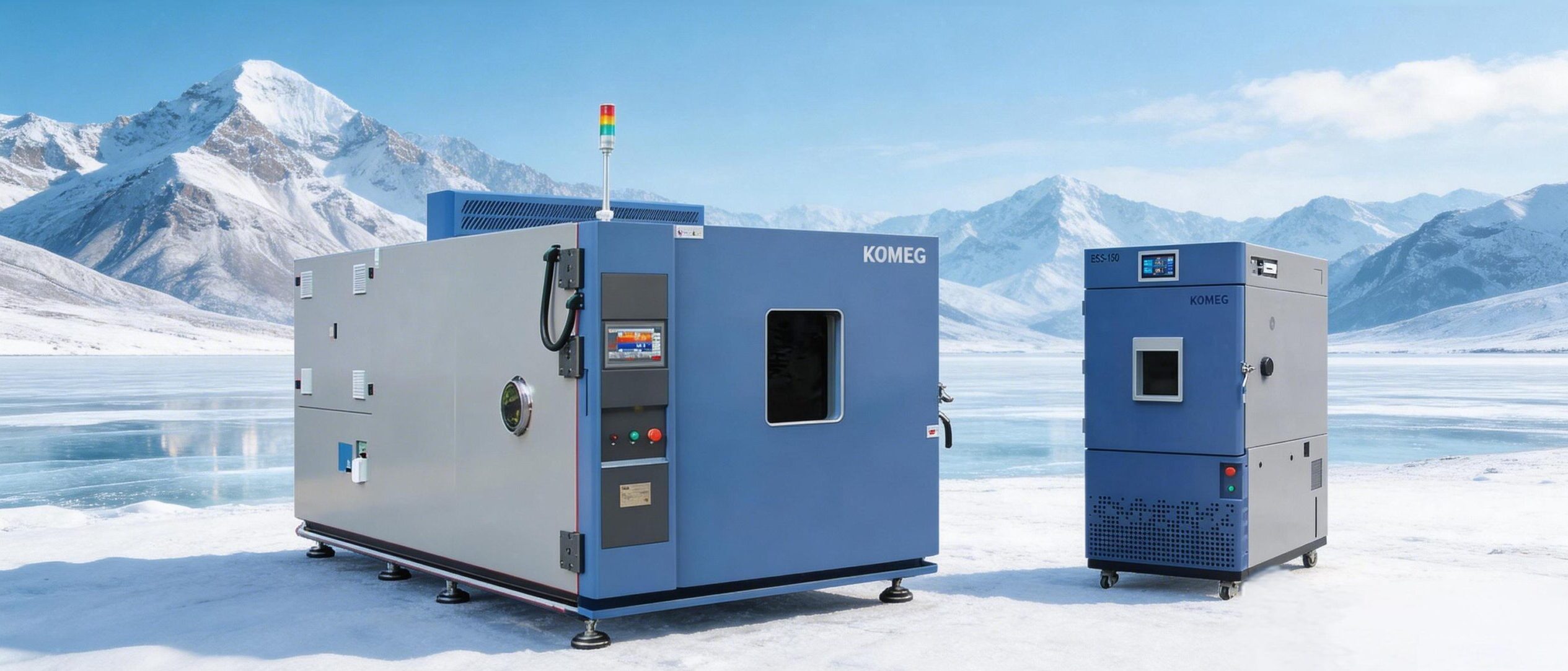
Environmental Stress Screening (ESS) is widely used in electronics manufacturing and reliability verification to identify latent defects before products reach the field. Unlike conventional thermal soak testing, which holds products at a stable temperature for an extended period, ESS applies controlled environmental stress to accelerate the discovery of manufacturing weaknesses and early-life failures.
Rapid temperature cycling is one of the most effective methods used in ESS. Repeated transitions between high and low temperatures can expose weak solder joints, PCB delamination, material interfaces, micro-cracks, and other defects that may remain undetected under steady-state conditions.
However, selecting a rapid temperature change rate chamber is not simply a matter of choosing the chamber with the highest advertised ramp rate. The actual performance of a chamber depends on the temperature profile, product thermal mass, active heat generation, airflow, refrigeration capacity, and the way the ramp rate is specified.
For an ESS laboratory, understanding these factors before purchasing a chamber can make a significant difference in test consistency and long-term reliability.
What Is a Rapid Temperature Change Rate Chamber?
A rapid temperature change rate chamber is designed to move the test environment between temperature conditions significantly faster than a conventional temperature test chamber.
The purpose is not simply to reach a target temperature quickly. The chamber must also maintain sufficient airflow, refrigeration capacity, heating power, and temperature uniformity while the test specimens are exposed to repeated thermal transitions.
During ESS testing, the repeated expansion and contraction caused by temperature changes can place mechanical stress on different materials and interfaces within an electronic assembly. This is particularly important when a product contains materials with different coefficients of thermal expansion (CTE).
For example, a PCB assembly may contain copper, FR-4, solder, semiconductor packages, connectors, adhesives, and other materials. These materials do not expand and contract at exactly the same rate. Repeated thermal cycling can therefore create mechanical stress at interfaces and eventually reveal weaknesses that may not appear during conventional thermal soaking.
This is why rapid temperature change testing is often used as a screening method rather than simply as a long-term environmental exposure test.
Linear vs. Non-Linear Ramp Rate: What Is the Difference?
One of the most important questions when selecting a rapid temperature change chamber is how its temperature change rate is calculated.
The term “10°C/min” can mean different things depending on the manufacturer’s measurement method.
A non-linear or average ramp rate generally represents the average temperature change over a defined temperature range. For example, a chamber may be evaluated based on the time required to move from -40°C to +125°C.
The chamber may initially change temperature at a relatively high rate, but the actual rate can decrease as the chamber approaches the target temperature. The overall result is expressed as an average temperature change rate.
A linear ramp rate, on the other hand, requires the chamber to maintain a much more consistent rate of temperature change over the specified portion of the temperature range.
This distinction becomes particularly important when a test procedure requires a defined ramp profile. If the requirement calls for a true linear transition of 10°C/min, simply selecting a chamber advertised as having a 10°C/min average ramp rate may not provide the same test conditions.
Therefore, when comparing rapid temperature change chambers, always ask:
Is the stated ramp rate linear or non-linear?
Over what temperature range is the rate measured?
Is the chamber empty or loaded during the measurement?
What sample mass was used?
Is the ramp rate based on air temperature or product temperature?
What temperature uniformity is maintained during the transition?
These details provide a much more realistic picture of chamber performance than the ramp-rate number alone.
Thermal Mass Can Significantly Change Chamber Performance
A chamber’s published ramp rate is often measured under specific test conditions. In real ESS applications, the test load can substantially affect the actual temperature transition rate.
Consider a chamber rated at 15°C/min under no-load conditions. If the chamber is subsequently filled with large aluminum fixtures, metal components, PCB assemblies, cables, and powered electronic devices, the effective ramp rate may be considerably different.
This is because the chamber must remove or supply additional thermal energy to the test load.
Three factors are particularly important.
Test Sample Mass
The total thermal mass includes more than the products themselves. Mounting fixtures, shelves, trays, heat sinks, cables, and other accessories can all contribute to the thermal load.
A larger mass generally requires more energy to change temperature. If the chamber is selected without considering this additional load, the actual ramp rate may fall below the expected value.
Material Heat Capacity
Different materials respond differently to temperature changes.
Aluminum and copper, for example, have different thermal properties from FR-4, plastics, steel, or composite materials. A chamber designed for lightweight electronic assemblies may therefore behave differently when used for heavy metal components or large mechanical assemblies.
Understanding the material composition of the DUT and its fixtures helps determine the required heating and cooling capacity.
Active Electrical Heat Load
ESS testing is often performed with products powered on so that functional performance can be monitored while environmental stress is applied.
A powered electronic assembly generates heat continuously. The chamber must therefore remove both the heat generated by the DUT and the heat introduced by the surrounding environment while still achieving the required temperature transition.
This is one reason why chamber specifications should be evaluated under realistic loaded conditions rather than based only on empty-chamber performance.
Why Airflow Matters in Rapid Temperature Cycling
Fast temperature transitions require more than a powerful refrigeration system.
Air circulation plays a critical role in transferring thermal energy between the chamber environment and the test specimen.
When airflow is insufficient, temperature gradients can develop inside the working space. One area of the chamber may reach the target temperature faster while another area changes more slowly.
This can create inconsistent thermal stress between different samples.
A well-designed rapid temperature change chamber should provide sufficient airflow volume and an effective air distribution system to deliver conditioned air across the test area.
The airflow design should also consider the arrangement of test samples. Closely packed products, large fixtures, or complex cable assemblies can restrict airflow and influence temperature uniformity.
For ESS laboratories, it is therefore important to evaluate not only the chamber’s specified temperature range and ramp rate, but also its airflow design and temperature uniformity under actual loading conditions.
Refrigeration Capacity Is Critical for Fast Temperature Changes
Achieving a high cooling rate requires substantial refrigeration capacity, particularly when the chamber is operating at low temperatures or handling a large thermal load.
Rapid temperature change chambers may use more robust refrigeration architectures than conventional environmental chambers. Depending on the temperature range and required performance, systems can incorporate cascade refrigeration, semi-hermetic compressors, liquid injection technologies, or other high-capacity cooling solutions.
The objective is to maintain sufficient cooling capacity throughout the temperature transition rather than achieving a high initial cooling rate and then losing performance as the chamber approaches the lower temperature limit.
When selecting equipment, engineers should consider the complete temperature profile rather than looking at the maximum cooling rate in isolation.
For example, a requirement to repeatedly cycle between -40°C and +125°C places very different demands on the refrigeration system compared with a cycle between 0°C and +85°C.
Condensation Control During ESS Testing
Rapid transitions from cold to warm conditions can introduce another important issue: condensation.
When a cold DUT is suddenly exposed to warmer, humid air, moisture can condense on surfaces and potentially affect electrical performance or cause unwanted corrosion.
This is especially relevant when testing exposed PCBs, connectors, electronic modules, and other sensitive assemblies.
Depending on the application, condensation control may involve dry-air purging, nitrogen systems, controlled humidity, or other environmental management methods.
The appropriate solution depends on the test profile and the DUT. Engineers should therefore consider condensation risk when defining the chamber configuration, particularly for tests involving large temperature differences and powered electronics.
Cable Ports and Electrical Connections for Powered ESS
Many ESS programs require the DUT to remain powered and monitored during testing.
This means the chamber may need to accommodate power cables, communication cables, sensors, thermocouples, and other instrumentation.
Cable feedthrough ports should therefore be considered during chamber selection.
The ports need to provide enough space for the required wiring while maintaining adequate sealing and thermal insulation. Poorly configured cable access can create thermal leakage, interfere with temperature control, or make it difficult to install the test setup.
For complex ESS applications, it is useful to define the required number, diameter, and location of cable ports before ordering the chamber.
What Ramp Rate Do You Actually Need?
A common mistake is assuming that a higher ramp rate is always better.
It is not.
The correct ramp rate depends on the purpose of the test and the applicable test procedure.
A conventional temperature chamber may be sufficient when the objective is long-term temperature exposure, thermal soaking, or basic environmental qualification.
A rapid temperature change chamber becomes more appropriate when the objective is to apply repeated thermal stress and accelerate the discovery of latent defects.
If the test requirement specifies 5°C/min, purchasing equipment designed for 15°C/min may provide additional capability, but it can also increase equipment cost, power requirements, and system complexity.
The better approach is to define the required temperature range, ramp rate, cycle profile, DUT mass, fixture mass, and active heat load first. Chamber capacity can then be selected according to the actual test conditions.
How to Select the Right Chamber for ESS Testing
Before choosing a rapid temperature change rate chamber, reliability engineers should establish several key parameters.
First, define the temperature range required by the ESS profile. The chamber should be capable of reaching both temperature extremes with sufficient cooling and heating capacity.
Second, determine the required ramp rate and clarify whether it must be linear or whether an average/non-linear rate is acceptable.
Third, calculate the total thermal mass of the DUT, fixtures, shelves, and accessories. Do not rely exclusively on the empty-chamber specification.
Fourth, determine whether the products will be powered during testing. If so, the internal heat generated by the DUT must be included in the chamber load calculation.
Fifth, evaluate airflow and temperature uniformity, particularly when multiple products will be tested simultaneously.
Finally, consider practical requirements such as condensation control, cable feedthroughs, monitoring connections, chamber volume, refrigeration architecture, and laboratory power availability.
A chamber that matches these requirements will provide more reliable and repeatable ESS results than a system selected solely on the basis of its maximum advertised ramp rate.
KOMEG Rapid Temperature Change Chambers for ESS Applications
For manufacturers that need high-rate thermal cycling for Environmental Stress Screening, KOMEG provides rapid temperature change chambers designed for demanding thermal reliability applications.
KOMEG rapid temperature change chambers are engineered for fast and repeatable temperature transitions, with available temperature change rates ranging from 5°C/min to 25°C/min or higher, depending on the chamber configuration and test requirements.
The systems are designed to support applications where conventional temperature chambers may not provide sufficient thermal transition speed. By combining high-capacity refrigeration, optimized airflow circulation, precise temperature control, and configurable test volumes, KOMEG chambers can be configured around the actual thermal load of the DUT rather than relying only on an empty-chamber ramp rate.
This is particularly important for ESS applications involving electronics, PCB assemblies, automotive components, semiconductor devices, and other reliability-critical products. When the test specimen is powered during screening, its internal heat generation and the thermal mass of fixtures and accessories can significantly affect the actual ramp performance. KOMEG works with customers to evaluate these factors during chamber selection and configuration.
For applications requiring specific thermal profiles, KOMEG can also provide custom chamber configurations based on the required temperature range, ramp rate, product dimensions, thermal load, cable connections, and testing conditions.
Why Proper Chamber Selection Matters for ESS Reliability
Environmental Stress Screening is intended to identify weaknesses before they become field failures. To achieve that objective, the environmental stress applied during the test must be controlled and repeatable.
An undersized refrigeration system may fail to maintain the required ramp rate under load. Insufficient airflow can create temperature gradients. An incorrect ramp-rate definition can result in a test profile that does not match the intended requirement. Poor condensation management can introduce unwanted variables into the test.
These issues can reduce the value of the screening process.
A properly selected rapid temperature change rate chamber provides the thermal capacity, airflow performance, temperature control, and test flexibility needed to reproduce demanding ESS profiles consistently.
For manufacturers of electronics, automotive components, semiconductor devices, PCB assemblies, and other reliability-critical products, selecting the chamber based on the complete test profile—not just the headline ramp rate—is the key to obtaining meaningful and repeatable results.
KOMEG’s approach is to evaluate the actual test requirements and thermal load before recommending a chamber configuration. This helps customers avoid selecting equipment based only on nominal specifications and ensures that the chamber is matched to the intended ESS profile.
Selecting a rapid temperature change rate chamber for ESS testing requires more than comparing temperature ranges and advertised ramp rates.
The most important considerations include the difference between linear and non-linear ramp rates, total thermal mass, active electrical heat load, airflow, refrigeration capacity, condensation control, and the specific temperature cycling profile required by the application.
By evaluating these factors before equipment selection, engineers can choose a chamber that delivers the required thermal stress under realistic operating conditions and supports reliable, repeatable Environmental Stress Screening.
For applications requiring rapid and repeatable thermal transitions, KOMEG provides rapid temperature change chambers and customized environmental testing solutions based on the specific requirements of the DUT and ESS profile.
If you are unsure whether your ESS application requires a 5°C/min, 10°C/min, 15°C/min, or higher temperature change rate, the first step is to evaluate the complete thermal profile and DUT load rather than selecting equipment based on ramp rate alone. KOMEG engineers can help evaluate these requirements and determine a suitable chamber configuration for your application.