

As lithium-ion batteries become increasingly important in electric vehicles (EVs), energy storage systems (ESS), consumer electronics, aerospace, and renewable energy applications, ensuring battery reliability under changing environmental conditions has become a critical challenge.
Battery packs and cells are often exposed to repeated temperature fluctuations throughout their service life. These thermal changes can cause expansion and contraction of materials, leading to mechanical stress, internal degradation, seal failure, capacity loss, and even safety risks.
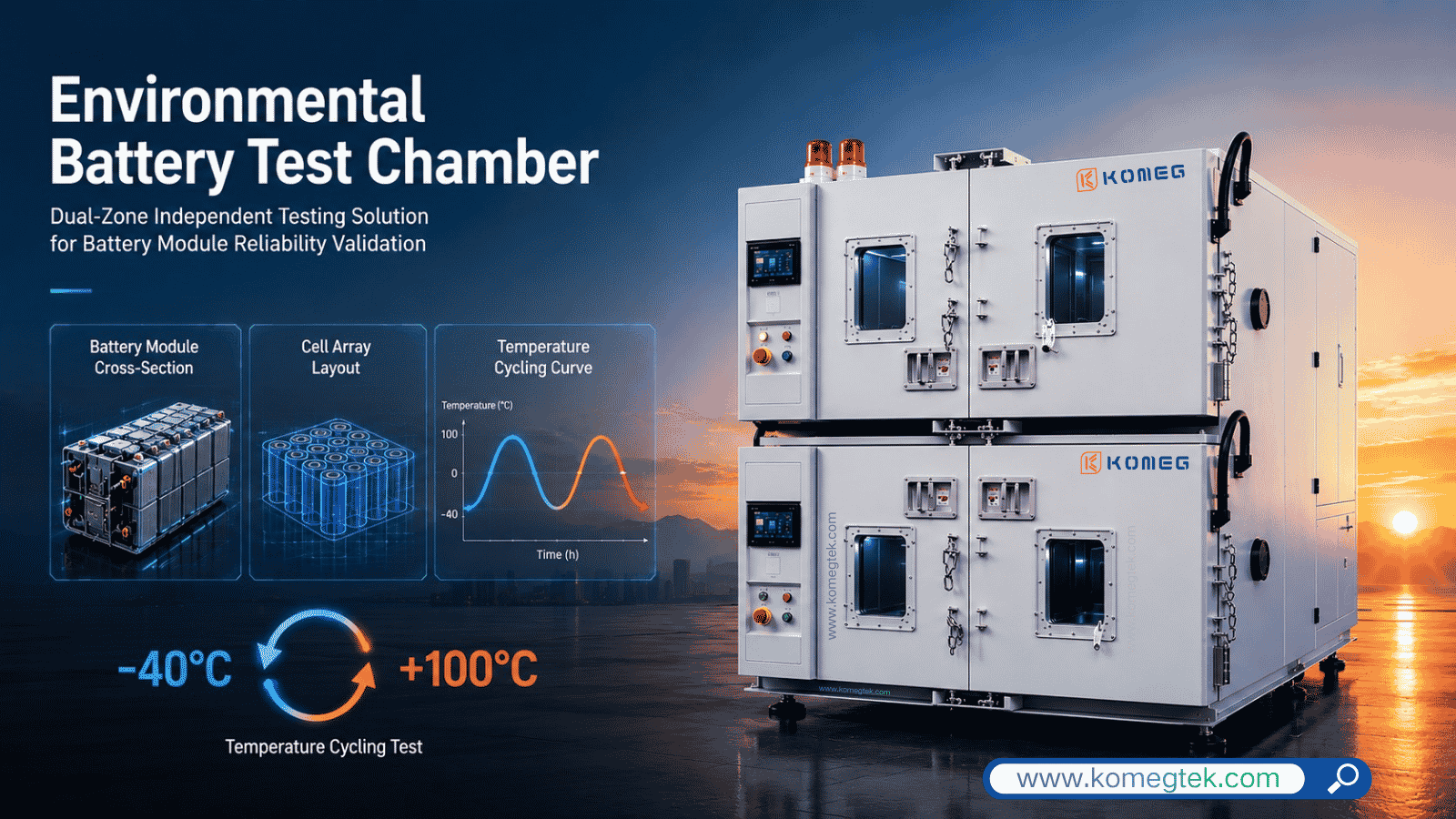
To evaluate long-term durability and reliability, manufacturers use a Battery Temperature Cycle Test Chamber to simulate repeated temperature transitions under controlled laboratory conditions.
This article explains the principles of battery thermal cycling testing, relevant standards, applications, testing procedures, and how to select the right Battery Temperature Cycle Test Chamber for your testing requirements.
What Is a Battery Temperature Cycle Test Chamber?
A Battery Temperature Cycle Test Chamber is a specialized environmental testing system designed to expose batteries to repeated temperature changes between high and low temperature conditions.
The purpose is to simulate real-world environmental stresses encountered during:
- Electric vehicle operation
- Outdoor energy storage deployment
- Transportation and logistics
- Aerospace applications
- Consumer electronics usage
- Renewable energy installations
By repeatedly cycling batteries through extreme temperatures, engineers can identify potential reliability issues before products enter the market.
Typical test temperatures range from:
- -40°C to +85°C
- -40°C to +100°C
- -55°C to +125°C
depending on industry requirements.
Why Is Battery Thermal Cycling Testing Important?
Lithium-ion batteries contain multiple materials with different coefficients of thermal expansion.
During temperature cycling:
- Electrodes expand and contract
- Welded joints experience stress
- Current collectors deform
- Seals age prematurely
- Internal resistance changes
- Battery management components are stressed
Repeated thermal cycling can reveal failures that may not appear during normal room-temperature testing.
Common defects identified include:
Cell Swelling
Temperature fluctuations can accelerate gas generation and material degradation, causing battery swelling.
Weld Joint Fatigue
Repeated expansion and contraction may weaken electrical connections.
Seal Leakage
Thermal stress can compromise sealing materials and allow moisture ingress.
Capacity Degradation
Cycling temperatures can accelerate electrochemical aging.
Internal Short Circuits
Material movement may eventually cause insulation failure.
Detecting these issues early helps manufacturers improve product design and reduce field failures.
Battery Temperature Cycling Test Standards
Several international standards require temperature cycling testing for batteries.
IEC 62660
Widely used for electric vehicle battery cells.
Temperature cycling evaluates durability under automotive operating conditions.
UN 38.3
Mandatory for lithium battery transportation.
Includes temperature exposure tests to ensure transportation safety.
UL 2580
Applies to electric vehicle battery systems.
Requires environmental and thermal reliability evaluation.
IEC 62133
Used for portable rechargeable batteries.
Evaluates battery safety under environmental stress.
SAE J2464
Provides abuse testing guidelines for EV batteries, including temperature-related testing.
GB/T 31467
Chinese national standard for electric vehicle battery systems.
Includes environmental durability requirements.
How Does a Battery Temperature Cycle Test Work?
A thermal cycling test typically follows a programmed sequence.
Example:
| Step | Temperature | Duration |
|---|---|---|
| 1 | -40°C | 2 Hours |
| 2 | Ramp to +85°C | Controlled Rate |
| 3 | +85°C | 2 Hours |
| 4 | Return to -40°C | Controlled Rate |
| 5 | Repeat | 100–1000 Cycles |
During testing, engineers monitor:
- Voltage
- Capacity
- Internal resistance
- Physical deformation
- Temperature distribution
- Safety performance
After completion, batteries undergo additional inspections and performance verification.
Key Specifications of a Battery Temperature Cycle Test Chamber
When selecting equipment, several technical specifications are critical.
Temperature Range
A wider temperature range enables compliance with more standards.
Typical configurations:
- -40°C to +100°C
- -70°C to +150°C
Temperature Uniformity
Uniform temperature distribution ensures accurate results.
Recommended:
- ±2°C or better
Temperature Fluctuation
Stable control minimizes testing uncertainty.
Recommended:
- ±0.5°C or better
Heating and Cooling Rates
Rapid temperature transitions improve testing efficiency.
Typical:
- 1°C/min to 15°C/min
For battery reliability testing, 3°C/min to 10°C/min is common.
Safety Systems
Battery testing introduces unique risks.
A chamber should include:
- Over-temperature protection
- Overcurrent protection
- Smoke detection
- Fire suppression options
- Pressure relief systems
- Emergency stop functions
Data Acquisition Capability
Modern testing requires complete traceability.
The chamber should support:
- Data logging
- Remote monitoring
- Network communication
- Real-time alarms
Applications of Battery Temperature Cycle Test Chambers
Battery thermal cycling testing is widely used in:
Electric Vehicles
Testing:
- Battery cells
- Modules
- Packs
- Battery management systems
Energy Storage Systems
Evaluating long-term reliability of:
- Residential ESS
- Commercial ESS
- Utility-scale storage containers
Consumer Electronics
Testing batteries used in:
- Smartphones
- Tablets
- Laptops
- Wearable devices
Aerospace and Defense
Validating battery performance under extreme environmental conditions.
Renewable Energy
Ensuring durability for solar and wind energy storage applications.
Why Choose KOMEG Battery Temperature Cycle Test Chambers?
With over 36 years of experience in environmental testing technology, KOMEG has become a trusted manufacturer of battery testing equipment for customers worldwide.
KOMEG Battery Temperature Cycle Test Chambers are designed specifically for demanding battery reliability applications.
Wide Temperature Range
Available up to:
- -70°C to +180°C
For advanced battery testing requirements.
Excellent Temperature Uniformity
Optimized airflow systems ensure consistent temperature distribution throughout the test area.
Advanced Safety Design
Multiple protection systems include:
- Over-temperature protection
- Smoke alarm integration
- Independent safety controllers
- Emergency shutdown functions
Flexible Chamber Sizes
Available from:
- Benchtop chambers
- Floor-standing chambers
- Walk-in battery test chambers
for cells, modules, packs, and full battery systems.
Intelligent Control System
Features:
- Touchscreen interface
- Ethernet communication
- Remote monitoring
- Data export
- Industry 4.0 compatibility
Custom Battery Testing Solutions
KOMEG provides customized solutions including:
- Battery explosion-proof chambers
- Temperature cycling chambers
- Battery thermal abuse chambers
- Walk-in environmental chambers
- Altitude and temperature combined testing systems
for EV, ESS, and battery R&D laboratories.
A Battery Temperature Cycle Test Chamber is an essential tool for evaluating the durability, safety, and reliability of modern battery technologies. By simulating repeated temperature fluctuations, manufacturers can identify design weaknesses, improve product performance, and ensure compliance with international standards.
Whether testing lithium-ion cells, EV battery packs, or large-scale energy storage systems, selecting a high-quality testing chamber is critical for obtaining accurate and repeatable results.
With extensive experience in environmental simulation technology, KOMEG provides reliable Battery Temperature Cycle Test Chambers that help battery manufacturers accelerate product development and achieve higher levels of quality and safety.