

Thermal shock chambers are essential environmental testing equipment used across modern electronics, semiconductor, automotive, and aerospace industries. By rapidly alternating between extreme high and low temperatures, these chambers simulate real-world thermal stresses, validating product reliability and durability. However, as precision instruments, thermal shock chambers require regular preventive maintenance to ensure test accuracy, extend equipment lifespan, and maintain laboratory safety.
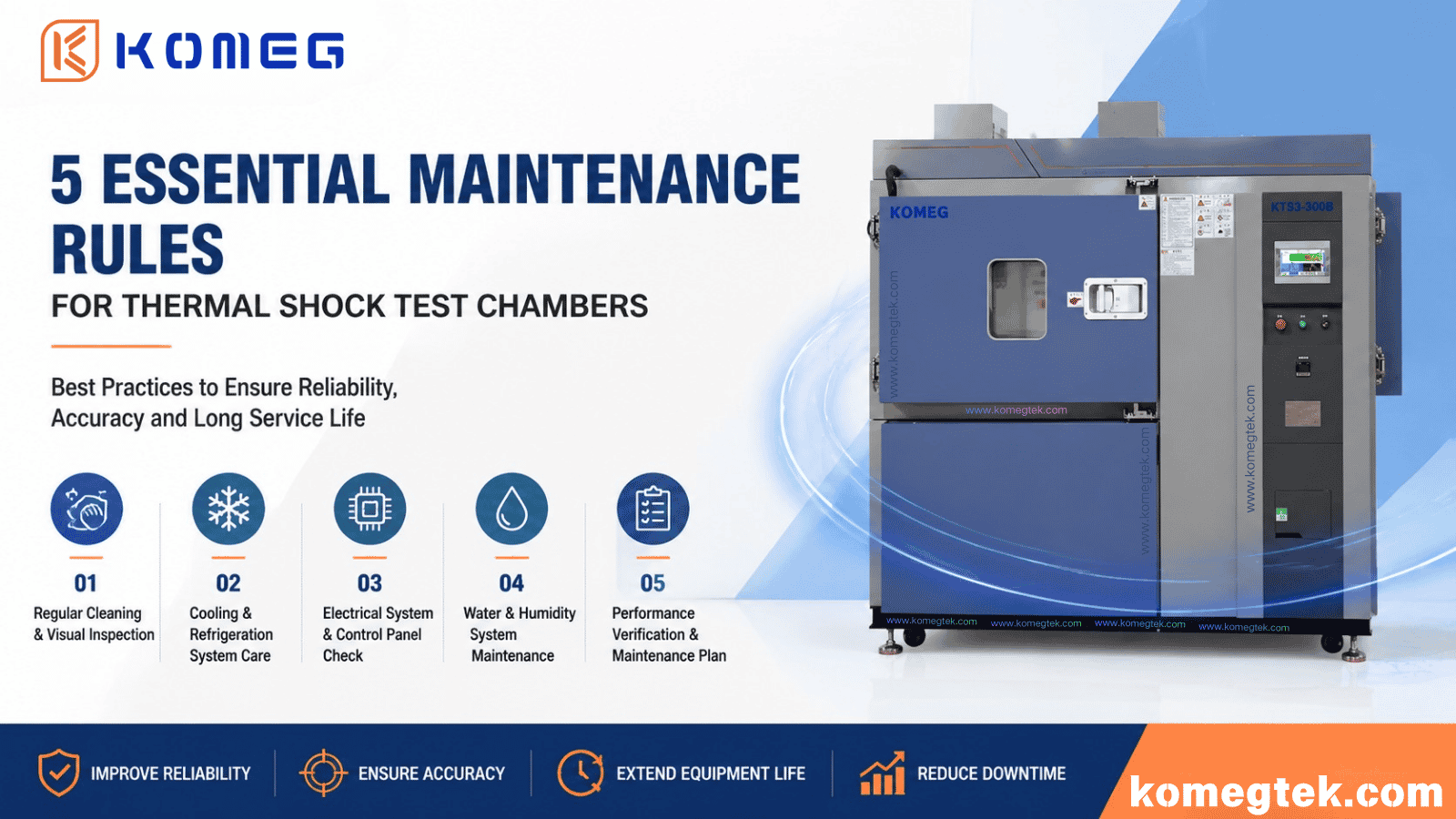
This article highlights five practical preventive maintenance practices to keep thermal shock chambers operating at peak performance.
1. Regular Cleaning and Visual Inspection
Both the interior and exterior of thermal shock chambers can accumulate dust, debris, and particles that may impact airflow and sensor accuracy. Recommended daily maintenance includes:
Exterior cleaning: Wipe down the chamber with non-corrosive cleaning agents, avoiding liquid ingress.
Door seals and gaskets: Inspect for wear or damage and replace as needed to maintain proper airtightness during rapid temperature transitions.
Air ducts and ventilation: Keep airflow channels unobstructed to prevent uneven temperature distribution caused by blocked fans.
Routine cleaning ensures consistent thermal performance and prolongs the life of fans and sensors.
2. Refrigeration and Cooling System Maintenance
The refrigeration system is the core of any thermal shock chamber, including compressors, condensers, expansion valves, and refrigerant lines. Key maintenance points:
Check refrigerant pressure: Maintain pressure within manufacturer-specified ranges to prevent system overload or frosting.
Clean condensers and evaporators: Remove dust with soft brushes or compressed air to improve cooling efficiency.
Regular cycling: Even during periods of inactivity, run the refrigeration system at least once a month to keep refrigerant and lubricants circulating.
Compressor lubrication: Some compressors require periodic oil replenishment or component replacement.
Proper refrigeration system maintenance prevents excessive temperature fluctuations and ensures accurate test results.
3. Electrical Systems and Control Panel Checks
Electrical systems and controllers manage data acquisition, temperature regulation, and alarms. Preventive maintenance should include:
Inspect electrical connections: Ensure terminals are secure and free of oxidation to prevent circuit faults.
Clean touchscreens and panels: Keep moisture and dust out to avoid control malfunctions.
Sensor calibration: Regularly calibrate temperature, humidity, and pressure sensors for accurate measurements. System self-checks: Utilize built-in diagnostics as recommended by the manufacturer.
Maintaining the electrical systems reduces unexpected downtime and ensures consistent test reliability.
4. Water and Humidity System Care
Some thermal shock chambers include humidity control or water-cooling systems. Maintenance focuses on:
Water quality: Use distilled or deionized water to prevent mineral deposits and microbial growth.
Water tank and piping cleaning: Monthly cleaning of tanks, lines, and humidifiers prevents mold or scale buildup.
Humidity sensor calibration: Ensure accurate measurement across the full range, with periodic zero and span checks.
Pump and valve inspection: Keep circulation smooth to avoid localized humidity inconsistencies.
Good water system management prolongs humidification system life and maintains stable temperature-humidity testing results.
5. Scheduled Performance Verification and Maintenance Planning
Long-term reliability requires a structured preventive maintenance program:
- Temperature and humidity verification: Quarterly full-range checks of chamber responsiveness and stability.
- Functional testing: Execute typical test cycles to verify rapid temperature transitions, thermal shock cycles, and alarm systems.
- Recordkeeping: Document maintenance activities, calibration data, detected issues, and corrective actions.
- Personnel training: Ensure operators understand proper usage, emergency procedures, and maintenance protocols.
A systematic maintenance plan reduces unexpected failures and ensures uninterrupted testing operations. Thermal shock chambers are critical tools for reliability testing, directly affecting the accuracy of test results and product development efficiency. Following these five preventive maintenance practices:
- Regular cleaning and visual inspection
- Refrigeration and cooling system maintenance
- Electrical systems and control panel checks
- Water and humidity system care
- Scheduled performance verification and maintenance planning
can effectively extend equipment lifespan, improve reliability, and minimize operational risk. For laboratories, production facilities, and R&D centers, establishing a standardized maintenance routine is essential for long-term, high-efficiency operation.
KOMEG provides comprehensive maintenance manuals and tailored preventive maintenance solutions for thermal shock chambers, helping customers achieve consistent and reliable testing performance.