

ISO 16750 is one of the most important international standards for testing the environmental reliability of electrical and electronic equipment used in road vehicles. It defines a structured set of test methods that simulate real-world conditions such as extreme temperatures, humidity, vibration, mechanical shock, and electrical load variations.
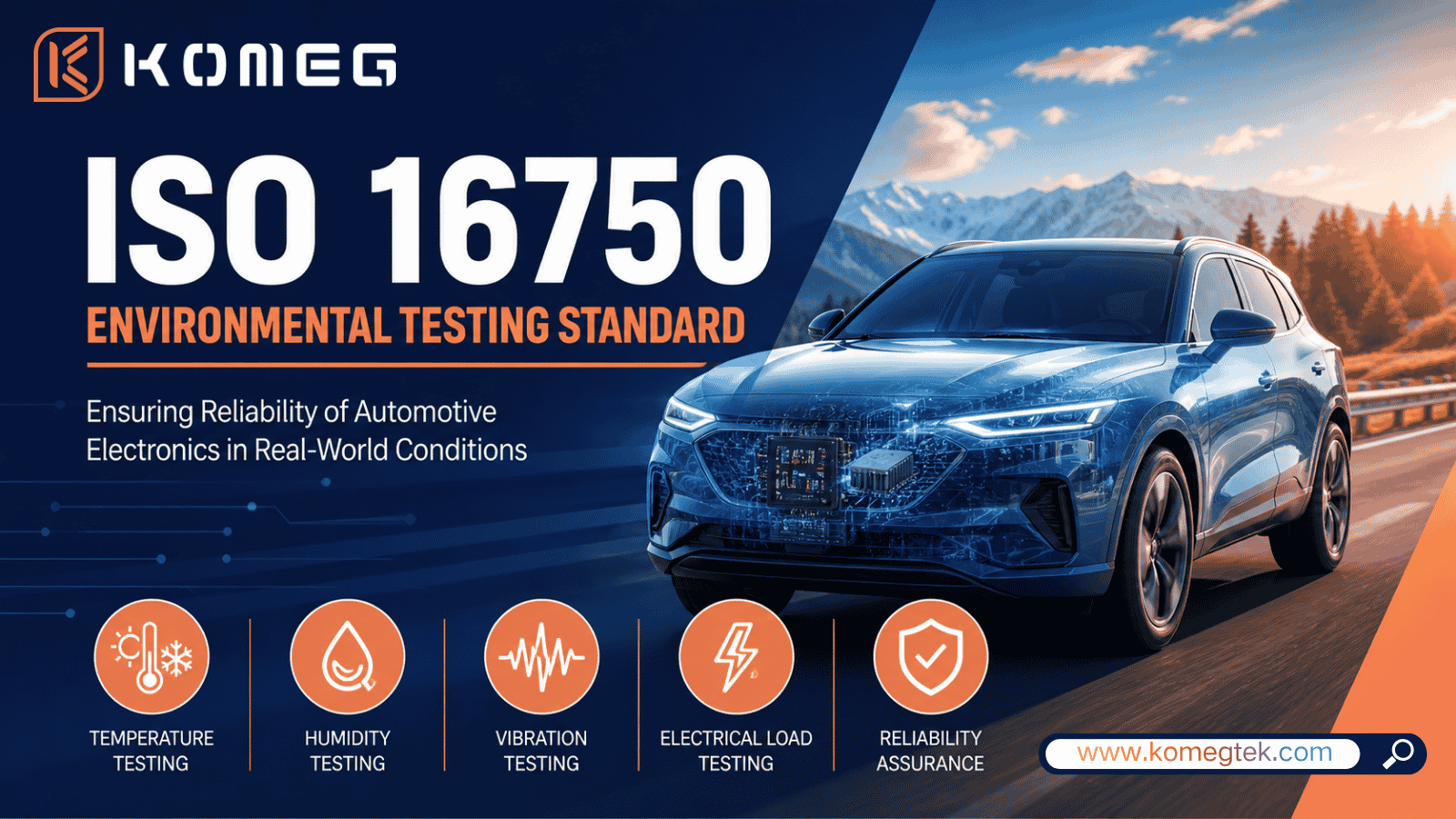
In modern automotive engineering, electronic systems are deeply integrated into safety, performance, and user experience. As vehicles evolve toward electrification and intelligent control systems, the reliability requirements for automotive electronics have become significantly more demanding. ISO 16750 plays a critical role in ensuring that these components can operate safely and consistently throughout the vehicle lifecycle.
This standard is widely adopted by automotive OEMs, Tier 1 suppliers, and testing laboratories worldwide as a baseline requirement for product validation.
What Is ISO 16750?
ISO 16750 is a multi-part international standard developed by the International Organisation for Standardisation (ISO). It specifically addresses environmental conditions and testing procedures for electrical and electronic equipment installed in road vehicles.
Unlike general electronic testing standards, ISO 16750 is designed specifically for automotive environments, where components are exposed to a combination of thermal stress, vibration, humidity, chemical exposure, and electrical fluctuations.
The standard covers the entire lifecycle of automotive electronic systems, including storage conditions before installation, operational conditions during use, and environmental stress conditions during transportation and handling.
ISO 16750 is structured into several parts, each focusing on a specific type of environmental stress. These include general principles, electrical loads, mechanical loads, climatic loads, and chemical influences. Together, they form a comprehensive framework for validating automotive electronic reliability.
Why ISO 16750 Is Critical for Automotive Electronics
Automotive electronic systems operate in one of the harshest environments for electronic components. Unlike consumer electronics, which typically operate under controlled indoor conditions, automotive systems must withstand continuous exposure to dynamic and often extreme environmental changes.
Vehicles experience rapid temperature variations between day and night, seasonal climate shifts, engine heat, and cold starts in winter conditions. In addition, vibration from road conditions and mechanical stress from vehicle movement continuously affect electronic components.
Without standardised testing, these environmental factors can lead to premature failures, system instability, or safety risks.
ISO 16750 provides a standardised framework that helps manufacturers ensure product reliability before deployment. It reduces field failure rates, improves product quality, and ensures compliance with OEM specifications. In many cases, passing ISO 16750 testing is a mandatory requirement for component approval in automotive supply chains.
Environmental Stress Conditions Covered by ISO 16750
ISO 16750 addresses a wide range of environmental stress conditions that automotive electronics may encounter during their lifecycle.
One of the most critical aspects is temperature exposure. Automotive electronics must function reliably in both extremely high and extremely low temperatures. For example, components installed in engine compartments may be exposed to high thermal loads, while exterior-mounted sensors may experience freezing conditions in winter climates.
Humidity is another important factor. Moisture ingress can lead to corrosion, insulation degradation, and electrical failures. ISO 16750 defines conditions that simulate long-term exposure to humid environments as well as condensation cycles that occur when temperature changes rapidly.
Thermal cycling and thermal shock conditions are also included in the standard. These tests simulate rapid or repeated temperature transitions, which can occur during engine startup, shutdown, or changes in driving environments. These conditions are particularly important for identifying material fatigue, solder joint failure, and structural weaknesses in electronic assemblies.
Mechanical stress is another key factor. Vehicles generate constant vibration from road surfaces, engine operation, and drivetrain movement. ISO 16750 ensures that electronic components are tested under controlled vibration and shock conditions to evaluate their mechanical durability and structural integrity.
Electrical load variations are also part of the standard. Automotive electrical systems are subject to voltage fluctuations, load dumps, and transient conditions caused by engine start-stop cycles and power distribution changes. These electrical stresses must be considered when validating electronic system reliability.
How ISO 16750 Testing Is Performed in Practice
In practical engineering applications, ISO 16750 testing is conducted using specialized environmental simulation equipment. The goal is to replicate real-world conditions in a controlled laboratory environment.
Temperature testing is typically performed using environmental test chambers capable of precisely controlling high and low temperature conditions over extended periods. These chambers allow engineers to simulate both steady-state and dynamic thermal environments.
Humidity testing is conducted using systems that can generate controlled moisture levels and simulate condensation cycles. This helps evaluate the long-term effects of moisture exposure on electronic components.
Thermal cycling and thermal shock testing require more advanced equipment capable of rapidly changing temperature conditions. Thermal shock testing in particular involves exposing components to extreme temperature transitions within very short time intervals to simulate sudden environmental changes.
Mechanical vibration testing is performed using vibration systems that simulate road conditions and mechanical stress experienced by vehicles during operation.
In many cases, combined environmental testing systems are used to simulate multiple stress factors simultaneously, providing a more realistic representation of actual operating conditions.
Automotive Applications of ISO 16750
ISO 16750 is widely used across almost all automotive electronic systems. One of the most critical application areas is engine control systems, where electronic control units must operate reliably under extreme thermal and mechanical stress conditions.
Battery management systems in electric vehicles also rely heavily on ISO 16750 validation. These systems must maintain stable performance under varying temperature conditions and electrical load fluctuations.
Automotive sensors, including pressure sensors, temperature sensors, and position sensors, must also meet ISO 16750 requirements to ensure accurate data transmission under harsh conditions.
Infotainment systems, lighting control modules, braking systems, and advanced driver assistance systems (ADAS) all depend on ISO 16750 compliance to ensure long-term reliability and safety performance.
As vehicles become more electrified and automated, the importance of ISO 16750 continues to grow.
Common Failure Mechanisms Identified Through ISO 16750 Testing
One of the key benefits of ISO 16750 testing is its ability to reveal hidden failure mechanisms that may not appear during normal operation or short-term testing.
Thermal expansion mismatch is a common issue identified during temperature-related testing. Different materials within an electronic assembly expand at different rates, which can lead to mechanical stress, cracking, or delamination.
Moisture-related failures are also frequently detected. Water ingress can cause corrosion of conductive materials, short circuits, and insulation breakdown, particularly in high-humidity environments.
Mechanical vibration can lead to fatigue failure in solder joints, loosening of connectors, or structural damage to printed circuit boards. These issues often develop over time and may not be immediately visible without accelerated testing.
Electrical stress testing can reveal vulnerabilities in circuit design, such as susceptibility to voltage spikes or insufficient protection against transient conditions.
By identifying these failure modes early in the development cycle, manufacturers can significantly improve product reliability and reduce long-term warranty risks.
Relationship Between ISO 16750 and Environmental Test Chambers
Environmental test chambers are essential tools for performing ISO 16750 compliance testing. These systems allow engineers to simulate controlled environmental conditions that replicate real-world automotive operating environments.
Temperature and humidity chambers are used to evaluate long-term environmental stability. Thermal shock chambers are used to test rapid temperature transition resistance. Combined systems may integrate multiple stress factors to simulate more complex conditions.
Without these systems, it would be impossible to accurately reproduce the environmental conditions required by ISO 16750 in a controlled and repeatable way.
For manufacturers and testing laboratories, selecting the right environmental test equipment is critical to ensuring compliance and achieving accurate test results.
ISO 16750 vs Other Environmental Standards
ISO 16750 is specifically designed for automotive applications, making it more focused than general electronic testing standards such as IEC 60068.
While IEC 60068 covers a broad range of environmental testing methods for general electronic products, ISO 16750 focuses specifically on the unique environmental stresses experienced by automotive systems.
Compared to military standards such as MIL-STD-810, ISO 16750 is more industry-specific and tailored to commercial vehicle applications rather than extreme military environments.
Understanding these differences is important when selecting the appropriate testing standard for a given application.
ISO 16750 is a fundamental standard for ensuring the reliability and durability of automotive electronic systems. It provides a comprehensive framework for testing under real-world environmental conditions, including temperature extremes, humidity, vibration, mechanical shock, and electrical stress.
As automotive systems continue to evolve toward greater complexity and electrification, the importance of reliable environmental testing will continue to increase.
For manufacturers, compliance with ISO 16750 is not only a requirement for market access but also a critical factor in ensuring product safety, performance, and long-term reliability.
👉 Selecting the right environmental testing equipment is essential for accurate validation and successful certification.