

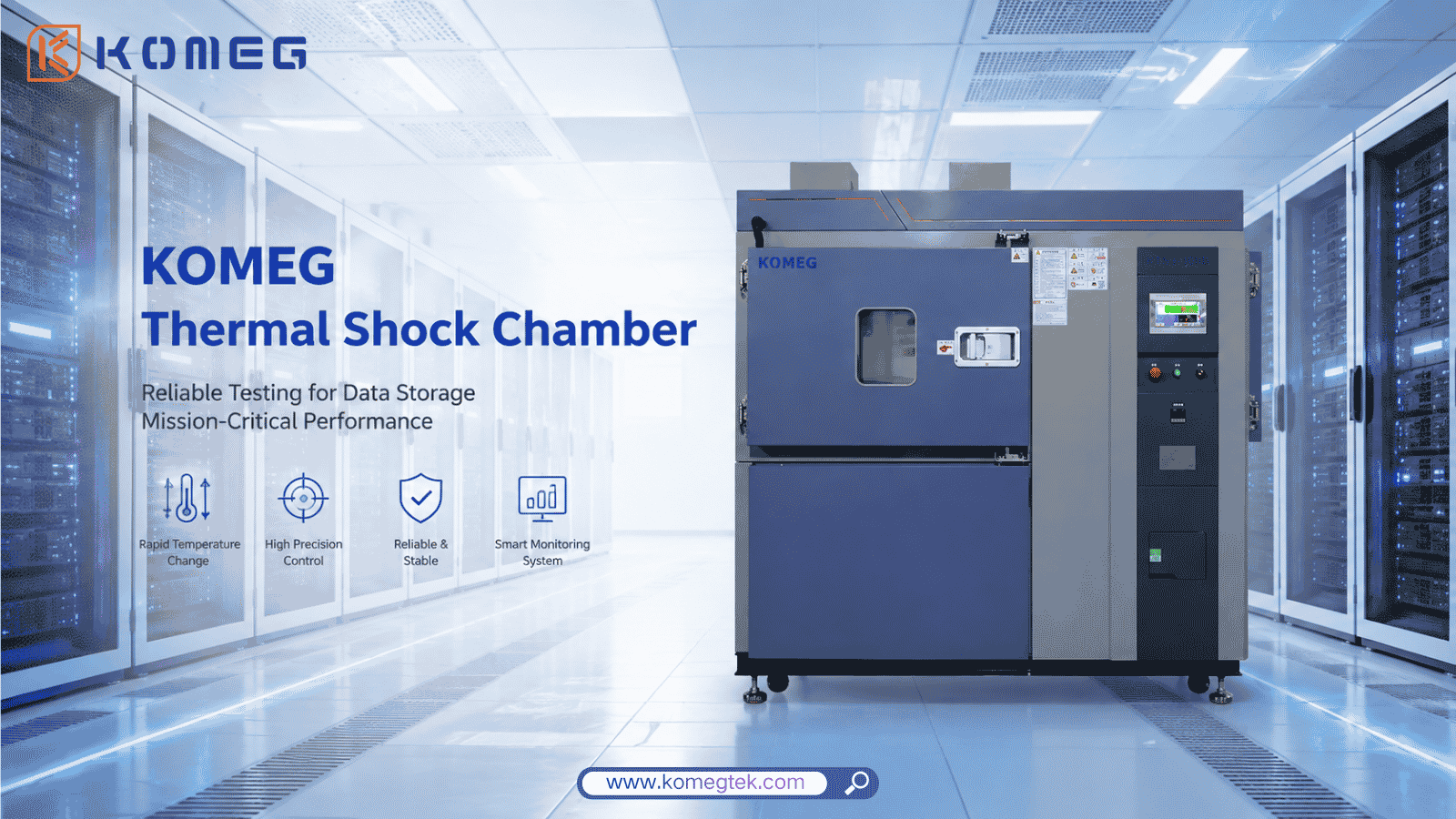
Introduction: Why Thermal Reliability Matters for Enterprise SSDs in AI Data Centers
The rapid growth of artificial intelligence (AI), machine learning, and high-performance computing (HPC) is transforming modern data center infrastructure. As AI workloads become more complex, data centers require storage systems that can deliver higher speed, greater capacity, and long-term reliability under continuous operation.
Enterprise SSDs have become a critical component in AI data centers because they provide faster data access, lower latency, and higher efficiency compared with traditional storage solutions. However, increasing storage density and workload intensity also create new challenges, especially related to thermal reliability.
Unlike conventional server environments, AI data centers operate with:
- Higher rack power density
- Continuous high-performance workloads
- Increased data processing requirements
- More demanding thermal management conditions
Temperature has become one of the most important factors affecting enterprise SSD performance and service life. Excessive heat or repeated temperature fluctuations can accelerate component degradation, reduce performance stability, and increase the risk of unexpected failures.
Thermal testing provides manufacturers with a reliable method to evaluate SSD behavior under different temperature conditions. Through controlled environmental testing, engineers can identify potential weaknesses, optimize product design, and improve the reliability of enterprise SSDs used in mission-critical AI infrastructure.
1. How Temperature Affects Enterprise SSD Reliability
Enterprise SSD reliability depends on the performance of multiple internal components, including NAND Flash memory, controllers, printed circuit boards (PCBs), and electronic connections.
Temperature variations influence these components in different ways. Understanding these effects is essential for designing SSDs capable of long-term operation in demanding data center environments.
1.1 Thermal Impact on NAND Flash Memory
NAND Flash is the core storage component inside an SSD. Data is stored by controlling electrical charges within memory cells, and temperature directly affects the stability of these charges.
High operating temperatures can accelerate several degradation mechanisms, including:
- Faster charge leakage from memory cells
- Reduced data retention capability
- Increased error correction requirements
- Accelerated memory wear
For enterprise SSD applications, especially in AI data centers where large amounts of data are continuously written and read, maintaining NAND Flash reliability is critical.
Thermal testing helps engineers evaluate how SSDs perform under elevated temperatures and determine whether the memory architecture can maintain data integrity throughout the expected product lifetime.
1.2 SSD Controller Performance Under High Temperature
The SSD controller manages critical operations, including data processing, error correction, and communication between NAND Flash and the host system.
During intensive AI workloads, SSD controllers generate significant heat. When temperatures exceed the designed operating range, SSDs may activate thermal protection mechanisms.
Common responses include:
- Reduced operating frequency
- Lower write performance
- Performance throttling
- Temporary workload limitation
Although thermal throttling protects the SSD from damage, it can affect system performance, especially in AI applications that require consistent storage throughput.
Thermal testing allows engineers to evaluate controller behavior under different temperature conditions and optimize cooling strategies to maintain stable performance.
1.3 Thermal Cycling and Mechanical Reliability
Temperature changes not only affect electronic performance; they also create mechanical stress inside SSD assemblies.
Different materials used in SSD construction have different coefficients of thermal expansion (CTE). During repeated heating and cooling cycles, these materials expand and contract at different rates.
This can create stress on:
- Solder joints
- PCB connections
- Semiconductor packages
- Component interfaces
Over time, repeated thermal cycling may lead to:
- Micro-cracks
- Connection failures
- Signal instability
Thermal cycling and thermal shock testing help manufacturers identify these potential mechanical reliability issues before products are deployed in real-world applications.
2. What Is Thermal Testing for Enterprise SSDs?
Thermal testing for enterprise SSDs is a reliability evaluation process used to determine whether storage devices can maintain performance, structural integrity, and operational stability under different temperature environments.
The purpose of thermal testing is not only to verify whether an SSD can operate at a specific temperature, but also to understand how temperature affects long-term reliability.
Typical testing objectives include:
- Verifying operating temperature limits
- Evaluating thermal stability
- Detecting hidden manufacturing defects
- Assessing component durability
- Improving product lifetime prediction
For enterprise SSD manufacturers, thermal testing is an important step in product qualification before large-scale deployment in data centers.
3. Common Thermal Testing Methods for Enterprise SSD Reliability
Different thermal testing methods are used depending on product requirements and reliability goals.
3.1 High and Low Temperature Testing
High and low temperature testing evaluates whether SSDs can start, operate, and maintain stable performance under extreme temperature conditions.
During testing, SSD samples are exposed to controlled temperature environments to verify:
- Startup performance
- Data access stability
- Operating reliability
- Component durability
Typical test conditions may include:
- Low-temperature operation
- High-temperature operation
- Extended exposure testing
This type of testing is commonly used during SSD design verification and qualification processes.
3.2 Temperature Cycling Testing
Temperature cycling testing repeatedly changes the environmental temperature between high and low conditions.
The purpose is to simulate the temperature variations SSDs may experience during:
- Equipment startup and shutdown
- Transportation
- Seasonal environmental changes
- Data center cooling fluctuations
Temperature cycling helps identify weaknesses related to material expansion, contraction, and interface stress.
Typical failure mechanisms detected include:
- Solder joint fatigue
- PCB stress
- Component connection issues
This testing method is closely related to environmental reliability standards such as IEC 60068 temperature cycling requirements.
3.3 Thermal Shock Testing
Thermal shock testing creates rapid temperature transitions between extreme hot and cold environments.
This testing method is widely used for evaluating electronic components, semiconductor devices, and storage products that require high reliability under extreme temperature changes. A dedicated thermal shock chamber provides controlled hot and cold temperature zones to simulate these rapid thermal transitions.
Compared with temperature cycling, thermal shock introduces much faster temperature changes, generating higher mechanical stress.
This method is commonly used to evaluate:
- Packaging reliability
- Material compatibility
- Component durability
- Structural resistance to sudden temperature changes
For high-reliability SSD applications, thermal shock testing helps identify potential failures that may not appear during normal temperature cycling tests.
3.4 Temperature and Humidity Testing
Although temperature is a major reliability factor, humidity can also affect electronic storage devices.
Temperature and humidity testing evaluates SSD performance under combined environmental stress conditions.
This type of testing helps assess:
- Moisture resistance
- Corrosion risk
- Long-term environmental stability
For data centers located in different climates, environmental testing provides additional confidence in SSD reliability.
4. Thermal Testing Requirements for AI Data Center SSDs
AI data centers create more demanding reliability requirements compared with traditional computing environments.
Enterprise SSDs must maintain stable operation under continuous workloads and changing thermal conditions.
4.1 Reliability Under Continuous High Workloads
AI applications require massive amounts of data processing, including:
- AI model training
- Data analysis
- Machine learning workloads
- High-speed data storage operations
These workloads can cause SSDs to operate continuously at high utilization levels.
Thermal testing helps verify whether SSDs can maintain:
- Stable performance
- Consistent data access
- Long-term reliability
under extended operating conditions.
4.2 Accurate Temperature Control and Monitoring
Reliable thermal testing requires precise environmental control.
Important testing capabilities include:
- Accurate temperature regulation
- Stable airflow distribution
- Fast temperature response
- Real-time monitoring
Without accurate control, test results may become inconsistent and fail to represent actual operating conditions.
A well-designed thermal testing environment ensures that every SSD sample experiences the same thermal conditions, improving test repeatability.
4.3 Accelerated Reliability Testing
Accelerated thermal testing allows manufacturers to identify potential failures within a shorter development cycle.
By applying controlled thermal stress, engineers can discover:
- Latent manufacturing defects
- Weak material interfaces
- Potential lifetime limitations
This approach helps companies improve product design, reduce field failures, and increase confidence before mass production.
5. Environmental Test Chambers for SSD Thermal Reliability Testing
Reliable thermal testing requires advanced environmental test equipment capable of creating accurate and repeatable temperature conditions.
Different testing requirements may require different types of environmental chambers.
Temperature Humidity Test Chamber
A temperature humidity test chamber is commonly used to evaluate SSD reliability under controlled temperature and humidity conditions. It helps simulate different environmental scenarios and verify long-term product stability for electronic components, semiconductor devices, and storage systems.
They help simulate different environmental scenarios and verify long-term product stability.
Typical applications include:
- Operating environment simulation
- Temperature and humidity reliability testing
- Storage condition evaluation
Thermal Shock Chamber
Thermal shock chambers are designed for rapid temperature transitions between hot and cold conditions.
They are suitable for evaluating SSD resistance against sudden temperature changes and thermal stress.
Typical applications include:
- Packaging reliability testing
- Component stress evaluation
- High-reliability product validation
Rapid Temperature Change Chamber
Rapid temperature change chambers provide controlled temperature transition rates for accelerated reliability testing.
They are commonly used when engineers need to evaluate product durability under repeated thermal stress conditions.
6. How to Select the Right Thermal Testing Equipment for SSD Reliability Testing
Choosing the correct thermal testing equipment is essential for obtaining accurate and meaningful reliability results.
Engineers should consider several key factors.
Temperature Range
The chamber should support the required temperature conditions based on SSD application requirements.
Common temperature ranges include:
- -40°C to +150°C
- -70°C to +150°C
The selected range should provide sufficient margin beyond the expected operating environment.
Temperature Uniformity
Temperature uniformity ensures that all test samples experience consistent conditions.
Poor temperature distribution may result in:
- Inconsistent test results
- Incorrect reliability evaluation
- Reduced repeatability
Cooling and Heating Response
For thermal testing, fast response capability is important.
A reliable chamber should provide:
- Stable cooling performance
- Efficient heating control
- Fast temperature recovery
These features ensure accurate simulation of real-world thermal conditions.
Data Monitoring Capability
Modern reliability testing requires detailed data management.
Important features include:
- Test data recording
- Remote monitoring
- Test process tracking
- Historical data analysis
These functions improve testing efficiency and support quality control processes.
7. Future Trends: Thermal Reliability Testing in AI Infrastructure
As AI infrastructure continues to develop, enterprise SSD requirements will become increasingly demanding.
Future data centers will require:
- Higher storage density
- Faster data interfaces
- Greater energy efficiency
- Improved thermal management
These trends will drive the need for more advanced thermal reliability testing methods.
Manufacturers will increasingly focus on:
- Extreme temperature validation
- Longer endurance testing
- Intelligent monitoring systems
- Automated reliability evaluation
Thermal testing will continue to play an essential role in ensuring the stability of AI computing infrastructure.
Thermal reliability has become a critical factor in enterprise SSD development as AI data centers demand higher performance and continuous operation.
Temperature testing, thermal cycling, and thermal shock testing help manufacturers identify potential weaknesses, improve product design, and ensure reliable performance under demanding conditions.
By using advanced thermal testing methods and accurate environmental simulation equipment, SSD manufacturers can reduce failure risks, extend product lifetime, and provide more reliable storage solutions for next-generation AI data centers.
Frequently Asked Questions (FAQ)
Q1: Why is thermal testing important for enterprise SSD reliability?
Thermal testing helps evaluate how enterprise SSDs perform under high temperatures, temperature fluctuations, and long-term operating conditions. It helps identify potential issues such as performance degradation, thermal throttling, and component fatigue before SSDs are deployed in AI data centers.
Q2: What thermal tests are used for SSD reliability evaluation?
Common SSD thermal reliability tests include high and low temperature testing, temperature cycling testing, thermal shock testing, and temperature humidity testing. These tests help verify SSD performance, durability, and stability under different environmental conditions.
Q3: Which environmental test chamber is suitable for SSD thermal testing?
The suitable test chamber depends on the testing purpose. Temperature-humidity chambers are used for environmental simulation, while thermal shock chambers and rapid temperature change chambers are used for evaluating SSD resistance to fast temperature variations and thermal stress.