

Optoelectronic devices are functional components designed to leverage the photoelectric conversion effect. They enable essential functions such as optical signal generation, modulation, detection, connection, energy combining/splitting, gain adjustment, signal amplification, and electro-optical/opto-electrical conversion. These devices are primarily categorized into two types:
Optical Fiber Communication Components: This includes active devices (such as lasers and optical transceiver modules) and passive devices (such as fiber couplers, optical switches, and splitters).
Optoelectronic Lighting Components: Such as LED luminaires, various light-emitting fixtures, and decorative lighting.
In essence, any product that requires electro-optical conversion, opto-electrical conversion, or other optoelectronic-related functions falls within this category. As the core components of optoelectronic technology, testing these devices is a vital foundational task across industries. Due to the wide variety of products and diverse industry requirements, it is essential to select specific testing methods based on the component type to accurately assess performance.
What are the common reliability testing projects for optoelectronic components? Let’s take a closer look.
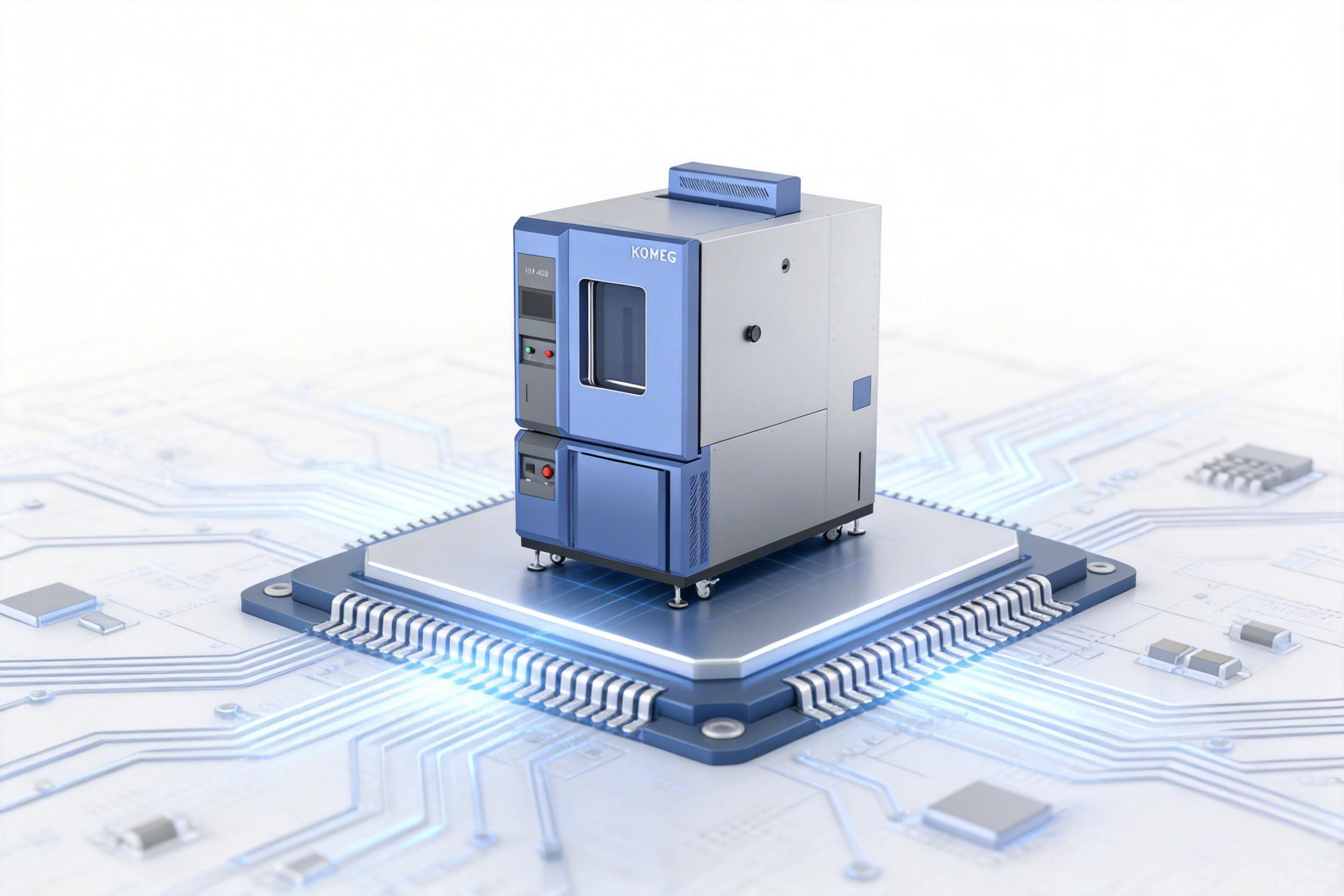
1. Physical Characteristic Testing
Internal Water Vapor Content: Determines the moisture content within the internal gas of metal or ceramic-packaged optoelectronic devices.
Hermeticity (Sealing): Verifies the air-tightness of the packaging for optoelectronic devices with internal cavities.
ESD Threshold: Evaluates the sensitivity of devices to damage or performance degradation caused by electrostatic discharge.
Flammability: Determines the fire-resistance properties of the materials used in the device.
Shear Strength: Examines the structural integrity of the materials and processes used to mount chips and passive components onto headers or substrates.
Solderability: Assesses the soldering performance of leads (with a diameter less than 0.3mm or equivalent flat leads) for devices requiring soldering.
Wire Bond Strength: Measures the strength of wire bonds created using low-temperature, thermocompression, or ultrasonic welding techniques.
2. Mechanical Integrity Testing
Products inevitably face bumps during transportation and use. Even when installed inside equipment, they may be subjected to vibrations from cooling fans. Mechanical shock and vibration tests are preventive measures designed to screen products against harsh operating conditions.
Mechanical Shock: Determines if a device can withstand moderate-severity shocks common in handling, transportation, or field use.
Variable Frequency Vibration: Evaluates the impact of vibration on various parts of the optoelectronic device within a specified frequency range.
Thermal Shock: Tests the device’s resistance and reaction to sudden, extreme temperature changes.
Mating Durability: Verifies that fiber optic connectors maintain repeatability in parameters like optical power, loss, and reflection after repeated insertion and removal.
Storage Testing: Determines the adaptability of devices to transport and storage under extreme high and low temperatures.
Temperature Cycling: Assesses the ability of the device to withstand extreme temperatures and the impact of alternating thermal stress.
Constant Humidity and Heat: Tests the ability of both hermetic and non-hermetic devices to operate under specified temperature and humidity levels.
High-Temperature Life: Utilizes accelerated aging at high temperatures to analyze failure mechanisms and operational lifespan.
3. Accelerated Aging Tests
Accelerated aging is performed by applying high temperature, high humidity, and specific driving currents. The results serve as the basis for acceptance or rejection and provide data for adjusting operating conditions and calculating reliability.
High-Temperature Accelerated Aging: High temperature is the most fundamental environmental stress in aging. Selected parameters are monitored periodically until degradation exceeds the “end-of-life” criteria.
Constant Temperature Test: Similar to high-temperature operational tests, specifying sample sizes and allowable failure rates.
Step-Stress Temperature Test: High-temperature aging conducted by incrementally increasing temperatures in stages (e.g., 60℃, 85℃, and 100℃).
Temperature Cycling for Aging: Beyond environmental stress testing, cycling can be used for accelerated aging. This is often used to provide additional data on the long-term mechanical stability of the optical path within the packaged assembly.
The reliability of optoelectronic components is a complex, systematic engineering project. To improve operational reliability, rigorous testing and screening must be conducted during the R&D, mass production, and pre-shipment phases. This requires the collaborative efforts of R&D, production, procurement, quality assurance, and system management to provide a solid guarantee for the reliability of electronic products.