

A thermal shock test chamber (also known as a temperature shock test chamber or thermal cycling test chamber) is a specialized environmental testing equipment that exposes test samples to rapid, alternating high-temperature and low-temperature environments. Unlike standard environmental test chambers that adjust temperature gradually, thermal shock chambers switch between hot and cold zones in seconds or minutes, replicating the sudden temperature changes products may encounter in real-world scenarios.
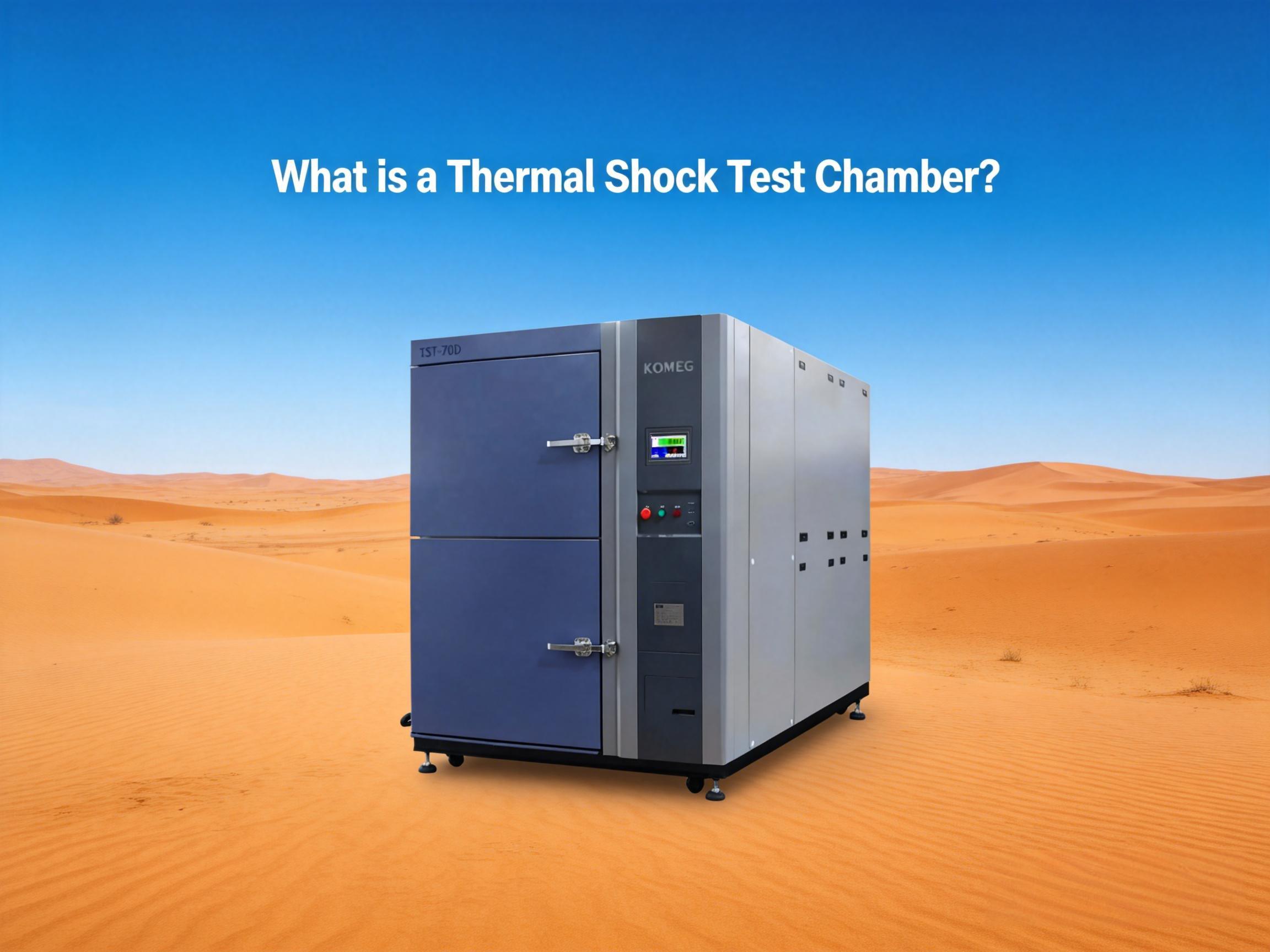
The core purpose of a thermal shock test chamber is to evaluate how materials and products withstand thermal stress — such as expansion and contraction of components — and detect potential failures early in the product development or quality control process. This helps manufacturers improve product design, reduce defects, and ensure compliance with industry standards.
How Does a Thermal Shock Test Chamber Work?
Thermal shock test chambers operate on the principle of rapid temperature transition, typically using one of two main structural designs: two-zone (hot zone + cold zone) or three-zone (hot zone + cold zone + transition zone). Here’s a step-by-step breakdown of their working process:
1. Zone Configuration
Hot Zone: Equipped with high-efficiency heating elements to maintain high temperatures, usually ranging from 80°C to 200°C (or higher for specialized models).
Cold Zone: Equipped with a refrigeration system (often cascade refrigeration for ultra-low temperatures) to maintain low temperatures, typically from -40°C to -70°C (or even -100°C for extreme applications).
Transition Zone (Three-Zone Models): A neutral zone between the hot and cold zones, designed to minimize temperature loss during sample transfer, ensuring faster and more stable temperature switching.
2. Test Process
The test sample is placed in the initial zone (either hot or cold) and held at the set temperature for a predetermined “soak time” to ensure the entire sample reaches thermal equilibrium.
The sample is rapidly transferred to the opposite zone (cold or hot) using an automated transfer mechanism (e.g., a conveyor or lift). The transfer time is usually 10-60 seconds, depending on the chamber design and test requirements.
The sample is held in the second zone for another soak time to achieve thermal equilibrium again.
This cycle of hot-cold-hot (or cold-hot-cold) is repeated for a specified number of cycles, as per the test standard (e.g., IEC 60068-2-14, MIL-STD-810G).
After the test, the sample is inspected for physical or functional damage, such as cracking, deformation, delamination, or electrical performance degradation.
Key Components of a Thermal Shock Test Chamber
A high-quality thermal shock test chamber relies on several core components to ensure rapid temperature switching, precision control, and safe operation. These include:
1. Heating System
Composed of nickel-chromium alloy heating tubes or finned heaters, paired with solid-state relays for precise temperature control. The heating system quickly raises the hot zone to the set temperature and maintains stability during the soak period.
2. Refrigeration System
The heart of the cold zone often uses cascade refrigeration technology (two compressors working in series) to achieve ultra-low temperatures. Key components include compressors, condensers, evaporators, and throttling devices (e.g., expansion valves). For standard models, single-stage refrigeration may be used for temperatures above -40°C.
3. Transfer Mechanism
An automated system (conveyor belt, lift, or rotating platform) that moves the sample between zones quickly. The speed of transfer directly affects the accuracy of the thermal shock test, as slower transfer can cause temperature loss and reduce test reliability.
4. Control System
Equipped with a programmable PLC controller and touchscreen interface, allowing users to set test parameters (temperature, soak time, number of cycles, transfer time) and monitor the test process in real time. High-end models may include data logging, remote monitoring, and fault diagnosis functions.
5. Insulation & Sealing
The hot and cold zones are insulated with high-efficiency materials (e.g., rigid polyurethane foam, high-density fiberglass) to minimize heat transfer between zones and reduce energy consumption. Magnetic silicone rubber seals ensure airtightness, preventing temperature leakage during testing.
6. Safety Protection System
A multi-level protection network to ensure safe operation, including over-temperature protection (independent of the main controller), compressor high/low pressure protection, overload protection, leakage protection, and an emergency stop button. This prevents damage to the chamber, test samples, and operators.
Applications of Thermal Shock Test Chambers
Thermal shock test chambers are widely used across various industries to test products that must withstand extreme temperature fluctuations. Common applications include:
1. Electronics & Semiconductors
Testing circuit boards, chips, capacitors, resistors, and other electronic components to ensure they function normally after rapid temperature changes (e.g., from cold storage to hot operating environments).
2. Automotive Industry
Testing automotive components such as sensors, connectors, batteries, and engine parts to verify their durability under extreme temperature conditions (e.g., winter cold and summer heat, or engine heat cycles).
3. Aerospace & Defense
Testing aerospace components (e.g., avionics, satellite parts, missile components) to ensure they can withstand the drastic temperature changes of high-altitude flight and re-entry into the atmosphere.
4. Metals & Plastics
Evaluating the thermal stability of metal alloys, plastic materials, and composites to detect defects such as cracking, warping, or material fatigue caused by thermal expansion and contraction.
5. Medical Devices
Testing medical equipment (e.g., diagnostic devices, implants, surgical instruments) to ensure they remain functional in different temperature environments, from cold storage to body temperature.
Key Factors to Consider When Choosing a Thermal Shock Test Chamber
When selecting a thermal shock test chamber for your application, consider the following critical factors to ensure it meets your testing needs and industry standards:
Temperature Range: Determine the required high and low temperature limits (e.g., -70°C to 150°C) based on your product’s intended use.
Zone Design: Choose between two-zone (cost-effective, suitable for most applications) or three-zone (faster temperature switching, better stability) models.
Sample Size & Capacity: Select a chamber with a working volume that accommodates your largest test sample, ensuring sufficient space for uniform temperature distribution.
Switching Time: The time it takes to transfer the sample between zones (typically 10-60 seconds) — faster switching is required for more rigorous tests.
Control & Data Logging: Ensure the chamber has a user-friendly controller, programmable test cycles, and data recording capabilities (e.g., USB export, software integration) for compliance and analysis.
Industry Standards: Verify that the chamber meets relevant standards (e.g., IEC 60068-2-14, MIL-STD-810G, ASTM D1598) for your industry.
Why Thermal Shock Testing is Critical for Product Reliability
Rapid temperature changes are one of the most common causes of product failure. A thermal shock test chamber allows manufacturers to simulate these conditions in a controlled environment, identifying potential defects early in the product development cycle. This not only reduces the risk of product recalls and warranty claims but also improves customer trust and brand reputation.
By subjecting products to thermal shock testing, you can ensure they meet the highest standards of reliability, durability, and performance — even in the harshest real-world environments.
A thermal shock test chamber is an essential tool for any industry that produces products exposed to extreme temperature fluctuations. It provides a reliable, controlled way to simulate thermal stress, verify product performance, and ensure compliance with industry standards. Whether you’re testing electronics, automotive components, or aerospace parts, choosing the right thermal shock test chamber is key to delivering high-quality, durable products to the market.