

Salt Spray Test Chamber is a sophisticated environmental simulation system designed to evaluate the corrosion resistance of protective coatings and industrial materials. Often referred to as a Salt Fog Chamber or Corrosion Tester, this equipment acts as an accelerated-aging laboratory. It compresses years of potential exposure to salt-heavy coastal or industrial atmospheres into a controlled test cycle lasting only hours or days.
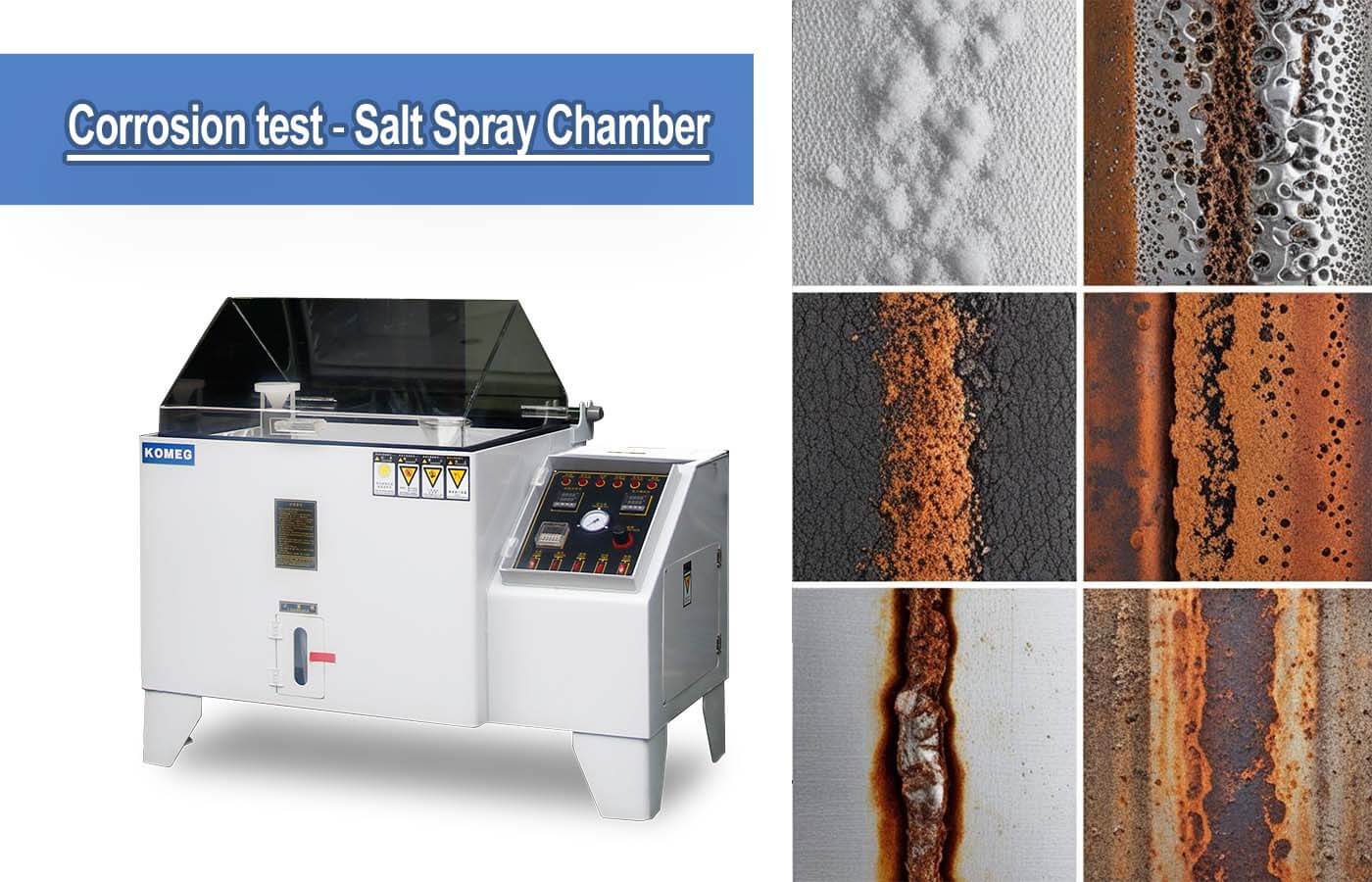
The Core Function: Simulated Marine Environments
In real-world conditions, salt is one of the most aggressive corrosive agents. For products used in automotive, aerospace, marine, or outdoor construction applications, durability is paramount.
The salt spray chamber operates by creating a hermetically sealed microclimate. Inside, a precise brine solution—typically a 5% sodium chloride (NaCl) concentration—is converted into a dense, uniform mist via an atomization nozzle. This saline fog settles onto test specimens, triggering an electrochemical reaction that mimics natural oxidation and degradation.
How the Testing Process Works
To ensure repeatable and scientifically valid results, the chamber controls three critical variables:
1. Temperature Control: Since heat acts as a catalyst for corrosion, most chambers maintain a stable internal temperature (often 35°C or 50°C), ensuring the chemical reaction proceeds at a predictable, accelerated rate.
2. Fog Dispersion: Advanced tower-style sprayers ensure even distribution of salt mist across all samples, eliminating “dead zones” where corrosion might not occur.
3 . Atmospheric Consistency: High-end units, such as those from KOMEG, continuously monitor the pH value of collected fallout and air pressure to comply with international standards, including ASTM B117, ISO 9227, and JIS Z 2371.
Key Technical Features of a Modern Corrosion Tester
Beyond simply spraying salt water, a high-performance chamber integrates several engineering innovations:
Corrosion-Proof Construction: To withstand the harsh environment it generates, the chamber body is made of reinforced, heat-resistant PVC or high-grade PP plastics that will not rust or deteriorate.
Precision Atomization: Adjustable nozzles allow users to control mist density and particle size, producing a fine fog that covers specimens without forming large, irregular droplets.
Automated Data Logging: Modern systems include PLC touch-screen controllers that record temperature fluctuations, spray duration, and water levels, providing a complete audit trail for quality control.
Safety & Protection: Integrated safety features include low-water alarms, over-temperature protection, and automated venting systems to safeguard the laboratory environment.
Why Do Manufacturers Need Salt Spray Testing?
The primary purpose of using a salt spray chamber is risk mitigation. By identifying failure points in coatings, paints, or electroplated layers during the R&D phase, manufacturers can:
Validate the quality of raw materials. Predict product service life in harsh environments.
Optimize surface treatment processes to outperform competitors.
Experience Excellence with KOMEG
As a global leader in environmental simulation with over 30 years of expertise, KOMEG delivers reliable, high-precision salt spray chambers customized for the most demanding industrial requirements. Our equipment ensures your products are not just built to last, but engineered to conquer the elements.
Looking for a customized corrosion-testing solution? Contact KOMEG today!