

1. Defining the Rapid-Rate Thermal Cycle Chamber
A Rapid-Rate Thermal Cycle Chamber, commonly referred to as an Environmental Stress Screening (ESS) system, is a high-performance environmental test unit engineered to subject components to extreme and rapid thermal transitions. Unlike standard climatic chambers used for steady-state soaking, these systems are designed to apply aggressive, controlled thermal stress to reveal latent manufacturing defects that would otherwise remain hidden until a product is in the field.
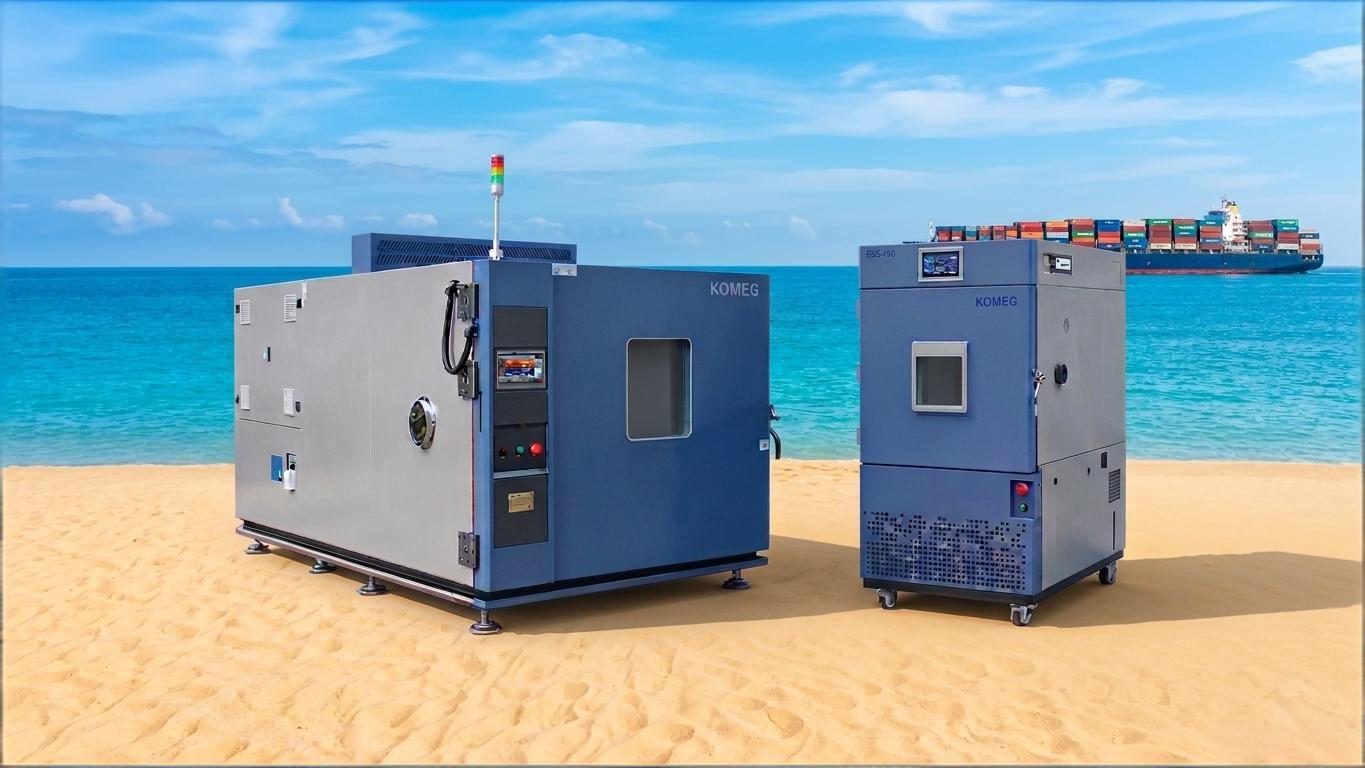
The core mission of this technology is to accelerate the aging process by executing precise and repeatable temperature swings, typically ranging from 5°C/min to 25°C/min or higher. By compressing months of environmental wear into a matter of days, engineers can validate design robustness and significantly shorten product qualification cycles.
2. Core Thermodynamics: Linear vs. Non-Linear Transitions
Understanding the distinction between temperature control modes is critical for high-precision reliability testing:
Linear Ramp Rates: In this mode, the chamber maintains a constant change in temperature per minute throughout the entire transition. This requires immense power reserves and sophisticated PID (Proportional-Integral-Derivative) control to ensure the slope remains straight even as the air temperature approaches the target limit.
Non-Linear (Average) Rates: This refers to the average speed of the transition from the starting setpoint to the final setpoint. The rate is typically much faster in the middle of the cycle and slows down at the “knees” of the curve as the thermal gradient decreases.
3. Advanced Systems Engineering and Hardware
To achieve the extreme performance required for ESS, the internal architecture of the chamber must far exceed standard industrial specifications:
High-Velocity Airflow Dynamics
Effective thermal cycling depends on the ability to break the stagnant air boundary layer surrounding the Device Under Test (DUT). These chambers utilize high-power, high-static pressure fan systems that deliver massive air change rates. This ensures that the temperature of the actual product closely tracks the temperature of the air, maximizing the mechanical stress applied to internal joints and interfaces.
High-Efficiency Refrigeration and Heating
Rapid cooling requires heavy-duty industrial-grade compressors, often arranged in a cascade configuration, paired with Electronic Expansion Valves (EEV). This setup allows for the precise regulation of refrigerant flow to handle the massive heat loads generated during a 25°C/min pull-down. Conversely, the heating systems utilize low-thermal-lag armored heaters to provide near-instantaneous response times.
Structural Integrity and Insulation
The inner workspace is typically constructed from high-grade SUS304 or SUS316 stainless steel using specialized welding techniques to withstand the constant expansion and contraction caused by rapid cycling. High-density, flame-retardant polyurethane foam is used for insulation to prevent thermal leakage and maintain high energy efficiency.
4. The Science of Failure: Why Rapid Cycling is Essential
Rapid-rate thermal cycling is a cornerstone of the Physics of Failure (PoF) approach to reliability. It targets several specific failure mechanisms:
CTE Mismatch: Different materials (such as silicon chips, epoxy resins, and copper traces) have different Coefficients of Thermal Expansion (CTE). Rapidly changing the temperature creates intense shear forces at the interfaces of these materials, which can snap weak solder joints or delaminate internal layers.
Eliminating Infant Mortality: By forcing defects to surface in a controlled laboratory environment, manufacturers can weed out “weak” units—those with poor soldering or micro-cracks—before they reach the end consumer.
Creep and Fatigue Acceleration: The rapid transitions accelerate the grain coarsening of solder alloys, allowing engineers to predict long-term fatigue life in a fraction of the time.
5. Safety, Control, and Global Standards
Operating at such high power levels requires a sophisticated multi-layer safety architecture. This includes independent mechanical over-temperature switches, compressor over-pressure protection, and fan overload safeguards to protect both the equipment and the high-value test samples.
Modern chambers are equipped with high-sampling-rate controllers and intelligent HMI (Human Machine Interface) systems. These systems provide granular control over the testing profile and generate comprehensive data logs required for compliance with international standards such as MIL-STD-810H, IEC 60068-2-14, and JESD22-A104.
The Rapid-Rate Thermal Cycle Chamber is a definitive tool for modern high-reliability manufacturing. By integrating precise ramp control, high-velocity airflow, and robust structural engineering, it provides the most effective means to validate the survivability of mission-critical electronics and materials. When evaluating these systems, the focus must remain on their actual performance under load and their ability to maintain long-term system stability during continuous, aggressive operation.
With over 30 years of expertise, KOMEG provides reliable, standard, and customized Rapid-Rate Thermal Cycle Chamber that meet ISO and CE standards. Whether you need a reach-in unit or a massive walk-in ESS system, KOMEG ensures your products are built to last.