

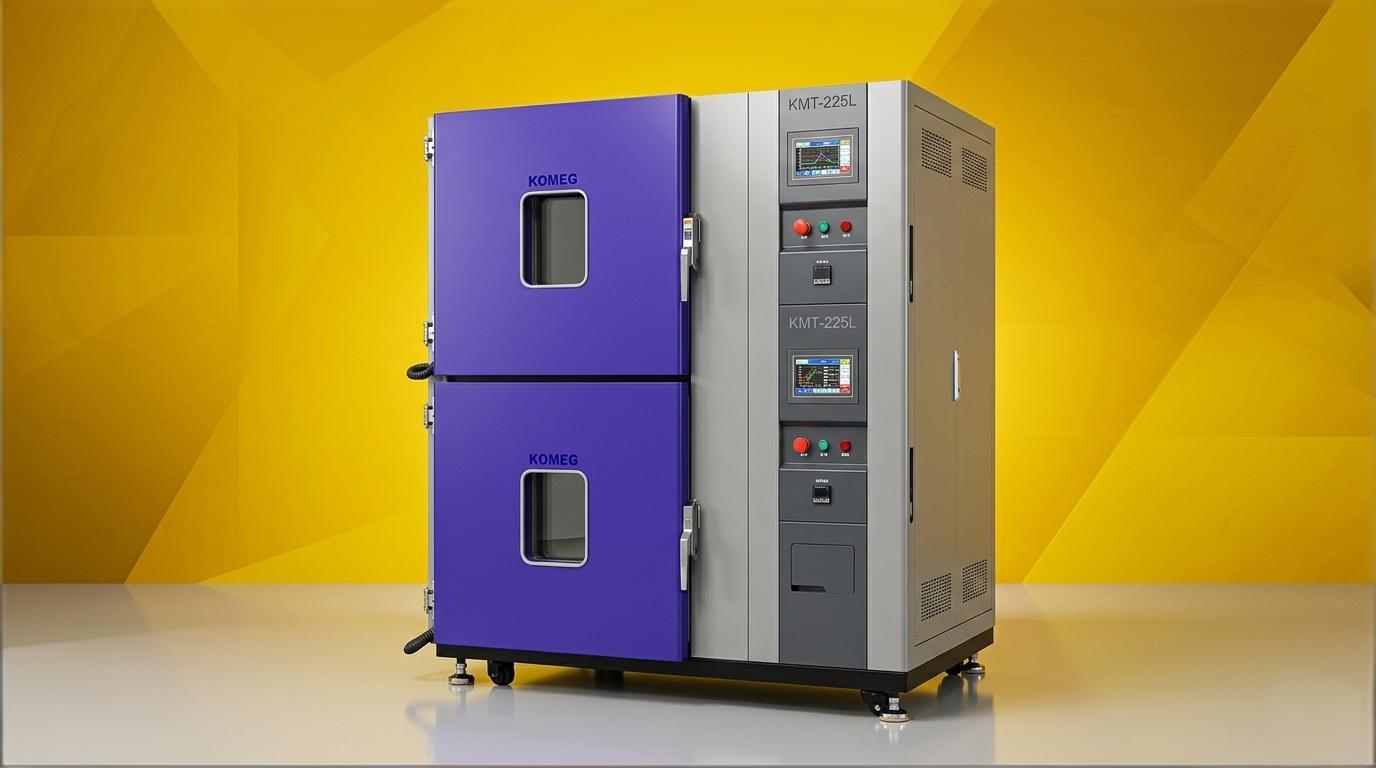
High and low temperature environment chambers, also known as thermal or climatic test chambers, are specialized laboratory instruments designed to simulate extreme atmospheric conditions. These enclosures provide controlled environments to evaluate the physical, chemical, and mechanical properties of materials, components, and finished products. By subjecting test subjects to precise thermal stress, manufacturers can identify failure points, verify shelf life, and ensure compliance with international quality and safety standards.
1. Fundamental Engineering and Operating Principles
The primary function of a high and low temperature chamber is to maintain a stable, uniform temperature within a confined space, regardless of external ambient conditions. This is achieved through the integration of several critical engineering systems.
1.1 The Heating and Control System
Heating is achieved through high-grade electric resistance heaters. These elements are positioned within a plenum—an air-distribution space—where they transfer thermal energy to the air. Modern chambers utilize a Balanced Temperature and Humidity Control (BTHC) system. This control logic uses PID (Proportional-Integral-Derivative) algorithms to continuously regulate power to the heaters in synchronization with the cooling output, allowing for precise temperature increments and high stability without energy waste.
1.2 The Refrigeration System
To reach and maintain low temperatures, chambers utilize advanced mechanical refrigeration cycles.
Single-Stage Systems: Utilized for temperatures down to -20°C or -40°C.
Cascade Refrigeration Systems: For ultra-low temperatures reaching -70°C or even -90°C (such as in KOMEG’s KFH ultra-low temperature series), two independent refrigeration circuits are used in series. The first stage cools the condenser of the second stage, allowing the system to reach extreme negatives that a single compressor cannot achieve. High-performance systems integrate imported, energy-efficient compressors to ensure continuous operation under these extreme conditions.
1.3 Airflow Dynamics and Uniformity
Uniformity is the measure of temperature consistency throughout the chamber’s interior volume. Chambers utilize forced-air circulation systems. Internal fans or blowers drive air through the plenum, across the heating/cooling coils, and into the work space. This ensures that the temperature at the center of the chamber is identical to the temperature near the walls, preventing localized thermal deviations even under high-load conditions.
2. Technical Specifications and Performance Metrics
When evaluating environment chambers, several quantitative metrics define the equipment’s capability and precision.
2.1 Temperature Range and Rate of Change
Chambers are categorized by their thermal boundaries. Common industrial ranges include:
Standard Range: -40°C to +150°C
Ultra-Low Range: -70°C to +180°C (with custom options extending down to -90°C).
The Rate of Change (expressed in °C/min) is critical for thermal cycling tests. Rapid-rate thermal cycle chambers are capable of maintaining specified transition rates to simulate rapid environmental transitions, such as those required by aerospace and defense standards.
2.2 Stability and Uniformity
Stability: The ability of the controller to maintain the set point over time, typically controlled within ±0.5°C.
Uniformity: The maximum temperature difference between any two points in the chamber, maintained within ±1.0°C or ±2.0°C, depending on the specific model volume.
2.3 Structural Integrity and Materials
The interior of high-specification chambers is constructed from corrosion-resistant materials, specifically high-quality SUS304 or SUS316L stainless steel. This ensures the structure can withstand long-term thermal expansion and contraction without warping or oxidation. Insulation is provided by high-density, CFC-free polyurethane foam combined with glass wool to maintain a high thermal resistance (R-value) and prevent heat leakage.
3. Critical Industrial Applications
Environmental testing is a mandatory phase in the product development lifecycle across multiple high-stakes industries.
3.1 Pharmaceutical and Biotechnology
In this sector, chambers are used for Stability Testing as per ICH Q1A (R2) guidelines.
Long-term studies: $25°C$ or $30°C$ to determine expiration dates.
Accelerated studies: $40°C$ at $75\% RH$ to predict degradation over time.
Cold Chain Validation: Ensuring biological products remain viable at $2°C$ to $8°C$.
3.2 Electronics and Semiconductors
Electronic components are sensitive to thermal fluctuations, which can cause solder joint fatigue or insulation breakdown.
Burn-in Testing: Operating electronics at high temperatures in burn-in rooms to trigger “infant mortality” failures before shipping.
Low-Temperature Start-up: Verifying that circuits can initiate and function in freezing environments.
3.3 Automotive and Aerospace
Materials used in vehicles and aircraft must withstand drastic thermal shifts.
Drivetrain Testing: Evaluating lubricants and seals at extreme cold.
Cockpit Instrumentation: Ensuring displays and sensors remain accurate under high-heat solar loads.
4. Regulatory Compliance and Validation Support
To ensure the data generated is legally and scientifically valid, manufacturers provide the necessary protocols to meet strict regulatory demands.
IQ/OQ/PQ Validation Support: Complete documentation for Installation Qualification, Operational Qualification, and Performance Qualification is provided to prove the equipment meets its design intent and complies with GMP standards.
Data Integrity (21 CFR Part 11): For pharmaceutical applications, control systems feature multi-level user access, non-deletable audit trails, and secure electronic data export to ensure full compliance with FDA digital records regulations.
Sensor Calibration: All internal sensors are calibrated to traceable standards to ensure continuous precision in reported data.
High and low temperature environment chambers are essential tools for modern industrial quality control. By providing a controlled, repeatable environment, they allow for the objective assessment of product reliability and safety. Manufacturers leveraging advanced control systems and materials deliver precise, reliable, and compliant thermal testing systems that serve as a foundation for engineering excellence worldwide.