

A Thermal Shock Test Chamber is designed to evaluate the endurance of structural materials or composites when subjected to instantaneous transitions between extreme high and low temperatures. By simulating rapid thermal expansion and contraction, this equipment detects chemical changes or physical damage caused by thermal stress in a significantly compressed timeframe.
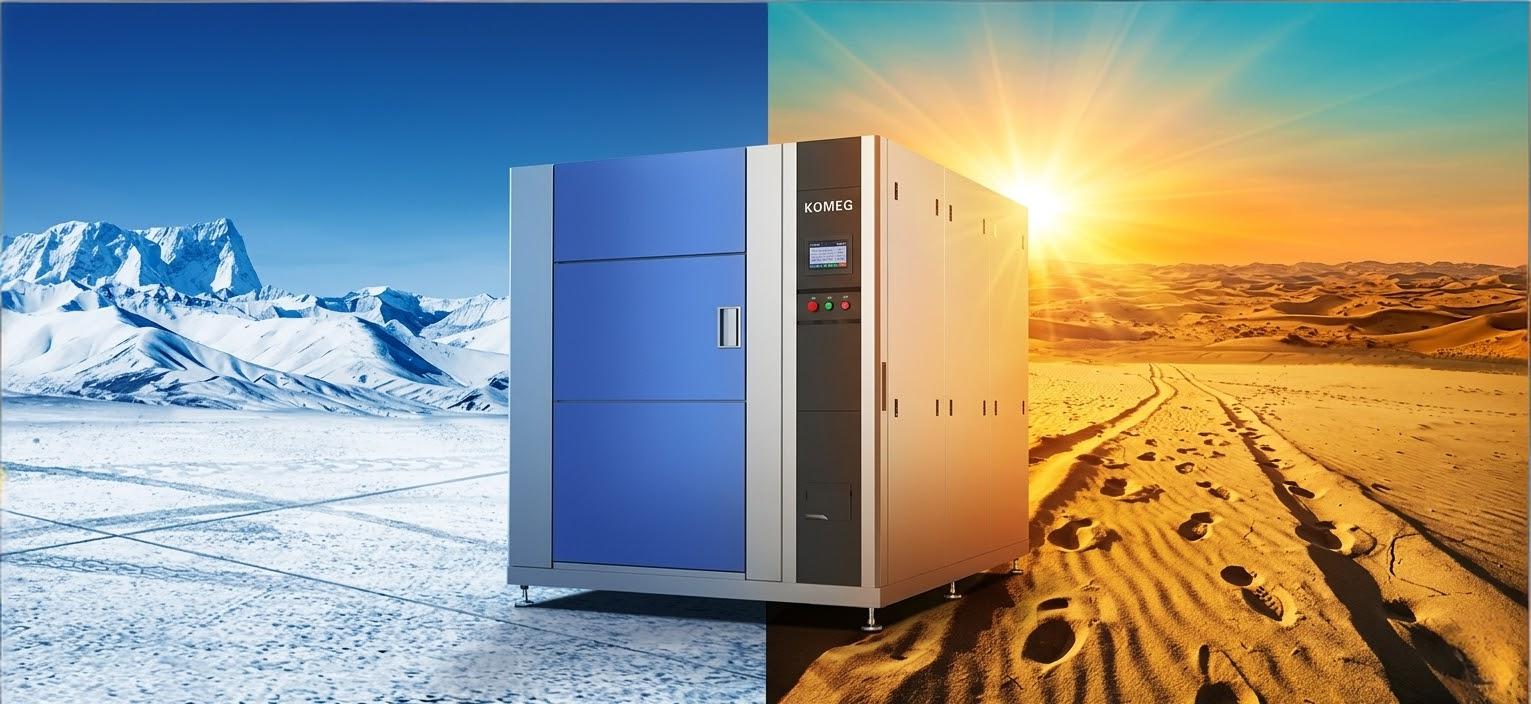
This equipment is widely utilized for quality inspection in industries such as semiconductors, optoelectronics, automotive components, metals, plastics, rubber, and wire & cable. It serves as a critical tool for R&D and quality control, providing a scientific basis for product reliability and improvement.
1. Maintenance Procedures
A disciplined maintenance routine and proper operating techniques are essential to extending the service life of your chamber and ensuring test accuracy.
Condenser Cleaning: Dust accumulation on the condenser fins can cause high-pressure switches to trip, leading to false alarms. Use a vacuum cleaner monthly to remove dust from the cooling fins, or use a stiff brush/compressed air nozzle after powering down.
Environmental Hygiene: Keep the floor around and underneath the unit clean. This prevents large amounts of dust from being sucked into the machinery, which could degrade cooling performance or cause electrical faults.
Door Gasket Protection: When moving samples, avoid contact between sharp objects and the silicone door gaskets. Damaged gaskets lead to air leaks, icing, and shortened equipment life.
Refrigeration System Inspection: Every six months, inspect the “heart” of the chamber—the refrigeration system. Check copper tubing for leaks and look for oil stains at joints (oil usually indicates a refrigerant leak). Contact the manufacturer immediately if leaks are found.
Humidifier & Water Tank Cleaning: Clean the humidifier and water tank regularly to prevent scale buildup, which hinders steam distribution. It is recommended to clean after every test cycle. Using a copper brush followed by a clean water rinse will extend the life of the heating elements and ensure smooth water flow.
Electrical Cabinet Maintenance: Clean and inspect the distribution room at least once a year. Loose contacts can put the entire device in a hazardous state, potentially burning out components or triggering fire alarms.
Wick Replacement: Regularly check the dry/wet bulb wicks. If the gauze becomes hard or discolored, replace it immediately to maintain humidity accuracy. A replacement interval of 3 months is recommended.
Water Line Inspection: Water pipes are susceptible to clogging and leaking. Regularly verify that the supply and drainage lines are unobstructed.
Water Quality Management: Replace the water in the humidifier reservoir monthly to ensure cleanliness and prevent biofilm buildup that may block the flow.
Safety in Retrieval: When a test is complete, always ensure the machine is powered off before retrieving samples. Operators must wear dry, insulated, and temperature-resistant protective gloves to prevent burns or frostbite.
2. Professional Operation Techniques
Sample Placement: Ensure the total volume of test samples does not exceed 1/3 of the chamber’s internal capacity. Crowding the chamber blocks airflow, leading to significant temperature deviations.
Pre-Test Checklist: Verify that the power cord is correctly grounded. Check the external water-cooling system (if applicable) for secure connections and adequate water pressure.
Dry the Workspace: Before starting a low-temperature test, run a drying cycle to ensure the workspace is moisture-free, then place your samples inside.
Strict “No Opening” Policy: Never open the door during an active test. Opening the door not only invalidates test data but also poses a severe safety risk to personnel due to sudden pressure or temperature surges.
Monitoring Performance: If the temperature rises too slowly during a high-temperature test, check the air circulation system and ensure the adjustment dampers are opening correctly.
3. Troubleshooting (Q&A)
Q1: What if the temperature fails to reach the setpoint?
High Temperature: Inspect the electrical heating system and Solid State Relays (SSR). Check the circulation fan and verify if the dampers are functioning.
Low Temperature: If cooling is slow, ensure the chamber isn’t overloaded. If the temperature hits a certain point and then rises, check if the ambient room temperature is too high or if the back of the chamber is too close to a wall, preventing heat dissipation.
Q2: Controller displays an “Over-temperature Alarm”?
Check the Over-temperature Protector setting. It should generally be set to 150℃ or roughly 30℃ above your operating temperature.
Inspect the circulation motor. If the motor fails, heat will build up locally, triggering the alarm.
Q3: Temperature overshoot is too high during heating.
Re-adjust the PID parameters (perform an Auto-tuning). If the temperature rises uncontrollably, the SSR may be shorted, or the controller may be faulty.
Q4: Actual humidity differs greatly from the target?
This is often caused by a dry wet-bulb wick. Check the water level controller and replace the wick if necessary. If humidity is much lower than the setpoint, check the humidification boiler’s water supply and electrical control system.
4. About KOMEG
Since environmental test chambers have a finite operational lifespan, regular maintenance is the key to preventing unexpected breakdowns. KOMEG (Guangdong KOMEG Industrial Co., Ltd.) provides a full range of solutions, including two-zone/three-zone thermal shock chambers, battery-specific shock chambers, and rapid temperature cycle chambers.
With a market presence in over 70 countries and regions, KOMEG has provided reliability testing services and technical support to more than 2,600+ enterprises globally. We don’t just manufacture equipment; we provide engineered solutions for the most demanding environmental simulations.