

1. What is a Rapid Temperature Cycle Test Chamber?
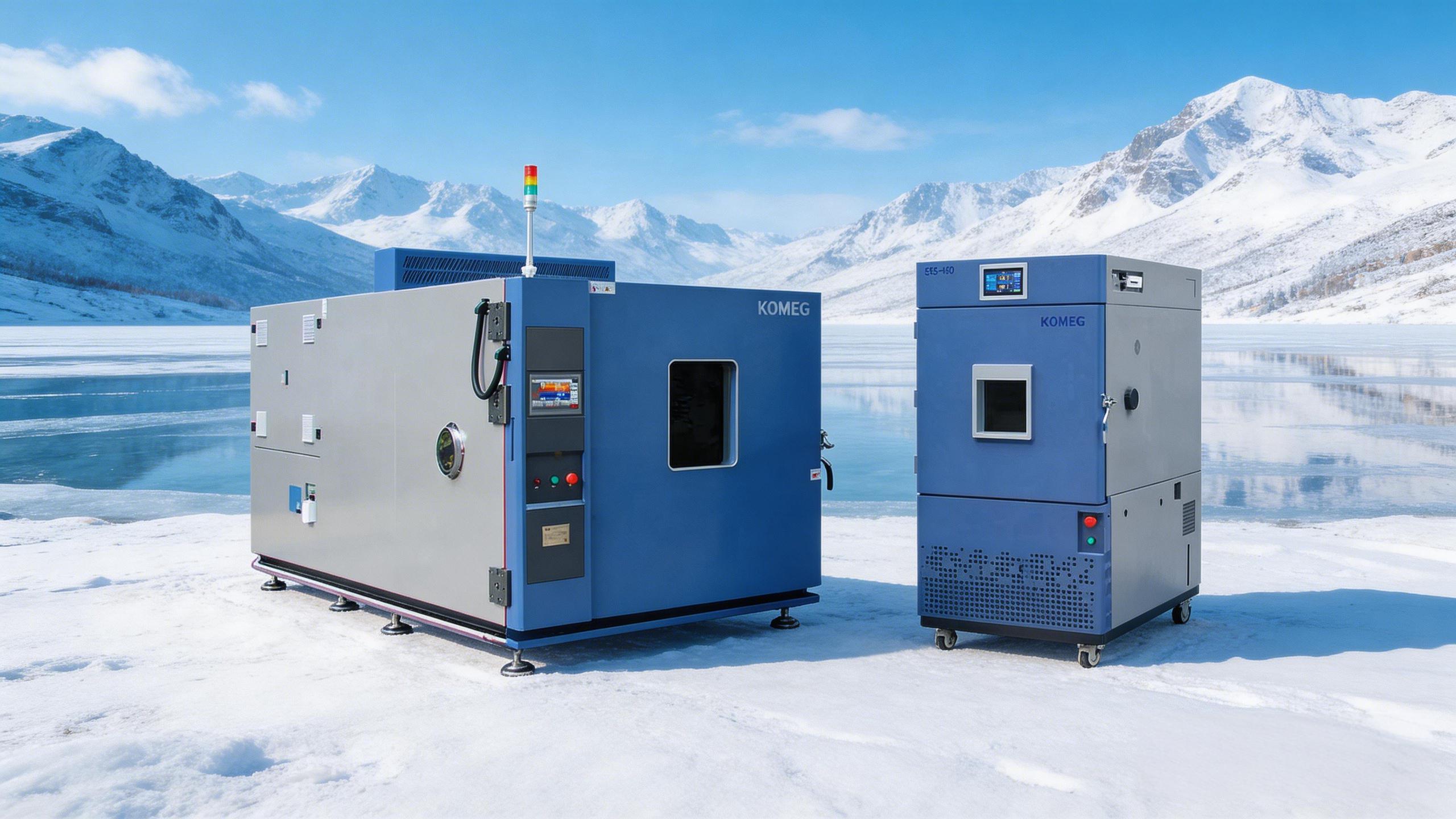
A Rapid Temperature Cycle Test Chamber, widely known in the industry as Environmental Stress Screening (ESS) equipment, is a high-performance environmental reliability testing system. Its primary mission is to apply controlled yet aggressive thermal stress—with ramp rates typically ranging from 5°C/min to 25°C/min or higher—to induce and reveal latent manufacturing defects within an extremely short timeframe.
2. Core Technical Features
In rapid thermal testing, understanding the nuances of temperature control modes is critical for meeting specific testing standards:
Linear Rate: Refers to a constant temperature change rate over a set duration (e.g., a steady 10°C/min from start to finish). Achieving a linear rate requires significant power reserves and sophisticated PID control to overcome the diminishing thermal gradient as the target temperature is approached.
Non-Linear (Average) Rate: Refers to the average rate across the entire transition. In this mode, the temperature changes fastest in the middle of the cycle and slows down at the boundaries. This is often more cost-effective for standard screening, where a strict constant slope is not mandatory.
3. Structural Engineering and System Integration
To achieve extreme thermal performance, ESS chambers utilize hardware configurations that far exceed those of standard climatic chambers:
Enhanced Airflow: These systems employ high-power, high-static pressure fans to ensure high-velocity airflow. This ensures the air can rapidly penetrate the surface of the Device Under Test (DUT), maximizing heat exchange efficiency and minimizing thermal lag.
High-Efficiency Refrigeration: Utilizing semi-hermetic industrial-grade compressor units combined with Electronic Expansion Valves (EEV). This setup allows for the precise regulation of refrigerant flow, enabling rapid cooling while maintaining energy efficiency during steady-state operation.
Material Excellence: The interior workspace is typically constructed from high-grade SUS304/316 stainless steel to withstand frequent thermal expansion and contraction. The insulation layer utilizes high-density, flame-retardant polyurethane to minimize thermal loss.
4. Why is ESS Essential?
ESS testing is more than just environmental simulation; it is a vital quality management tool used to ensure product survivability:
Eliminating Infant Mortality: It forces the exposure of latent defects such as poor solder joints, packaging cracks, or material thermal mismatches, preventing defective units from ever reaching the end-user.
- Validating CTE Compatibility: Different materials have different Coefficients of Thermal Expansion (CTE). Rapid cycling effectively tests the mechanical strength and integrity of the interfaces where dissimilar materials are bonded.
Accelerating Qualification: It compresses fatigue failures—which might take months to manifest in real-world conditions—into a few days, significantly boosting R&D efficiency and speed-to-market.
5. Key Safety and Control Strategies
Due to the massive power consumption and rapid environmental changes, robust safety mechanisms are paramount:
Multi-stage Over-temp Protection: Includes independent mechanical over-temperature switches and digital software limits to provide a failsafe against thermal runaway.
- Dynamic Capacity Modulation: The system automatically adjusts compressor output based on the current heat load. This prevents “thermal shock” that could cause physical damage to sensitive, high-precision components.
Intelligent HMI: Equipped with high-sampling-rate data loggers, the controller captures every minor fluctuation during transitions and generates comprehensive, audit-ready test reports.
6. Applications and Industry Standards
Rapid temperature cycle chambers are indispensable in high-reliability sectors:
Automotive Electronics: Meeting rigorous standards such as AEC-Q100 for automotive-grade component testing.
Aerospace: Simulating the extreme, rapid temperature transitions encountered by aircraft and spacecraft during rapid altitude changes.
Semiconductor Packaging: Essential for the reliability validation of BGA (Ball Grid Array) and wafer-level packaging.
Global Compliance: Fully compatible with international testing specifications, including MIL-STD-810G, IEC 60068-2-14, and JESD22-A104.
The Rapid Temperature Cycle Test Chamber (ESS) is the definitive tool for enhancing the reliability of modern electronic and material products. Through precise ramp control, optimized airflow dynamics, and multi-layered safety mechanisms, it provides laboratories with the most effective means to validate product “survivability” in harsh environments. When selecting ESS equipment, priority should be given to linear control precision, actual ramp capability under full load, and long-term system stability.
With over 30 years of expertise, KOMEG provides reliable, standard, and customized Rapid Temperature Cycle Test Chambers that meet ISO and CE standards. Whether you need a reach-in unit or a massive walk-in ESS system, KOMEG ensures your products are built to last.