

When selecting Temperature and Humidity Test Chambers, performance parameters—including temperature range, uniformity, fluctuations, and ramp rates—are the primary metrics for determining if the equipment can fulfill specific testing objectives.
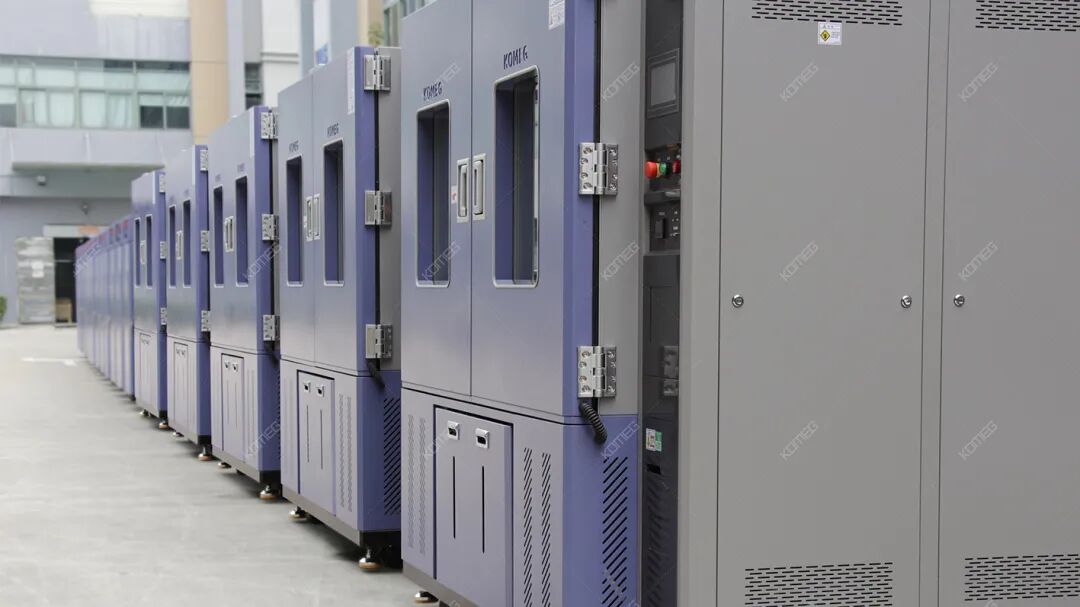
Among these, Temperature Uniformity is paramount. Inconsistent temperature distribution within the workspace directly compromises the reliability of test results. While traditional standards typically specify a temperature uniformity of ±2.0°C, advanced technology from KOMEG has pushed this precision to within ±0.5°C to ±0.2°C.
I. 6 Key Factors Leading to Temperature Non-Uniformity
1. Test Load and Sample Interference
Placing excessive or bulky test samples in Temperature and Humidity Test Chambers obstructs internal air convection. Specifically, active loads like LED lighting products generate their own heat. As a “heat load,” these products create thermal accumulation that significantly disrupts the balance of the temperature field.
2. Quality of Insulation Materials
The insulation layer is critical for maintaining internal conditions and blocking heat exchange. Poorly handled insulation (insufficient thickness or thermal bridging) leads to excessive deviation. High-quality chambers typically utilize a combination of Polyurethane foam (PU) and Glass Fiber.
3. Air Circulation System Efficiency
These chambers rely on forced air circulation for heat exchange.
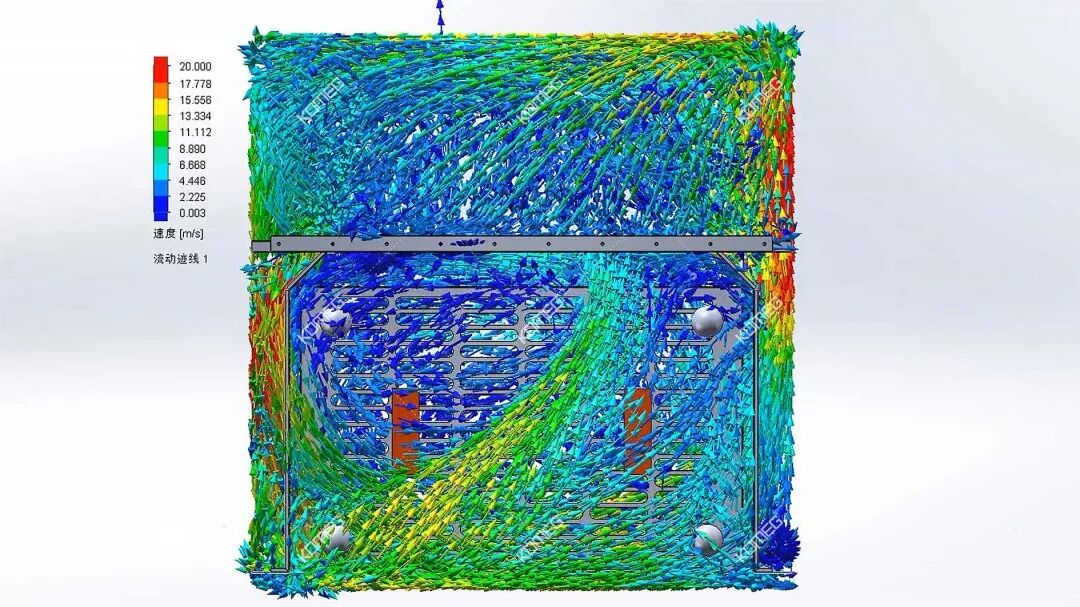
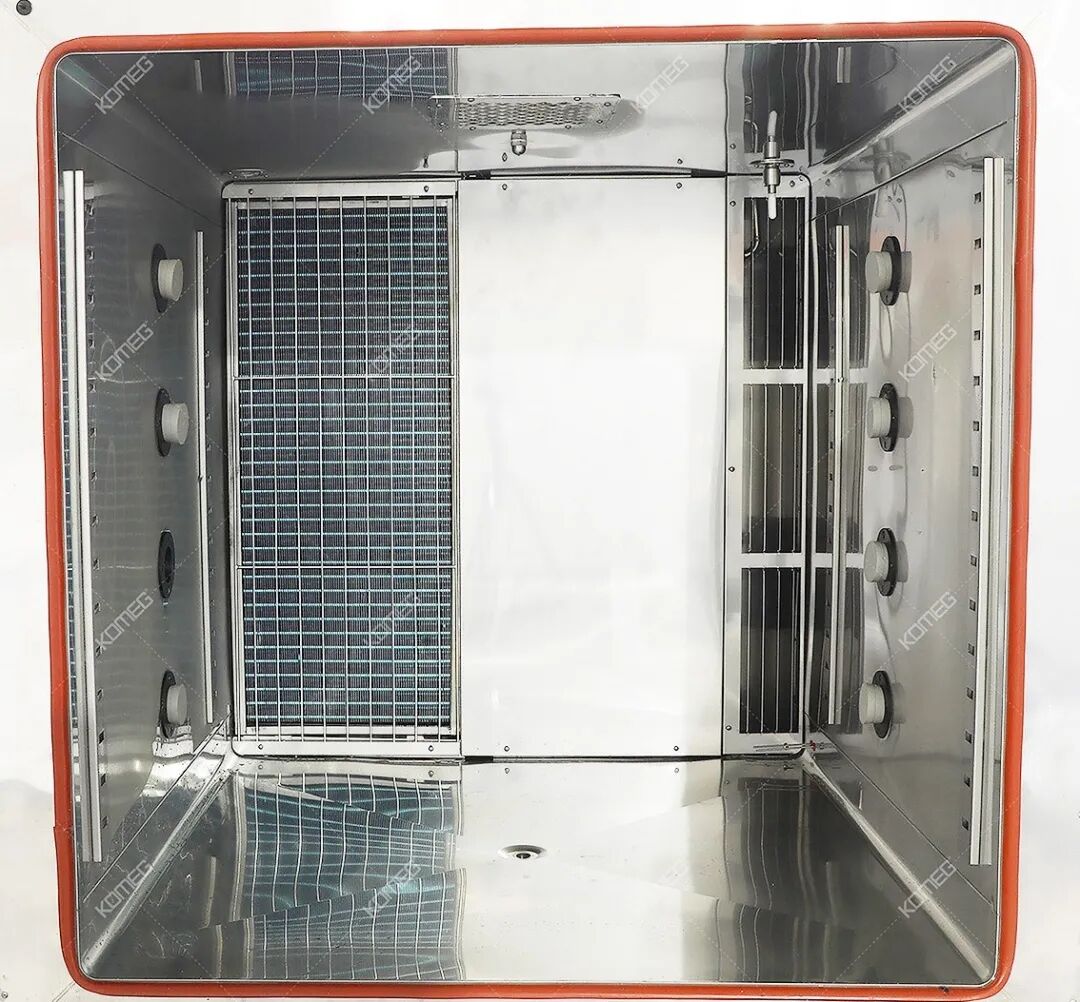
Mechanism: Air is conditioned in a rear plenum, heated by elements, and agitated by a high-temperature resistant long-axis motor driving a centrifugal fan before entering the workspace through adjustable louvers.
Impact: The velocity, direction, and turbulence of this airflow determine how evenly the temperature is distributed across the chamber.
4. Structural Design and Sheet Metal Layout
The internal geometry—including the design of air ducts, the positioning of heating elements, and fan power—must be symmetrical. Any deviation in the aerodynamic design of the sheet metal can create “dead zones” where air does not circulate effectively.
5. Variations in Internal Wall Heat Transfer Coefficients
The six sides of the chamber wall often have different heat transfer coefficients. The presence of cable ports, access holes, or viewing windows can cause localized heat dissipation or transfer, resulting in uneven wall radiation and convection.
6. Cabinet Sealing Performance
A compromised door seal or non-customized gaskets with seams allow for an exchange between internal and ambient air. This leakage destroys internal uniformity. Premium Temperature and Humidity Test Chambers must utilize one-piece molded silicone gaskets capable of withstanding extreme temperature cycles.
II. 6 Operational Measures to Improve Uniformity
To achieve higher precision and ensure test data integrity, consider the following optimization measures:
Enhance Sealing and Insulation: Regularly inspect for leaks and ensure all connectors between the inner liner and outer shell have thermal breaks.
Optimize Sample Placement: The total volume of test samples should not exceed 1/5 of the workspace volume.
The cross-sectional area of samples on the windward side should be less than 1/3 of the total cross-section to allow for adequate airflow.
Ensure samples do not block the air inlet or outlet.
Adjust Airflow Parameters: Increasing the air supply volume while reducing the supply air temperature differential can minimize the “shock” to the temperature field.
Increase Air Velocity: Where testing standards allow, increasing the fan speed enhances convection and eliminates thermal dead zones.
Advance Control Precision: Utilize PID (Proportional-Integral-Derivative) continuous adjustment for heating power. For cooling, employ the Heat Balance Method to maintain responsiveness.
Sensor Calibration and Offset Adjustment: Position the temperature sensor near the air outlet for maximum sensitivity. Adjust the Controller Offset if needed to realign the temperature field.
About KOMEG
Guangdong KOMEG Industrial Co., Ltd. (founded in 1990) possesses over 30 years of R&D and manufacturing expertise in environmental simulation.
Our Core Product Line:
Temperature and Humidity Test Chambers
Thermal Shock Test Chambers (2-Zone / 3-Zone)
Rapid Temperature Cycle Chambers (ESS)
Altitude / Low-Pressure Simulation Chambers