

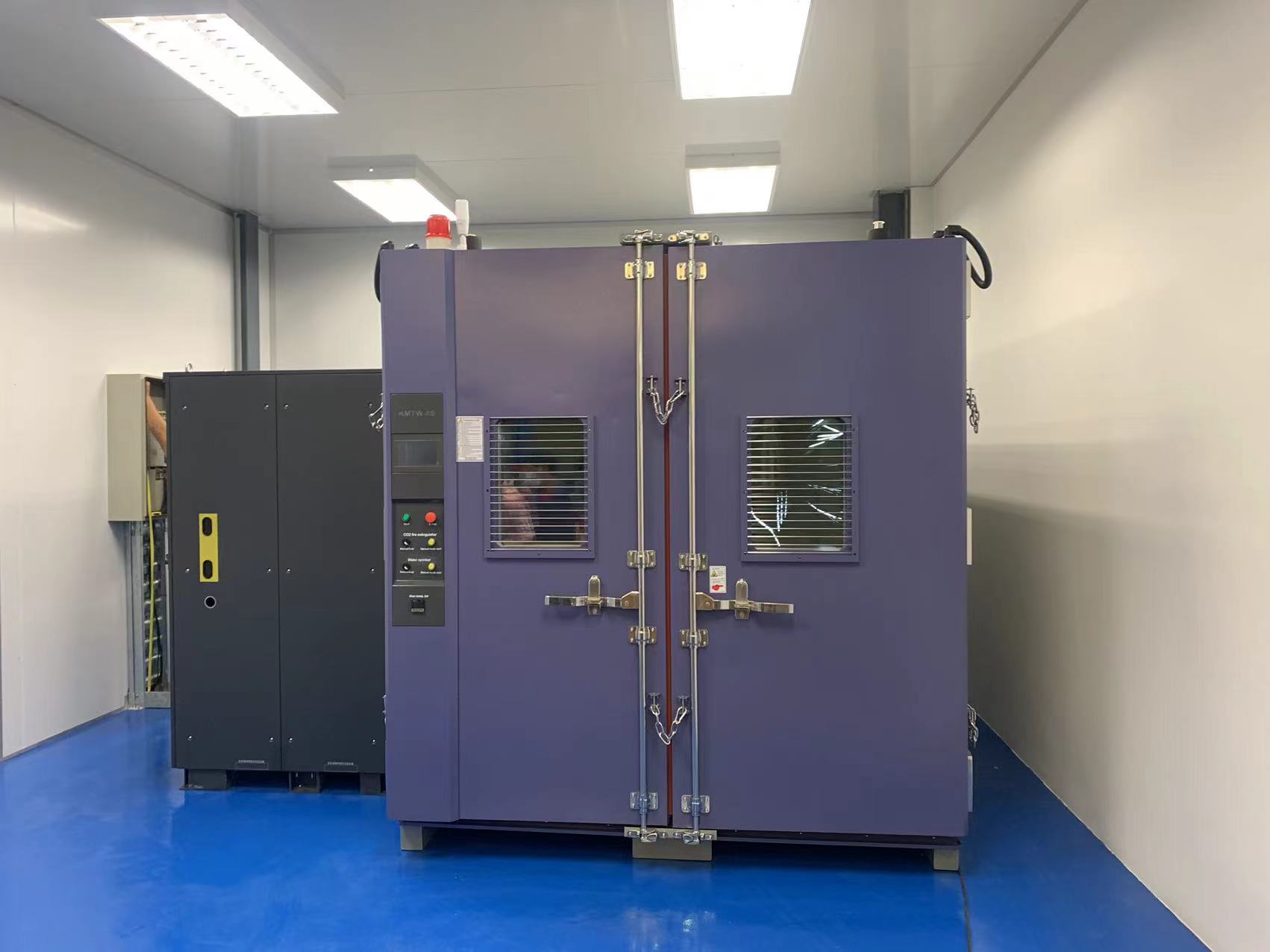
A Walk-in Environmental Test Chamber is a large-scale, walk-in room designed to subject products, components, or materials to precisely controlled environmental conditions. Its primary purpose is to validate product reliability, ensure quality control, and support research and development by simulating real-world stresses like extreme temperatures, humidity, dust, or altitude.

Core Applications & Key Industries
These chambers are indispensable for testing large, bulky, or high-quantity samples that cannot fit into standard bench-top chambers. They are critical in sectors where failure is not an option:
Aerospace & Defense: Testing components under extreme altitude and temperature conditions.
Automotive: Evaluating parts for durability against thermal cycles, humidity, and corrosion.
Electronics & Batteries: Validating the performance and safety of large battery packs, servers, and assemblies in controlled climates.
Pharmaceuticals: Providing stable, long-term storage environments (stability testing) for drug products as per regulatory requirements.
General Industry: Used for quality assurance of plastics, chemicals, telecommunications equipment, and more.
Primary Chamber Types & Functions
Walk-in chambers are specialized according to the environmental stress they simulate:
Temperature/Humidity Chambers: The most common type, providing accurate control over thermal and moisture conditions for tests like thermal cycling or steady-state damp heat.
Stability Chambers: Designed for precise, long-term control of temperature and humidity, crucial for pharmaceutical and biotech shelf-life studies.
Specialized Test Chambers: This category includes chambers engineered for specific, often harsh, conditions:
Altitude Chambers: Simulate low-pressure, high-altitude environments.
Dust & Sand Chambers: Test ingress protection and abrasion resistance.
Explosion-Proof Chambers: Safely contain tests on volatile items like batteries under failure conditions.
Rapid Temperature Change Chambers: Subject products to severe thermal shock.
Corrosion Test Chambers: Perform complex salt spray or cyclic corrosion tests.
Critical Selection & Cost Considerations
Choosing the right chamber requires a strategic assessment of several factors that directly impact performance and investment:
Technical Specifications: Define your exact needs for temperature range, humidity range, rate of change, uniformity, and compliance standards (e.g., ISO, IEC, MIL-STD).
Chamber Construction: Prioritize durable materials like SUS304 stainless steel interiors, robust insulation, and a structure that allows for potential future relocation or expansion.
Total Cost of Ownership (TCO): Look beyond the initial purchase price. Consider long-term energy efficiency, maintenance costs, availability of spare parts, and the supplier’s after-sales service capability.
Supplier Evaluation: Partner with a direct manufacturer that offers strong in-house R&D, provides traceable calibration, and has a proven track record in your industry. A clear warranty and responsive technical support are non-negotiable for minimizing downtime.
To learn more about the walk-in environmental testing chamber, please click here: KONEG Environmental Testing Chamber