

Industrial-grade environmental testing equipment has long been constrained by the “-70°C technical barrier,” failing to meet the core requirements for extreme low-temperature testing in high-end sectors. According to the 2024 Global Environmental Test Equipment Blue Book (IMS Research, Issue: GBR-2024-ET03), 92% of commercial low-temperature chambers cannot break the -70°C threshold. Meanwhile, demand for extreme testing below -80°C in aerospace, new energy, and biological research is growing at an annual rate of 42% (Source: China Aerospace Science and Technology Corporation 2024 Annual Report).
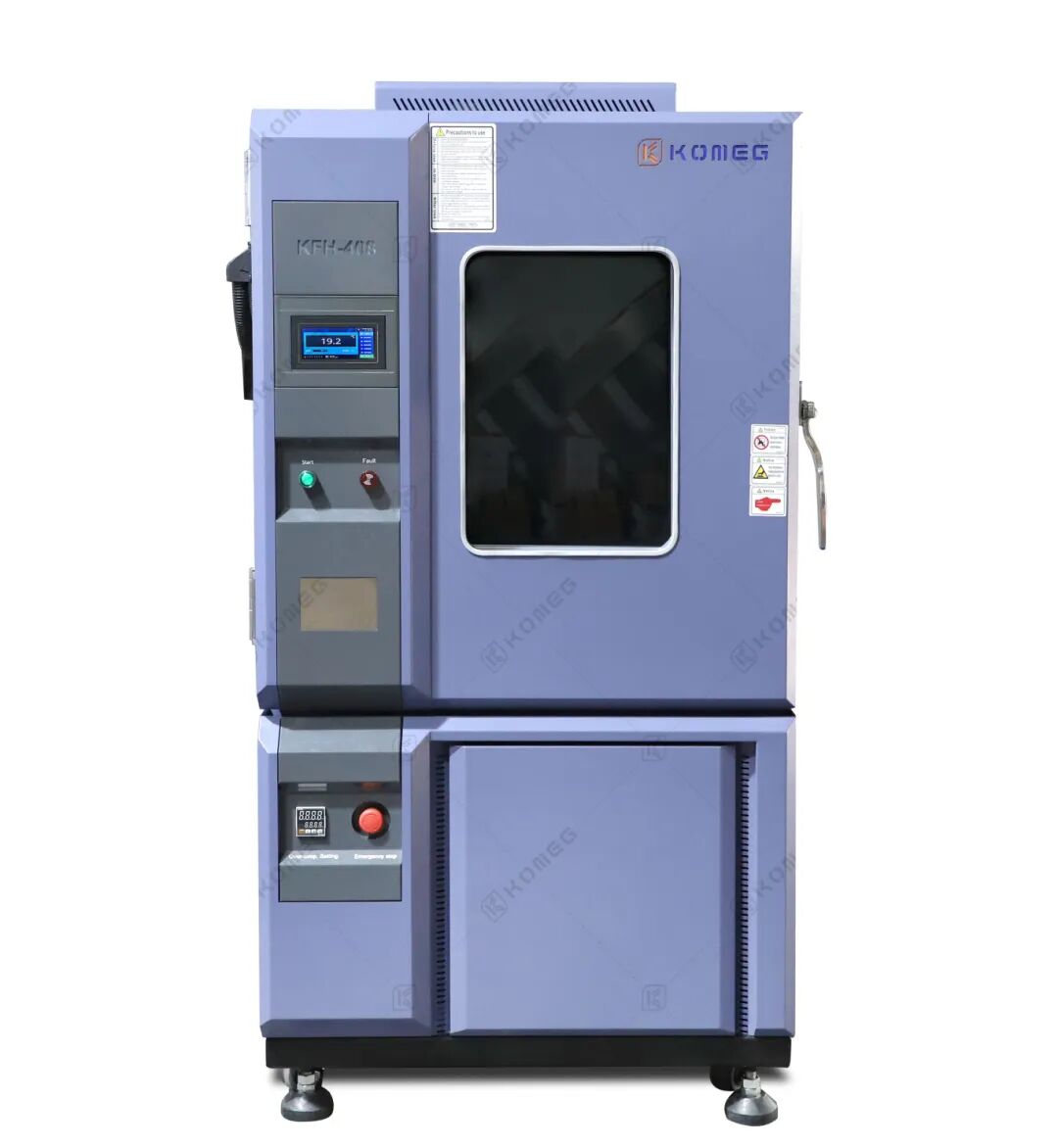
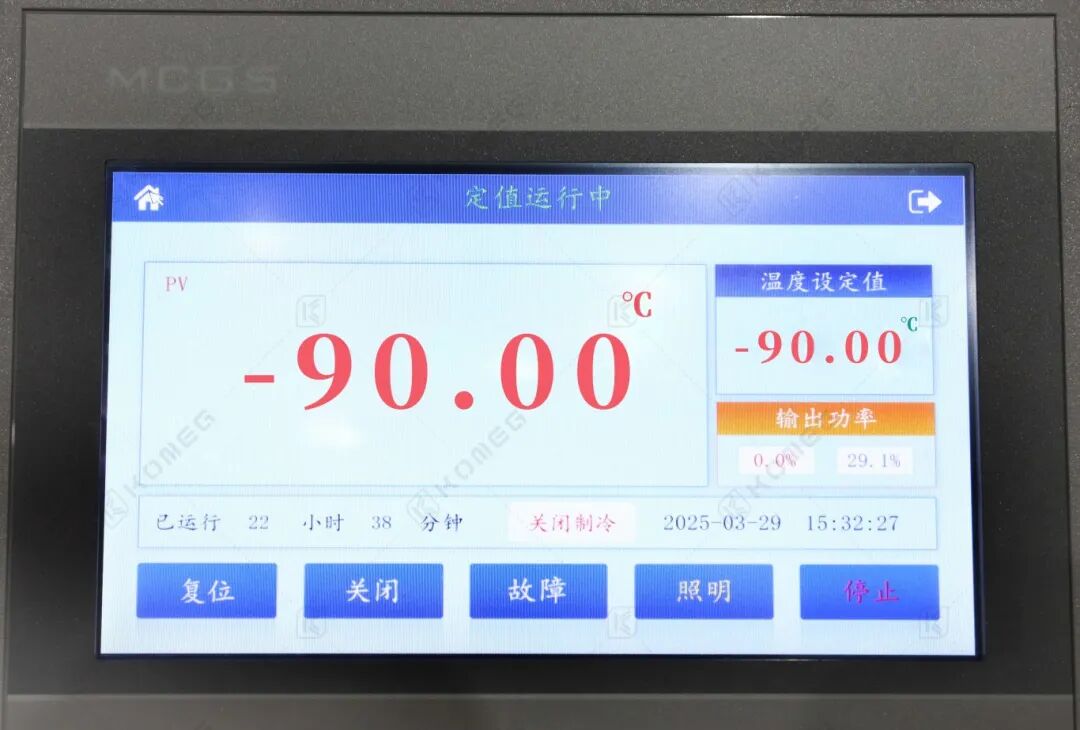
Addressing this industry pain point, KOMEG’s latest Ultra-Low Temperature Test Chamber has achieved a technical breakthrough, reaching a minimum temperature of -90°C. With a temperature fluctuation of ≤±0.5°C under no-load conditions, this temperature is lower than the natural record low in Antarctica (-89.2°C) certified by the World Meteorological Organization (WMO). This provides unprecedented experimental conditions for studying material behavior in extreme environments and verifying high-end product performance.
KOMEG Ultra-Low Temperature Test Chamber: A Breakthrough at the Boundaries of Science
Extreme Temperature Breakthrough: Precise control across a full range of -90°C to +180°C, covering testing needs from extreme cold to mid-high temperatures.
Efficiency Leap: A linear cooling rate of 4.0°C/min significantly shortens test cycles and enhances experimental throughput.
Authoritative Research Data: Temperature uniformity of ≤2.0°C at -90°C. CNAS certified, allowing data to be used directly in scientific reports and product certifications.
01 Core Performance Parameter Comparison
The technical advantages are clearly demonstrated in the comparison between the KOMEG Ultra-Low Temperature Test Chamber (Model: KFH-1000SF4W0) and traditional low-temperature chambers:
| Parameter | Traditional Chamber | KOMEG Ultra-Low Chamber |
| Lower Temp Limit | -70°C | -90°C |
| Temp Fluctuation (No-load) | ≤±1°C | ≤±0.5°C |
| Cooling Rate (20°C → -70°C) | ≤1.0°C/min | ≥4.0°C/min |
| Uniformity at -90°C | Data unavailable (Cannot reach -90°C) | ≤2.0°C |
| Stability (720h continuous run) | Drift ≤±1.0°C | Drift ≤±0.3°C |
Technical Notes:
Cooling Rate Advantage: The linear cooling capacity of ≥4.0°C/min is a 300% improvement over the 1.0°C/min benchmark of traditional equipment, reducing a single low-temperature test cycle by more than 60%.
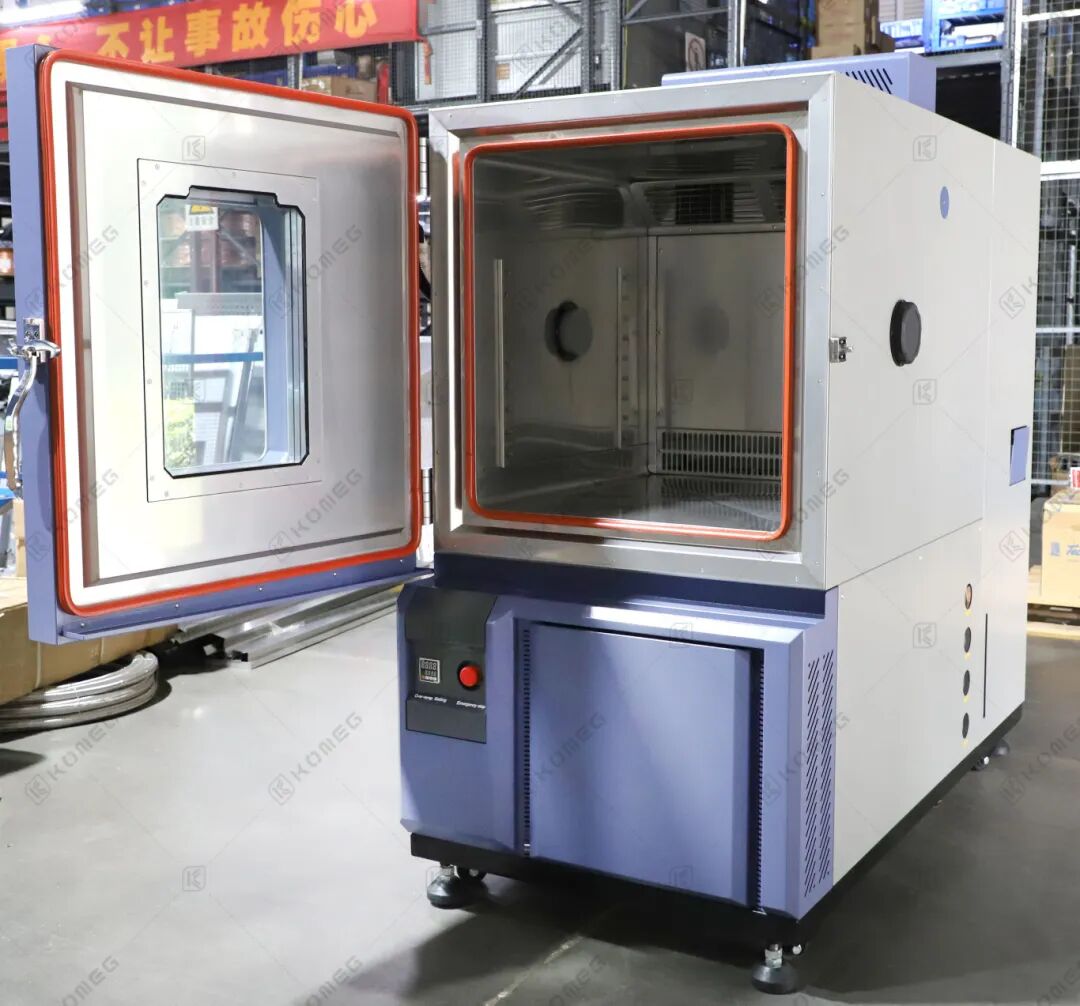
Uniformity Control: Maintaining a uniformity of ≤2.0°C even at -90°C ensures consistent stress distribution across samples within the large 1000L volume, ensuring data accuracy and reproducibility.
02 Key Technical Implementation
I. Refrigeration System Architecture Innovation
Utilizing a self-developed self-cascading refrigeration topology combined with refrigerant flow-state matrix control technology:
Energy Optimization: Power consumption during -90°C steady-state operation is 33% lower than comparable traditional equipment, balancing efficiency with energy savings (Source: NIM Energy Efficiency Report CESI-2024-089).
Reliability Assurance: Equipped with intelligent bypass valve groups to regulate refrigerant flow in real-time, preventing liquid slugging damage to the compressor and extending service life.
II. Material System Upgrades for Deep-Cold Environments
| Component | Solution | Standards / Indicators |
| Sealing System | PTFE-Ceramic Fiber Composite Seal | GB/T10592-2023 compliant; zero leakage/deformation at -90°C |
| Insulation Structure | Vacuum Insulation Panel (VIP) + Nano-Aerogel | Thermal conductivity ≤0.008W/m·K; >50% better than traditional materials |
III. Core Control Algorithm Breakthroughs
Power-Off Recovery: Automatically resumes the test from the point of interruption after an accidental power failure, preventing test invalidation and research losses.
Multi-Modal Precision Control: Supports 50 programs × 30 segments for complex temperature curve editing. Precisely matches the step-down cooling requirements of GJB150.4A-2009, meeting the rigorous standards of aerospace and defense sectors.
03 The Necessity of -90°C in Three Major Fields
I. Extreme Environment Verification of Aerospace Materials
Satellite and spacecraft components encounter extreme temperatures of -85°C to -90°C in orbit. This is the critical range for the glass transition (Tg point) of satellite composite materials, directly impacting mechanical properties and lifespan. Traditional -70°C equipment fails to simulate these orbital extremes, leading to inaccurate performance data.
Case Study: A specific carbon fiber-reinforced epoxy resin showed a 41.7% decay in tensile strength at -89°C in a KOMEG chamber, providing critical data for material selection and structural design (Source: Aerospace Materials & Technology 2024, 44(1):27).
II. Safety Boundary Research for New Energy Batteries
-90°C is the critical temperature zone for detecting the threshold of lithium dendrite growth:
CATL Findings: Using KOMEG ultra-low chambers, CATL observed micro-phenomena of lithium dendrites penetrating separators in NCM811 batteries after -90°C cycle testing, providing direct visual evidence for failure mechanism research (Report No.: CATL-RD2024007).
Limitations of -70°C Equipment: Traditional chambers only detect electrolyte viscosity changes, but cannot simulate the critical environment for dendrite growth.
III. Cryogenic Storage for Biological Samples
Cell Activity Retention: The survival rate of stem cells stored at -90°C for 72h is 15% higher than at -70°C, effectively extending the preservation cycle (Source: CAS Institute of Biophysics).
Alternative to Liquid Nitrogen: Provides a stable environment without the ice crystal damage caused by liquid nitrogen temperature fluctuations. Compliant with GB/T 20154-2014 medical equipment standards for standardized storage in healthcare and bio-research.
Push your testing boundaries to -90°C. Explore the precision of the KOMEG Ultra-Low Temperature (KFH-1000SF4W0) Series here.